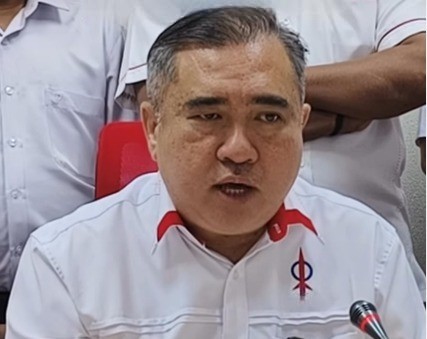
ECONOMY Minister Akmal Nasrullah Mohd Nasir has carried out a working visit to the Pengerang Integrated Complex (PIC) and All Cosmos Industries Sdn Bhd in Pasir Gudang, as Putrajaya intensifies measures to strengthen national energy security and food supply resilience in the face of ongoing global disruptions.
The ministry said the visit underscores the government’s commitment to bolstering Malaysia’s economic resilience amid geopolitical tensions, volatile input costs and persistent instability in international supply chains.
At the Pengerang Integrated Complex, discussions centred on the facility’s critical role in ensuring stable domestic fuel supplies and petrochemical production, which underpin key downstream industries including plastics manufacturing for everyday consumer and industrial use.
With a refining capacity of 300,000 barrels per day and petrochemical output exceeding 3.3 million metric tonnes annually, PIC remains one of Malaysia’s most important industrial assets, supporting national energy security, strengthening downstream industrial activity and expanding export capacity in higher-value products.
The minister also reviewed progress on the proposed Biofuel Hub in Pengerang, aligned with the National Energy Transition Roadmap.
The initiative forms part of broader government policy, including measures under the National Economic Action Council, to expand biodiesel usage to B15 as a practical mechanism to extend fuel supply sustainability under fluctuating global energy conditions.
Beyond its energy function, PIC was also highlighted for its wider economic impact, including the creation of high-skilled employment, development of local vendor ecosystems, technology transfer and improvements in surrounding infrastructure and public amenities.
The complex’s position as a regional petrochemical hub continues to reinforce Malaysia’s attractiveness as a competitive investment destination in Southeast Asia.
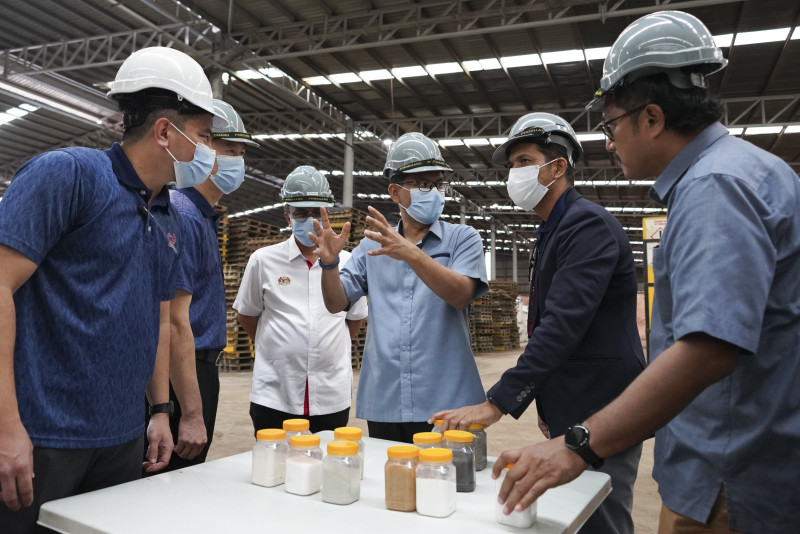
The second segment of the visit at All Cosmos Industries Sdn Bhd focused on structural challenges in the domestic fertiliser industry, including unstable raw material supplies, rising logistics costs and pressure from global input price volatility.
Discussions addressed strategies to strengthen sector resilience, including diversification of raw material sources, improvements in production efficiency and expansion of output capacity to meet domestic agricultural demand more effectively.
The government also emphasised the growing importance of bio-organic fertiliser production as an alternative to conventional inputs, aimed at reducing dependency on imports and enhancing supply stability during periods of global disruption.
The company’s adoption of a 20:80 fertiliser ratio was cited as an example of local industry innovation supporting a more balanced, efficient and sustainable approach to agricultural inputs.
Akmal said the visits reflect a more integrated policy approach to strengthening strategic sectors through the use of local resources, industrial innovation and closer cooperation between government and industry stakeholders.
It added that these efforts are essential to ensuring long-term energy and food security, while reinforcing Malaysia’s economic stability and safeguarding public welfare. - April 24, 2026