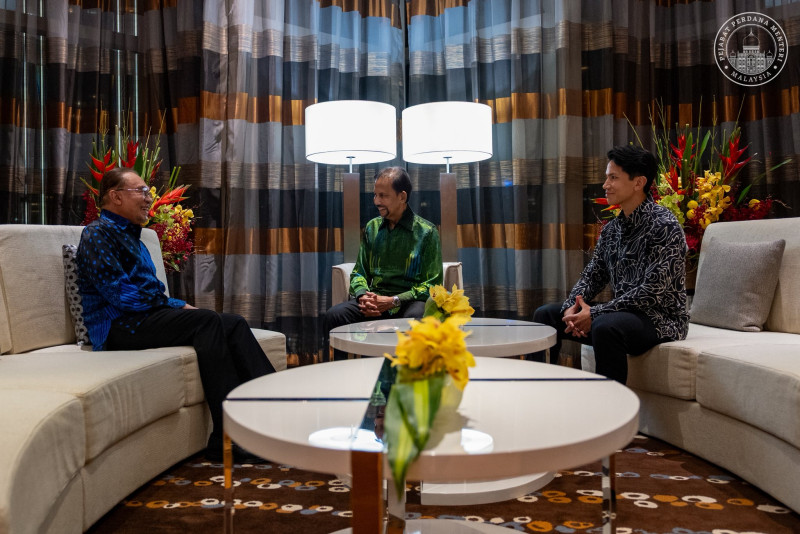
MALAYSIA has reaffirmed its commitment to deepening its longstanding partnership with Brunei while simultaneously defending its domestic fuel policies as global supply pressures intensify.
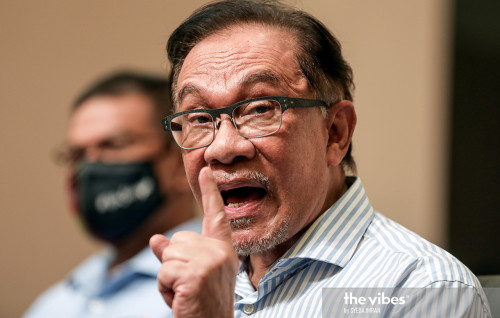
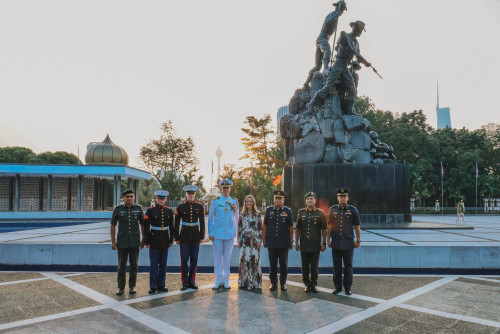
Prime Minister Datuk Seri Anwar Ibrahim said his audience with the Sultan of Brunei, Sultan Hassanal Bolkiah, centred on reinforcing bilateral ties grounded in trust, mutual respect and consensus in addressing regional and international challenges.
“In an atmosphere of mutual respect, we expressed our shared commitment to strengthen the special relationship between Malaysia and Brunei, anchored in trust, confidence and consensus in facing regional and global challenges,” Anwar said in a Facebook post.
He characterised the relationship as one that transcends conventional diplomacy, rooted instead in shared history and cultural affinity.
“This relationship is not merely diplomatic in nature, but a bond of brotherhood rooted in history, strengthened by sincerity and guided by a common determination to safeguard the well-being of the people of both countries,” he said.
Anwar expressed confidence that the enduring ties between the two nations would continue to flourish, paving the way for greater peace, stability and prosperity.
Separately, the Prime Minister underscored Malaysia’s distinct position in the region as the only country not to have implemented fuel rationing despite the global supply crisis, noting that several Southeast Asian nations have resorted to such measures, with some forced to shut hundreds of petrol stations due to shortages.
"RON95 petrol is provided at one of the lowest costs in the world at RM1.99 per litre. Diesel prices are high, but for farmers, fishermen, and school buses, the price has been lowered.
"What is the cost of RON95 in neighbouring countries? Some have reached RM10.50 per litre, others RM4, and RM6. And us? RM1.99," he said, adding that the government continues to absorb billions of ringgit in subsidies each month to shield the public from rising costs.
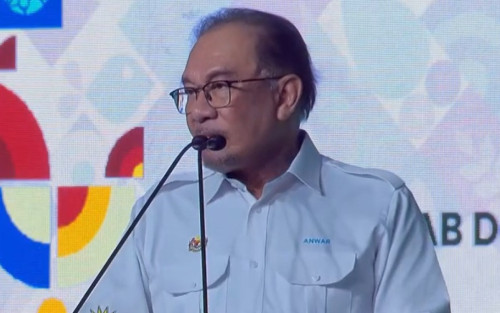
Speaking at a meet-and-greet session with staff of the Institute of Teacher Education and Sixth Form Centre students at the IPG Temenggong Ibrahim campus earlier, Anwar said early policy interventions, including targeted subsidies and diplomatic ties with Iran, have enabled Malaysia to maintain stable fuel supplies.
"Which other country has been allowed to send oil tankers through the Strait of Hormuz? Yet there are opposition political leaders who claim we did not pass through the Strait of Hormuz. This shows a lack of humility in seeking the facts," he said.
He added that the Cabinet had agreed to increase the deployment of police and enforcement personnel along national borders to curb rampant fuel smuggling, which he warned was draining billions of ringgit from the country.
"Our fuel is too cheap and smuggling is too rampant. When smuggling happens, it means the country's money is flowing out. So we have to tighten control because billions of ringgit are being lost," he said.
Anwar said federal and state leaders, including ministers, chief ministers and the Premier of Sarawak, have been briefed on coordinated measures to address the ongoing challenges.
He also urged the public to better understand prevailing economic and geopolitical realities and to avoid being misled by inaccurate information circulating on social media.
Earlier, Anwar revealed that Australia had approached Malaysia for diesel supplies following disruptions caused by the global crisis, a matter raised during his meeting with Prime Minister Anthony Albanese.
"He (Albanese) asked whether Malaysia could supply diesel. I said we don't have a surplus of diesel, but if there is any excess, we can export it," he said, noting that the discussion reflected the strength of bilateral ties. Malaysia also continues to import phosphate fertiliser from Australia for Felda farmers. - April 25, 2026