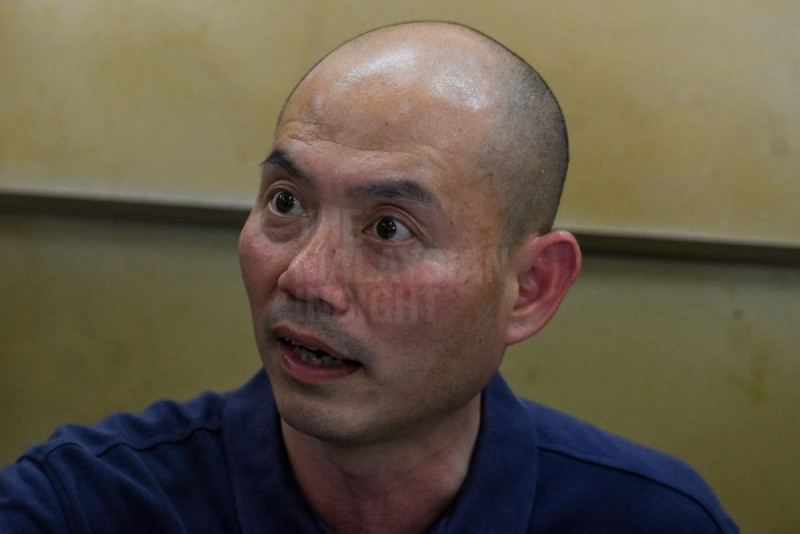
KEPONG Member of Parliament Lim Lip Eng has called on the government to explain in detail its proposed reforms to RON95 petrol subsidies, urging policymakers not to treat middle-income households as a financial “ATM” for the state.
He said any move to reduce or withdraw fuel subsidies from higher-income groups must be accompanied by clear criteria on how affected households are identified, as well as how income and living conditions are assessed.
He questioned whether subsidy eligibility would be determined based on individual or household income, and whether factors such as cost of living, family size, dependents, debt obligations and daily commuting needs would be taken into account.
Among the issues raised, Lim asked whether considerations would include residential location, number of children, elderly dependents, housing and vehicle loans, as well as travel distance for work.
“If these questions cannot be clearly answered, then the government is not ready to implement this policy,” he said.
He also cautioned against over-reliance on income classifications such as T20, T15, T10 or T5, saying such labels risk oversimplifying the financial realities faced by Malaysians.
“The government cannot simply use labels such as T20, T15, T10 or T5 and expect the public not to panic.
“High income does not necessarily mean wealthy. Households that are slightly above the national T20 threshold may still be struggling in Kuala Lumpur, Selangor or the Klang Valley after paying for housing costs, car loans, children’s education, insurance, caring for elderly parents and daily expenses.
“They are not millionaires, but merely ordinary middle-class families working hard just to get by,” he said in a statement.
Media reports on Sunday indicated that the government is reviewing proposals to reform RON95 petrol subsidies, which are currently still enjoyed by T20 households.
Prime Minister Datuk Seri Anwar Ibrahim said the proposal is being studied by the Crisis Management Task Force under the National Economic Action Council (MTEN), chaired by Tan Sri Mohd Hassan Marican, which has been reviewing the matter over the past month.
Lim stressed that policy decisions should not focus solely on income thresholds without considering actual household expenditure and financial pressure.
He also urged better use of the Central Database Hub (PADU), noting that RM85.27 million had reportedly been spent on its development and implementation.
“If the final decision is still made based on general labels without proper assessment, then what is the point of PADU?
“Malaysians are not rejecting reform. What they reject are measures that are unfair, unclear and carried out carelessly,” he said.
Lim added that many middle-income households just above eligibility thresholds could become the most severely affected group, despite appearing financially stable on paper.
“They may appear to earn higher incomes on paper, but the burden remains heavy. The government sees the numbers, but not the pressures of daily life.
“In addition, the middle class is now facing high taxes, rising living costs, housing pressures and education expenses.
“So do not turn them into the government’s ATM. These hardworking groups who have earned better incomes and improved their standard of living should be encouraged, not punished,” he said. - May 12, 2026