MALAYSIA'S economic ties with the United States remain on solid footing despite escalating global trade tensions, but growing scrutiny from Washington over supply chains and labour standards is emerging as a key challenge for exporters and manufacturers.
Business leaders and government officials have expressed confidence in the long-term strength of bilateral trade relations, even as proposed United States tariffs and wider geopolitical uncertainties raise concerns across global markets.
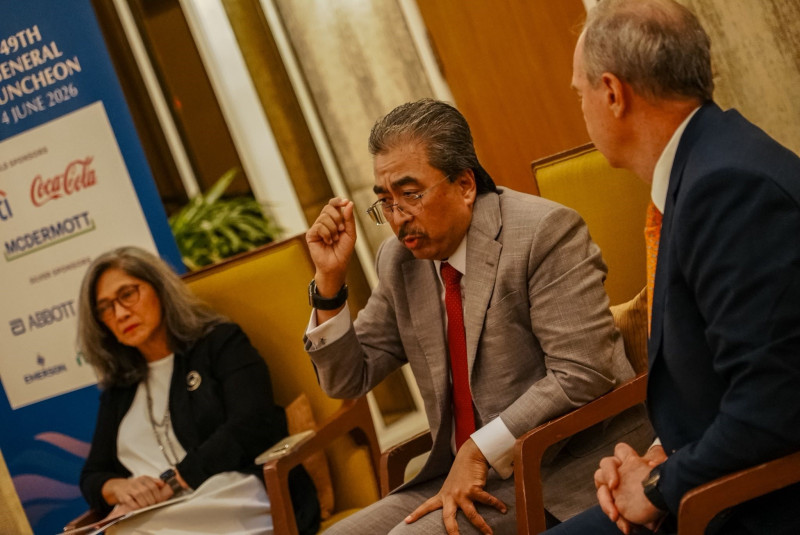
Speaking on the sidelines of the American Malaysian Chamber of Commerce (Amcham) 49th Annual General Meeting luncheon, Amcham chief executive officer Datuk Siobhan M Das said Malaysia continues to be viewed favourably by international investors and American businesses.
She described bilateral relations as being in a strong position despite external headwinds ranging from tariffs to conflicts in the Middle East.
“Malaysia is one of the most competitive places to be, supported by strong institutions and the rule of law,” she said.
While acknowledging growing global uncertainties, Siobhan stressed that Malaysia should remain focused on strengthening its economic fundamentals rather than becoming distracted by short-term disruptions.
“While everyone should be concerned and pay attention to these issues, we should also be working towards a better future for Malaysia.
“Malaysia’s exports to the United States are very strong,” she said.
“I do not have a crystal ball to tell whether that momentum will continue this year, but as far as we are concerned, the relationship between the two countries is good.”
Her remarks came as Malaysia faces increasing attention from the Office of the United States Trade Representative (USTR), which is reviewing trade practices among dozens of trading partners as part of a broader tariff strategy aimed at reshaping global supply chains.
At the same event, Investment, Trade and Industry (MITI) Minister Datuk Seri Johari Abdul Ghani sought to reassure businesses that Malaysia remains fundamentally competitive despite the prospect of new trade barriers.
He noted that Malaysia currently enjoys a trade surplus of approximately US$22 billion with the United States but argued that the overall economic relationship is far more balanced when the operations and earnings of American companies in Malaysia are taken into account.
Johari said countries are entitled to implement unilateral tariffs, but emphasised that long-term success depends on competitiveness rather than protectionism.
“Any country in the world will want to buy from us because we have those elements. Even if unilateral tariffs are imposed by the United States, for instance, those tariffs are ultimately paid by the Americans.
“What we need to do is ensure that every sector and industry operating in Malaysia remains competitive,” he said.
A central issue in Washington's review concerns forced labour compliance within international supply chains, particularly involving imported raw materials and semi-finished goods originating from third countries before being processed in Malaysia and exported to the United States.
Johari said Malaysia's challenge lies not in domestic labour practices but in the absence of a comprehensive mechanism to verify labour conditions throughout upstream supply chains beyond its borders.
“This is subject to forced labour, even though they are not in our country, but they are among the many suppliers from whom we buy products, which are then processed and exported to the United States.
“Currently, we do not have a mechanism to evaluate whether a third country engages in forced labour. That is the missing link.
“Moreover, we also do not have a specific law to restrict the import of raw materials, finished products or semi-finished products produced using forced labour.
“That is why we are subject to the proposed 10% tariff,” he said.
The minister pointed to previous cases involving Malaysian plantation giants where market access concerns were successfully resolved after labour-related issues were addressed, suggesting that similar compliance frameworks could help mitigate future trade risks.
Johari also highlighted another area under review by US authorities — excess industrial capacity — but maintained that Malaysia itself does not suffer from such a problem.
“However, if another country has excess capacity and sells its products to Malaysia, and that product is used to produce another product in the country, which is then exported to the United States, maybe that is an issue. We do not know,” he said.
The proposed tariff measures remain under review and have not been formally adopted by Washington. Under the current process, stakeholders are invited to submit comments before public hearings begin, meaning the final structure and scope of any duties could still change.
For Malaysian exporters, however, the debate has underscored the growing importance of supply-chain accountability and regulatory compliance as global trade increasingly extends beyond traditional questions of pricing and market access.
Reflecting that trend, Siobhan said responsibility ultimately rests with companies to ensure transparency throughout their operations and procurement networks.
“Companies need to establish their own mechanisms to determine whether forced labour exists within their supply chains and they must be conscious of and responsible for their own supply chains,” she said.
As global trade rules evolve and supply chains face greater scrutiny, industry leaders believe Malaysia's ability to remain competitive, transparent and adaptable will be critical to preserving its position as one of the United States' most important trading and investment partners in Southeast Asia. - June 5, 2026