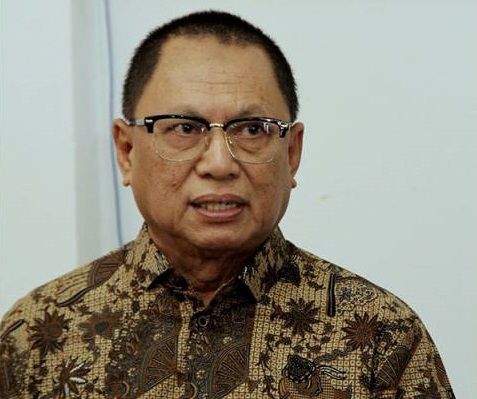

JOHOR Menteri Besar Datuk Onn Hafiz Ghazi may have struck a chord with parts of his base when he declared that he would rather give up his position than sit at the same table with DAP.
It was a strong political statement. But it also sits uneasily against the reality of how Johor has been developing in recent years.
Whether one likes it or not, Johor’s current economic momentum did not happen in isolation. It has been shaped, in no small part, by cooperation with the federal government under Prime Minister Datuk Seri Anwar Ibrahim — a unity administration that includes PKR, Umno and DAP.
Take the Johor-Singapore Special Economic Zone (JS-SEZ).
This is not a minor initiative. It is arguably one of the most significant economic frameworks for Johor in decades, aimed at attracting investment, creating jobs and strengthening cross-border economic activity.
But it was not a purely state-driven effort.
It required federal negotiations with Singapore, federal policy backing and federal commitments on infrastructure and incentives.
The same can be said of the RTS Link, a multi-billion-ringgit project set to transform connectivity between Johor Bahru and Singapore.
This is a bilateral undertaking involving national governments, not something that could have moved forward without sustained support from Putrajaya.
Even Forest City, once seen as a struggling project, has been given new life through federal-level decisions — including special incentives and the push to turn it into a financial zone. These are policy moves made at the national level, but with direct implications for Johor’s economic future.
In short, many of the projects now being highlighted as signs of Johor’s resurgence have been enabled by close coordination between the state and a federal government that includes DAP ministers.
This is where the contradiction becomes difficult to ignore.
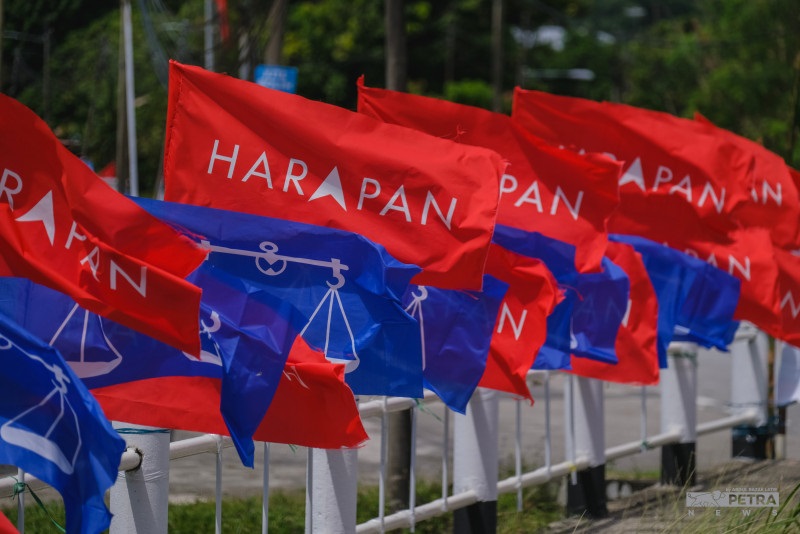
No one is arguing that Johor must politically align itself with DAP at the state level.
That is a separate question, and one that ultimately belongs to voters.
But to suggest that DAP is so unacceptable that even sitting at the same table is out of the question risks overlooking the reality that Johor has already benefited from a system where such cooperation exists — at the highest level of government.
Cabinet meetings in Putrajaya bring together leaders from Umno, DAP and PKR every week.
Policies affecting Johor are discussed, refined and implemented within that framework.
Funding decisions, infrastructure planning and international negotiations are all part of that same ecosystem.
Johor has not been excluded from this arrangement.
In fact, it has been one of its key beneficiaries.
So while political rhetoric may play well in certain settings, governance tells a more pragmatic story.
Development, investment and large-scale infrastructure do not happen in silos.
They require alignment, compromise and, at times, working with those on the other side of the political divide.
Johor’s progress over the past few years reflects that reality.
The question now is whether its leaders are willing to acknowledge it. – June 14, 2026