PERSISTENT corporate restructuring and sharp operational downsizings have prompted the Human Resources Ministry to significantly scale up its emergency employment nets and skills retooling programs after data revealed that 38,953 citizens were displaced from the workforce during the opening five months of the year.
The targeted intervention comes as key industrial pillars, including the manufacturing sector, wholesale and retail trade networks, automotive repair facilities, and corporate administrative support services, undergo severe structural re-alignments to weather fluctuating economic pressures.
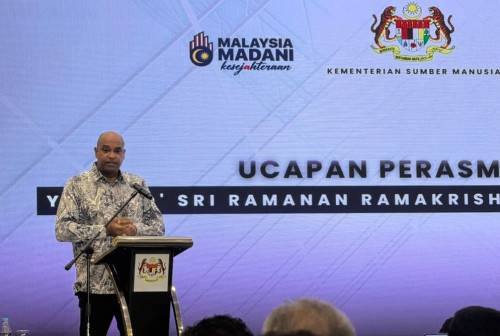
Human Resources Minister Datuk Seri Ramanan Ramakrishnan confirmed that the state-backed employment machinery was being rapidly diversified to cushion affected workers and accelerate their re-entry into alternative high-growth sectors.
Data maintained by the Social Security Organisation's Employment Insurance System indicated that the individuals suffered a formal loss of employment between January and May, this year.
Analysis shows that the majority of cases involved workers aged between 25 and 39 years, Ramanan said in an official statement released on Sunday.
By gender, men accounted for 23,536 cases or 64 per cent, while women recorded 15,417 or 39.6 per cent, the minister added.
Ramanan explained that the contraction was not indicative of a broader systemic collapse, but was instead driven by corporate restructuring exercises and operational adjustments undertaken by businesses seeking to adapt to current economic conditions.
He maintained that despite the sudden influx of retrenchments, the broader macroeconomic foundations of the Malaysian labour market demonstrated considerable defensive strength against compounding global and geopolitical headwinds.
In April, the nation’s labour force reached 17.33 million people, with the unemployment rate remaining low at 3.0 per cent, Ramanan stated.
The labour force participation rate stood at 70.9, comprising 82.9 per cent for men and 57.3 per cent for women, and this performance reflects a labour market foundation that remains stable and resilient.
To offset localised shocks, the ministry is urging displaced professionals to leverage advanced digital matching infrastructure, pointing directly to the state-run Labour Market Exchange and the MYFutureJobs Galaxy platform to secure real-time intelligence on vacancy trends and alternative career trajectories.
The strategic blueprint deployed by the ministry focuses heavily on structural agility, aiming to transition redundant personnel into new roles before their prolonged absence from the market erodes core competencies.
To ensure affected workers receive comprehensive support, the ministry is implementing various initiatives based on three main premises, namely career transition and employment support, reskilling and upskilling programmes, as well as early intervention measures for critical sectors, Ramanan stated.
These efforts are intended to help workers adapt to changing market conditions, improve employability and strengthen their competitiveness. - June 14, 2026