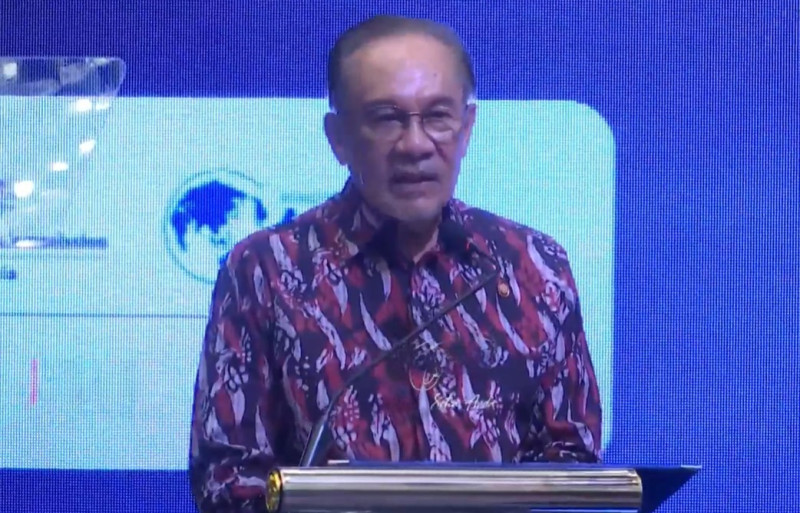
THE Government does not view the situation in the South China Sea with undue alarm and will continue to prioritise dialogue and sustained constructive engagement in addressing issues in the disputed waters, Prime Minister Datuk Seri Anwar Ibrahim said.
Speaking during a question-and-answer session after the 39th Asia-Pacific Roundtable (APR) on Thursday, Anwar said Malaysia's experience in dealing with China has shown that while maritime issues remain, both countries have maintained constructive relations without major confrontations.
"I personally do not share the exaggerated concerns about potential threats in the South China Sea.
"Yes, there are issues that need to be addressed, but Malaysia's experience has been one of meaningful exchanges with China," he said.
Anwar said China had reaffirmed its commitment to the United Nations Convention on the Law of the Sea (UNCLOS) and ongoing efforts to conclude a Code of Conduct for the South China Sea.
He said those commitments should be used as a basis for strengthening dialogue and cooperation rather than amplifying concerns over possible conflict.
As a maritime nation, Malaysia has maritime boundary issues with several neighbours, including Thailand, Singapore, Brunei, Indonesia and the Philippines, but these have consistently been managed through diplomatic channels without undermining bilateral relations, he said.
The Prime Minister said the same approach had characterised Malaysia's relationship with China.
"There are issues, and I have personally raised them with President Xi Jinping and Premier Li Qiang, yet our relationship remains excellent.
"Are there issues? Yes. Is there potential for conflict? Yes. But there has never been any major aggressive action that has triggered serious tensions," he said.
Anwar added that discussions on the South China Sea at many international forums often place disproportionate emphasis on the risks of war and security threats, while overlooking the scope for continued dialogue and cooperation.
"The reality in our region is that there remains ample space for engagement, and diplomacy continues to be the most effective means of managing differences and preserving stability," he said. - July 2, 2026