THE government has outlined a broad set of financial interventions aimed at cushioning small businesses from escalating global economic pressures, including surging logistics costs and disrupted supply chains attributed to prolonged geopolitical tensions in West Asia.
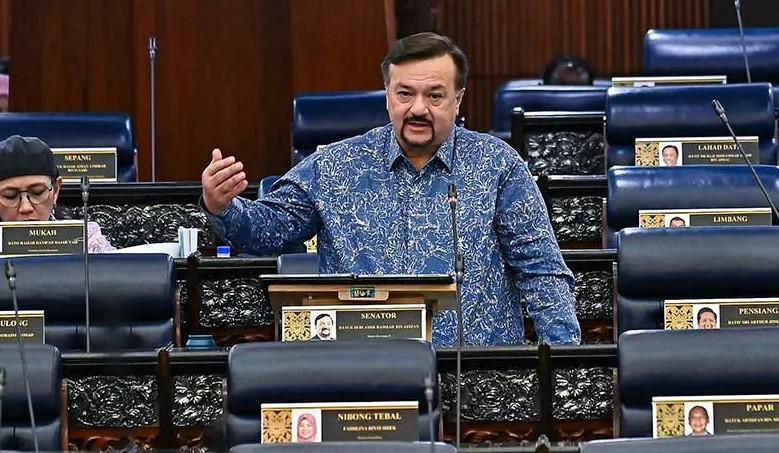
Responding in the Dewan Rakyat to Datuk Andi Muhammad Suryady Bandy [Kalabakan] during Question Time in the Dewan Rakyat on Thursday, Finance Minister II Datuk Seri Amir Hamzah Azizan said the MADANI administration is closely monitoring the spillover effects of the crisis on domestic prices and small business resilience.
It said micro, small and medium enterprises (MSMEs), particularly petty traders and micro-entrepreneurs, remain among the most vulnerable to cost shocks arising from global instability.
The minister detailed several immediate measures already in place to ensure business continuity and improve access to working capital.
Central to the response is RM15 billion in financing and guarantee facilities channelled through banks and government agencies, designed to sustain MSME operations and liquidity.
A further RM5 billion microfinancing programme has been deployed via institutions including Amanah Ikhtiar Malaysia, Agrobank, Bank Simpanan Nasional, Bank Rakyat, MARA and TEKUN Nasional. Between 15 May and 26 June 2026, more than RM500 million was approved, benefiting over 30,000 entrepreneurs, Amir said.
Under the Skim Jaminan Pembiayaan Perniagaan (SJPP), the government has introduced RM5 billion in guaranteed financing support through Syarikat Jaminan Pembiayaan Perniagaan Berhad. Between 15 May and 30 June 2026, RM219 million in guarantees were approved, benefiting more than 300 MSMEs, particularly in agriculture, construction, logistics and tourism.
The ministry said SJPP is also working with banks to facilitate restructuring, rescheduling and targeted repayment assistance to help businesses manage cash flow pressures during the downturn.
Bank Negara Malaysia has also contributed through a RM5 billion SME Stabilisation Relief Facility (SME SRF). Since mid-May 2026, nearly RM1 billion has been approved for more than 1,500 MSMEs, with approximately RM4 billion still available for further applications.
On domestic demand, the government said cash assistance programmes including Sumbangan Tunai Rahmah (STR) and Sumbangan Asas Rahmah (SARA), with a combined allocation of RM15 billion, are supporting around nine million recipients, while the expanded SARA-for-All initiative is reaching 22 million Malaysians.
The ministry added that these transfers are also strengthening domestic consumption, as beneficiaries spend at local retailers, markets and small food stalls, indirectly supporting MSME income. As of June 2026, more than 13,000 SARA partner outlets, including 6,000 small grocery stores, are participating.
During a supplementary question, the Kalabakan MP sought further clarification on the role of SJPP guarantees in key sectors and the accessibility of the SME SRF for micro-entrepreneurs lacking formal documentation.
In response, Amir explained that the SJPP provides up to RM5 billion in guarantee capacity targeting agriculture and agri-food, logistics and transport, construction and tourism.
It added that guarantee coverage has been increased to as much as 80 per cent, compared with the usual 70 per cent, with guarantee tenures extended up to 10 years. The guarantee fee has also been reduced to 0.75 per cent annually, down from around 1.0 per cent.
The scheme is intended as a credit enhancement tool to help viable MSMEs with insufficient collateral access both working capital and capital expenditure financing.
On the SME SRF, eligible MSMEs may access up to RM750,000 in financing for up to five years at a maximum rate of 3.75 per cent per annum, including guarantee fees, supported by up to 80 per cent guarantees from either the Credit Guarantee Corporation Malaysia or SJPP.
The ministry said banks are also allowed to use alternative credit assessment methods, including analysis of transaction flows and bank balances, to enable access for micro-entrepreneurs without formal financial records.
The government said these combined measures are aimed at ensuring MSMEs remain operational and resilient amid continuing global economic uncertainty. - July 2, 2026
.jpeg)