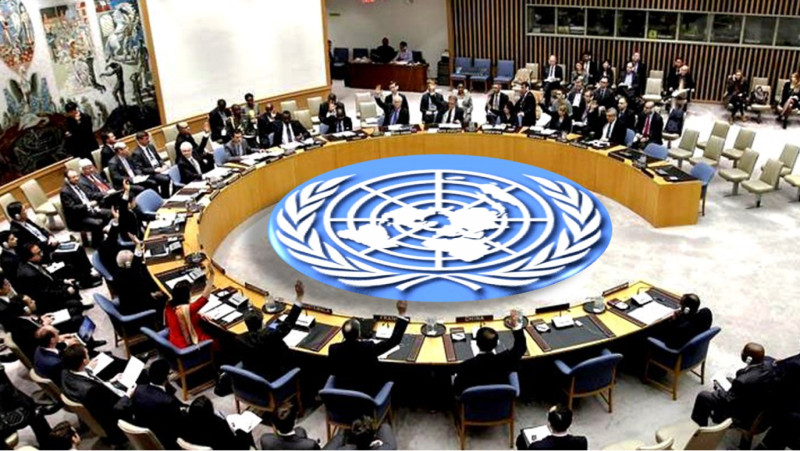
MALAYSIA has formally entered the race to reclaim a seat on the United Nations Security Council as a non-permanent member for the 2036 to 2037 period, with the government highlighting the country’s previous experience and commitment to defending international law.
Deputy Foreign Minister Datuk Lukanisman Awang Sauni said Malaysia’s four previous terms as a non-permanent member demonstrated that the country’s advocacy for global justice was not merely rhetorical, but reflected its willingness to speak up for developing nations and communities facing injustice.
"God Willing, in September, during the 81st United Nations General Assembly General Debate in New York, Foreign Minister Datuk Seri Mohamad Hasan will continue to emphasise Malaysia’s position on this issue when delivering the National Statement.
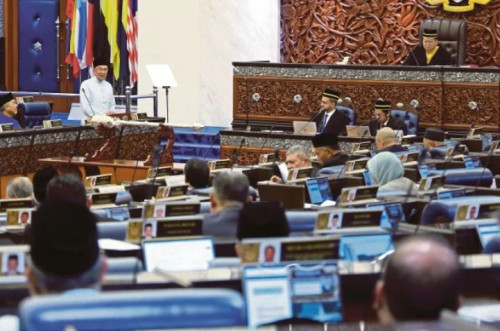
"The reform agenda of the UN Security Council and issues concerning global peace and security will continue to be among the priorities of Malaysia’s foreign policy," he said during a question-and-answer session in the Dewan Rakyat today.
Lukanisman was responding to a question from Datuk Seri Sh Mohmed Puzi Sh Ali (BN-Pekan) on Malaysia’s position regarding the imbalance created by the veto powers held by major global powers, as well as the country’s strategic approach towards pursuing UN reforms and strengthening Malaysia’s role in international institutions.
He said the misuse of veto powers by permanent members had undermined the credibility of the Security Council and weakened its ability to fulfil its primary mandate under the UN Charter of maintaining international peace and security.
According to him, the issue was particularly evident in conflicts in West Asia and the failure to adequately address violations of fundamental human rights, including the plight of Palestinians.
"Malaysia has consistently supported and called for comprehensive reform of the UN Security Council, including reforms involving veto powers.
"Malaysia’s position is clear that the veto power is unfair and should be abolished.
"At the very least, the use of veto powers must be completely prohibited in cases involving serious violations of international law, such as war crimes, genocide, crimes against humanity and the deliberate destruction of civilian infrastructure, as seen in Gaza," he said.
Lukanisman also highlighted progress made in improving transparency within the Security Council, including the adoption of the Veto Initiative through United Nations General Assembly Resolution 76/262 in 2022.
He said the resolution, which was supported by Malaysia, requires the General Assembly to automatically convene within 10 working days whenever a permanent member of the Security Council exercises its veto power.
The permanent member responsible for the veto is also required to provide an explanation for its decision.
He said the mechanism had already been implemented, including an emergency General Assembly meeting held on April 16 following the use of veto powers by China and Russia at the Security Council on April 7 over a resolution concerning the situation in Iran and the Strait of Hormuz.
"Beyond the veto issue, Malaysia also supports expanding both permanent and non-permanent membership of the UN Security Council to ensure fair representation for every region.
"Malaysia believes the composition of the UN Security Council must be improved to become more equitable, inclusive and reflective of current geopolitical realities and dynamics," he said. - July 13, 2026