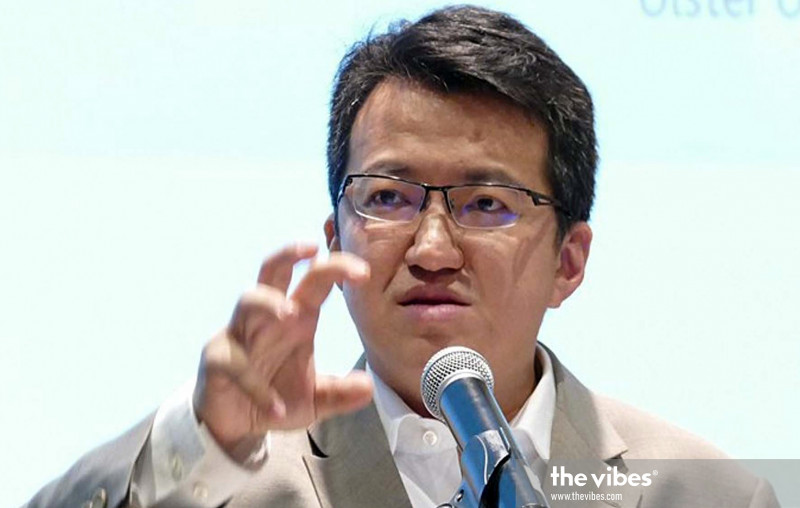
MALAYSIA must transform from a global semiconductor assembly and testing hub into a technology-owning economy that captures greater value from the electronics supply chain, Deputy Finance Minister Liew Chin Tong said.
Speaking at The Edge-HSBC E&E Symposium 2026 in Kuala Lumpur, Liew said Malaysia’s next stage of growth depended on developing home-grown technology, intellectual property and globally competitive companies rather than remaining primarily a manufacturing base for multinational corporations.
He said Malaysia’s semiconductor strength, built over more than five decades since the industry arrived in Penang in the 1970s, had made the country an essential part of the global supply chain, but too much of the value created continued to flow overseas.
“The problem was never our capability; it is how little the value our capability creates is kept by Malaysian companies, shareholders and workers,” he said.
Liew said Malaysia needed to move “from doing for others to doing for ourselves” by encouraging companies to own technology, develop products and create intellectual property.
He highlighted that electrical and electronics products contribute around 40 per cent of Malaysia’s exports, while the country accounts for around 13 per cent of global semiconductor assembly and testing activities outside China and Taiwan.
However, the sector contributes only about 6 to 7 per cent of gross domestic product, while listed semiconductor firms represent just around 1.7 per cent of Bursa Malaysia’s market capitalisation, reflecting limited domestic value capture.
“These numbers tell a single story: the deeper one looks into what Malaysia actually retains from this industry — in value, in profit, in ownership — the thinner it becomes,” he said.
Liew said Malaysia must climb higher on the semiconductor value chain by expanding into areas such as chip design, research and development, intellectual property ownership and advanced packaging.
He cited Malaysian companies including ViTrox Corporation Berhad and D&O Green Technologies Berhad as examples of firms moving towards higher-value technology activities.
He warned that Malaysia risked falling behind in the artificial intelligence-driven semiconductor boom as local companies had not captured enough opportunities in emerging AI supply chains.
Liew said Malaysian semiconductor companies had the financial capacity to expand, but greater support from banks, investment funds and venture capital firms was needed to finance deep technology growth.
He proposed establishing a one-stop semiconductor and deep-tech financing centre to connect Malaysia’s technology clusters with domestic capital markets.
“The value chain shift is not merely a hope. It now has a share price,” he said, referring to recent technology listings such as SkyeChip, which raised RM352 million through its initial public offering.
Liew said Government initiatives, including SemiconStart, financing support from Bank Pembangunan Malaysia Berhad and co-investment facilities under the New Industrial Master Plan 2030, would help accelerate the transformation.
“The Government will de-risk, match and convene, and let the market lead,” he said.
He stressed that owning technology was crucial not only for competitiveness but also for raising wages and creating better opportunities for Malaysians.
“If we wish to see Malaysian wages rise sustainably, Malaysian firms must operate where the margins can carry those wages,” he said.- July 13, 2026