PRIVATE short-term rental operators in Penang will now need licences from local councils, as the state moves to bring the growing sector under tighter regulation.
The Private Homestay (Penang Local Authorities) By-Law 2026 came into force on Aug 1, following approval by the state executive council on June 10.
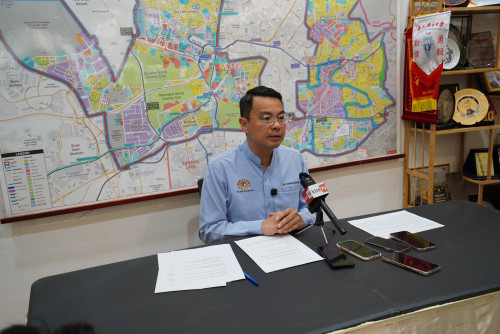
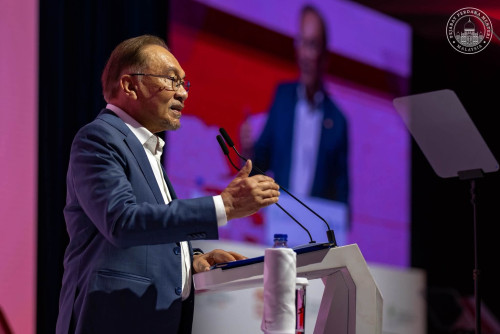
State Local Government Committee chairman Jason H’ng Mooi Lye said the new rules were introduced following continued complaints from residents over private lodging operations.
“The by-law strengthens the regulatory and enforcement framework for short-term rental operations and ensures they are carried out in a more orderly, safe and controlled manner,” he told reporters at Komtar today.
The complaints have largely involved public nuisance and safety concerns.
Between 2020 and March this year, Penang Island City Council (MBPP) received 364 complaints linked to illegal short-term rental operations, while Seberang Perai City Council (MBSP) recorded 24.
Under the by-law, operators must obtain a licence and comply with requirements covering cleanliness, safety, operating conditions and prohibited activities.
The councils will also have the power to inspect premises, investigate suspected offences, enter properties and close down premises where necessary.
Operators will have to pay RM50 for each licence application.
The annual licence fee is RM1,000 for premises with up to three rooms, with an additional RM200 charged for every extra room, capped at two additional rooms.
A separate annual fee of RM1,800 will be imposed for each unit, while RM5 will be charged for every reminder issued over outstanding payments.
H’ng said short-term rental operations would not be allowed in government or statutory body premises, healthcare and childcare facilities, workers’ hostels and private educational institutions.
The ban also covers low-cost and low-medium-cost housing, controlled-price homes and People’s Housing Projects.
“Generally, under the by-law, short-term rental operations may only be carried out in residential and commercial areas,” he said.
On Penang Island, MBPP has also introduced its own planning guidelines to account for the island’s urban landscape, including its heritage areas.
The Planning Guidelines for Private Homestay, approved by the state planning committee on Aug 3, allow short-term rental operations in general residential, general business and limited business zones, subject to planning requirements.
Within the George Town World Heritage Site, applications will be assessed under the site’s Special Area Plan.
However, MBPP has barred short-term rental operations in all stratified residential properties within its jurisdiction.
Several residential areas have also been excluded, including Jesselton Heights, Pearl Hill, Lebuh Bukit Jambul, Taman Sungai Ara and Minden Heights.
The restricted areas also cover locations around Jalan Utama, Jalan Gottlieb, Jalan Burma, Jalan Brother James, Jalan Cantonment and Jalan Nunn, as well as Jalan Tunku Abdul Rahman, Lebuhraya Rose, Rose Avenue, Jalan Park, Jalan Brown, Jalan DS Ramanthan and Jalan Bell.
For commercial properties, serviced apartments, small office home offices (SOHO), shops, shophouses and shop offices may be considered for short-term rental use.
Detached, semi-detached and terrace houses with individual titles may also be considered.
However, owners must first apply to MBPP for planning permission to change the use of the property.
H’ng reiterated that stratified residential properties would not be allowed to operate as short-term rentals within the MBPP area.
In Seberang Perai, short-term rental operations will be allowed in residential and commercial areas under the new by-law.
H’ng said MBSP would review its existing procedures for applications and operations, including whether additional requirements or designated areas should be introduced based on planning and land-use considerations. – August 21, 2026

.jpeg)