By Murray Hunter
THE four states of Kedah, Kelantan, Terengganu and Perlis, collectively known as SG4, will gather in Kuala Lumpur on 26 October 2026 for their Business and Economic Forum at the KLCC.
The timing is deliberate. Nearly three years after the initial announcement of the grouping and two years after the formal launch of SG4 Group Sdn Bhd, the event is meant to signal that the experiment has moved beyond political rhetoric into the realm of investment facilitation.
The SG4 is, at its core, a strategic economic coordination platform.
It is jointly owned by the four state governments through SG4 Group Sdn Bhd, with each holding an equal 25 per cent stake.
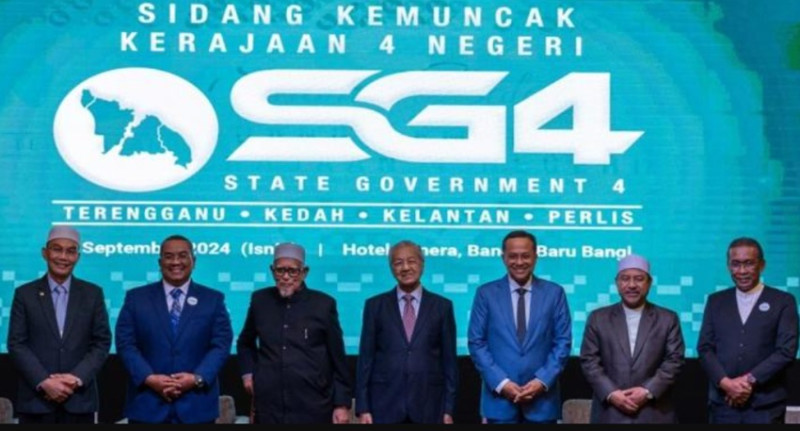
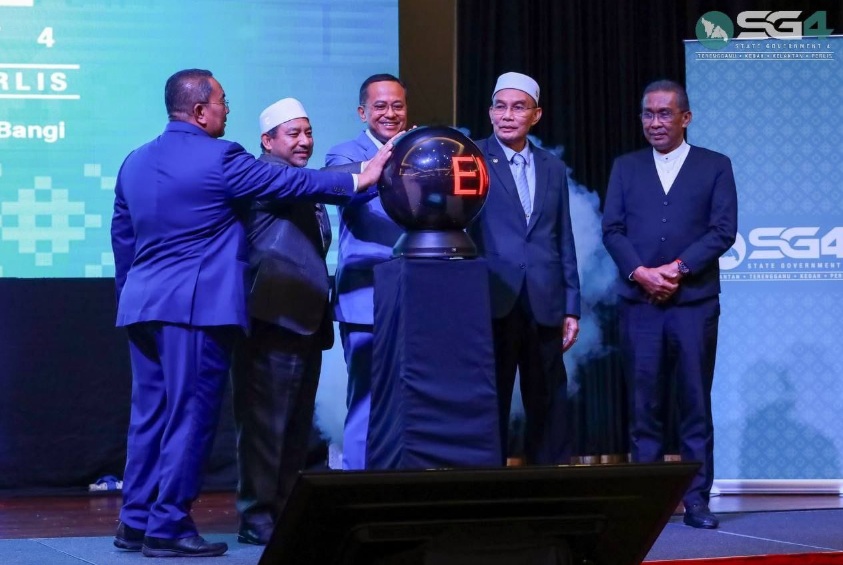
The vehicle was formally launched in September 2024, with former Prime Minister Tun Dr Mahathir Mohamad serving as adviser.
Its stated purpose is to pool the land, natural resources, energy potential and strategic geography of the four states and present them to investors as a single, coordinated economic bloc rather than four separate and often competing jurisdictions.
The structure is deliberately lean. Economic activity is organised around five clusters, being :
1. infrastructure, logistics and healthcare; trade, investment and business development;
2. agriculture and food security;
3. education and human capital; and
4. new resources and future income generation, the last of which prominently features rare earth elements.
Each cluster is championed by a designated state executive council member to ensure execution.
The company positions itself as a single investment gateway, working alongside rather than against federal agencies such as MIDA, the Northern Corridor Implementation Authority and the East Coast Economic Region Development Council.
Official materials emphasise that the four states span both the Northern and East Coast federal corridors and that SG4 is the first attempt to coordinate them as one economic voice.
The economic potential remains substantial. The four states still account for a disproportionately small share of national GDP relative to their population, which is roughly one-fifth of Malaysia’s people producing well under ten per cent of output.
The SG4 region possesses abundant underutilised land, significant rare earth deposits (particularly in Kedah, Kelantan and Terengganu), dolomite in Perlis useful for processing, oil and gas resources, the bulk of the nation’s rice production, the Kulim Hi-Tech Park, high solar irradiance, and a shared border with southern Thailand that offers cultural and commercial proximity to another six million people.
In theory, these assets can be linked into genuine clusters such as agriculture feeding into processing, minerals into downstream manufacturing, logistics connecting ports and airports, and education supplying the skills required.
The objective is higher productivity through better inputs, specialised labour and streamlined logistics, rather than the traditional government-linked company model that has dominated Malaysian development thinking for decades.
If realised, the SG4 could also alter federal-state relations more profoundly than any initiative since the formation of Malaysia. Individually, the four states are small and fiscally constrained.
Collectively, they gain negotiating weight. Success would strengthen arguments for greater autonomy over resource revenues, infrastructure prioritisation and planning. Similar arguments have already been advanced by Sabah and Sarawak.
Putrajaya would face a more coherent regional counterpart rather than four fragmented state administrations.
In the longer term, this could push the federal government toward a more facilitative role and return the federation closer to its original spirit.
Yet the political anchor remains the central problem.
SG4 was born under Perikatan Nasional state governments and has been widely viewed through a partisan lens.
The appointment of Mahathir as adviser, the equal-share structure designed to pool revenues across states of unequal resource endowment, and the repeated emphasis on Malay-majority demographics have all reinforced the perception that this is as much a political project as an economic one.
Recent political shifts in Perlis, where the Menteri Besar’s office moved and PAS stepped back from participation, have already raised questions about cohesion, prompting some observers to describe the arrangement as “SG3+1.”
Analysts have noted that without concrete results, the initiative risks being dismissed as a political gimmick.
Politics must not dictate outcomes if the economic logic is to prevail.
State governments need to act primarily as facilitators, streamlining regulation, aligning vocational training with cluster needs, improving connectivity, and resisting the temptation to create new state-owned enterprises that crowd out private initiative.
Close cooperation with the federal government is mandatory, as the states lack the fiscal capacity for large-scale infrastructure on their own.
Cross-border opportunities with southern Thailand and genuine private investment, domestic and foreign, will only materialise if the platform is seen as stable, rules-based and insulated from electoral cycles.
On the eve of the October forum, the hope is clear.
To connect capital with opportunity, technology with resources, and industry with location.
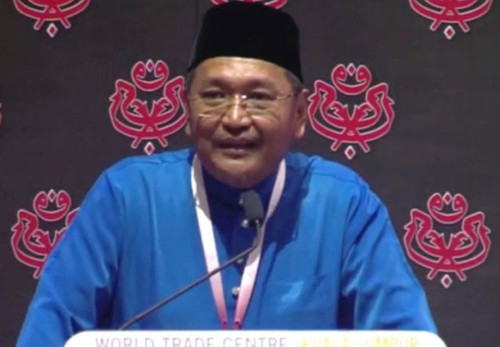
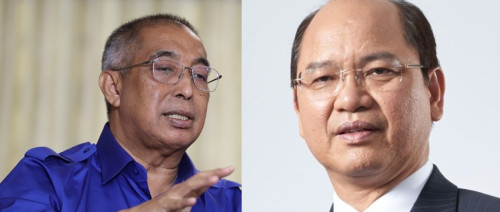
The four Menteris Besar, Mahathir, economists and industry figures will share a stage to present the case.
Whether the gathering produces measurable commitments or merely another round of declarations will determine if the SG4 can escape its political origins and become the competitive, investment-ready region its architects claim is possible.
The economic case has always been sound. The political constraints remain the decisive variable. – September 15, 2026