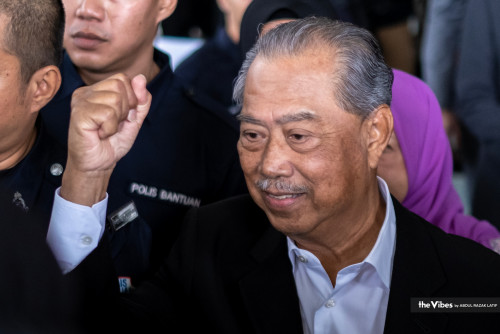

NOORAZLI Said has an unusual way of asking for forgiveness: quoting the Bible to the people he offended.
And frankly, he should stop doing it.
After making lewd jokes involving a priest and a nun, the UMNO Sepang division chief has now returned with Bible verses to defend the sincerity of his apology, citing passages from Ephesians, Colossians and Matthew on kindness, compassion and forgiveness.
Enough.
The Bible is not a prop for Noorazli to use every time he needs to defend himself from criticism over remarks involving Christianity.
He does not get to make offensive remarks involving Christian religious figures and then turn around and tell Christians what their own scripture teaches them about forgiveness.
That is not reconciliation. It is tone-deaf.
Noorazli says nobody can know what is in another person’s heart. He insists he never intended to insult Christianity, Christians, priests or nuns.
He has also acknowledged that his reference to Psalm 129 was inaccurate.
If he was wrong, he should say so. If he is sorry, he should apologise.
But he should leave the Bible out of it. Christians do not need a politician to explain their own faith to them.
And forgiveness does not mean criticism has to stop.
A person can forgive someone and still believe what they did was wrong.
Noorazli is right that nobody can know exactly what is in another person’s heart.
But that cuts both ways. He cannot know what is in the hearts of those who criticised him.
He cannot decide that someone who questions his apology is therefore refusing to forgive, or failing to practise tolerance.
People are entitled to hear an apology and still have reservations about it. That is part of public accountability.
The issue here was never simply whether Noorazli intended to offend. It was what he said.
And politicians should understand that words have consequences, particularly when religion and religious figures are involved.
“I did not mean it that way” explains intent. It does not erase impact.
If Noorazli genuinely believes his remarks caused hurt despite his intentions, then the straightforward response is to apologise, accept the criticism and move on.
Instead, he has turned his apology into another political argument, complete with scripture. That is precisely what makes his latest statement so grating.
He says he respects the sanctity of other religions. Yet he is invoking Christian scripture to tell those criticising him about forgiveness.
Why? Why must every defence now come with a Bible verse? Why must Christians be reminded to forgive by the very politician whose remarks offended?
He can practise his own faith as he sees fit. Nobody is disputing that. But Christianity is not his political shield.
The Bible does not need to be recruited to defend a politician from the consequences of his own words.
And Christians certainly do not need Noorazli to decide which parts of their faith they should apply when judging his conduct.
Malaysia has enough experience with politicians reaching for religion when it suits the argument.
We do not need another example. If Noorazli wants to move on, he is entitled to do so.
His critics are equally entitled to decide whether they are ready to move on with him.
Forgiveness is a personal choice. It cannot be demanded, prescribed or used to silence criticism.
An apology does not give the person making it control over how others respond.
So, Noorazli: you have said your piece.
You have explained your intention. You have admitted the Biblical reference was wrong. You have apologised.
Now leave the Bible alone. You do not need to quote it to prove that you are sincere.
And you certainly do not need to quote it to tell Christians how they should feel. Sometimes the most respectful thing a politician can do after offending is very simple: Say you were wrong. Say you are sorry. Then stop talking. – September 15, 2026