
Why should Malaysians pay Najib’s RM50 million fine?
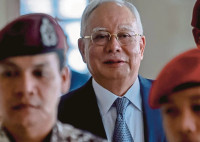
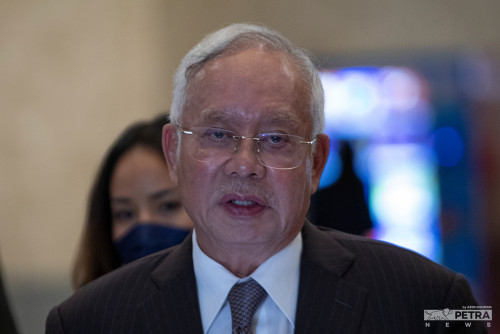
THE question following the decision to allow former prime minister Datuk Seri Najib Razak to serve the remainder of his sentence under house arrest is no longer simply how the RM50 million fine will be paid.
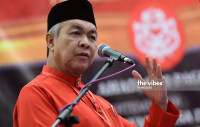
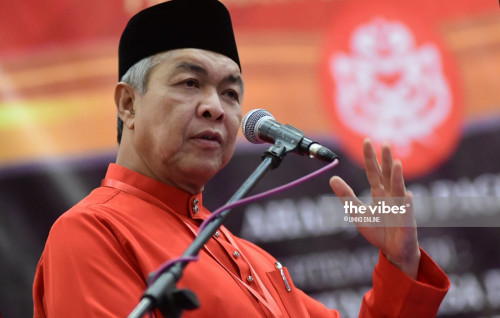
Umno president Datuk Seri Ahmad Zahid Hamidi has already said the party will launch a fundraising campaign to help Najib settle the amount.
The question now is much more basic:
Why should anyone else have to pay it?
Why should ordinary Malaysians — including Umno members and the public who may be approached for donations — contribute a single sen towards the fine of a politician who has been convicted of corruption-related offences?
The conditional pardon announced today allows Najib to serve the remainder of his sentence under house arrest until August 23, 2028, subject to payment of RM50 million and compliance with the conditions imposed.
If those conditions are breached, the pardon is revoked, and he must return to prison.
Najib’s original conviction in the SRC International case involved the transfer of RM42 million into his personal accounts. The Federal Court upheld his conviction in 2022.
His original 12-year sentence and RM210 million fine were subsequently reduced to six years and RM50 million following the 2024 pardon.
He also faces a separate 15-year prison sentence and RM11.38 billion fine after being convicted last year in the 1MDB case involving more than RM2 billion. He is appealing that conviction.
So why should the public be asked to help settle the RM50 million?
This is not a fundraising campaign for flood victims
It is not money being collected for a sick child, a natural disaster or a public emergency.
It is money being raised to satisfy a condition attached to the house arrest of a convicted former prime minister.
That raises a difficult question for Umno.
Does the party believe its supporters — or the wider Malaysian public — should contribute money towards the financial penalty imposed on its former president?
And if so, what message does that send about accountability for corruption?
There is also a very obvious question about the fundraising itself.

Who will contribute?
Will Umno publish the amount collected?
Will it disclose major donors?
Will Malaysians be told whether the money comes from thousands of small contributions or a handful of wealthy individuals?
And if someone is prepared to put millions of ringgit towards Najib’s RM50 million fine, Malaysians are entitled to ask:
Why?
What would motivate an individual, businessman or company to spend millions of ringgit settling the fine of a convicted politician?
Those questions become even more important because the person at the centre of the fundraising is not an ordinary private citizen.
He is a former prime minister and former Umno president who remains convicted in the SRC case and is appealing a separate 1MDB conviction.
The pardon changes the manner in which he will serve the remainder of his sentence.
It does not overturn the convictions. He remains a convict. Essentially a crook and corrupt politician.
And the RM50 million remains a condition of the house-arrest arrangement.
Which brings the issue back to where it started.
Why should Malaysians pay?
If Najib’s political supporters believe he deserves to be outside prison, they are free to make that argument.
If Umno believes its former president deserves its support, it is free to demonstrate that support.
But asking Malaysians to put their own money towards a RM50 million fine is an entirely different matter.
The public should not be expected to subsidise the consequences of a criminal conviction.
And Umno should be prepared to answer why it believes raising RM50 million from supporters or the public is justified.
Because ultimately, this is not about whether RM50 million can be raised.
It is about why anyone other than Najib - who is officially a corrupt politician, a two-time convicted criminal - should be expected to pay it. – September 18, 2026
.jpg)


_director_Datuk_M._Kumar.jpg)
.jpg)