MALAYSIA must ensure its energy transition generates greater economic returns for the country through stronger local industries, technology development and higher-paying jobs, rather than relying on investment commitments and renewable energy capacity alone.
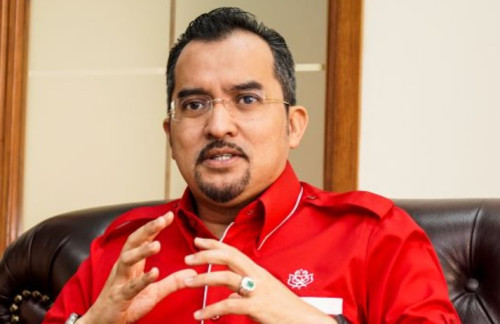
Economy Minister Akmal Nasrullah Mohd Nasir said the country had an estimated RM1.2 trillion to RM1.3 trillion in energy transition investment opportunities by 2050, presenting an opportunity to build domestic capabilities and position Malaysian companies in regional and international markets.
He said the challenge was to ensure more of the value generated by these investments remained within the country, particularly through local participation in technology, engineering, manufacturing and supporting services.
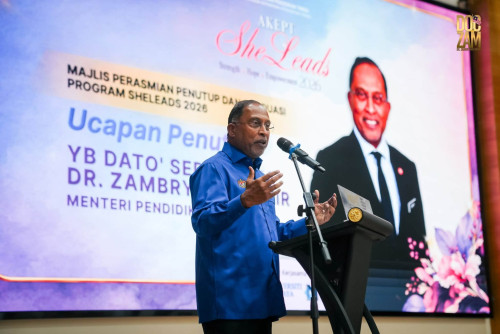
"The question is no longer only how many megawatts we can install. Beyond the megawatts we install, how much economic value do we create — and how much of that value can be developed, retained and eventually exported from Malaysia?" he said while delivering the ministerial keynote at the Clean Energy Transition Asia (CETA) 2026 conference.
Akmal said Malaysia needed to move beyond hosting energy projects towards developing the technologies, services and business models underpinning the transition.
He said the shift was essential to strengthening economic sovereignty, ensuring reliable and affordable energy supplies and turning current investments into sustainable industrial growth.
Malaysia's renewable energy installed capacity reached approximately 14,000 megawatts, or 32 per cent, as at August 2026, with the National Energy Transition Roadmap targeting a 70 per cent share by 2050.
Among the initiatives supporting this ambition is the sixth Large Scale Solar programme (LSS6), which offers 2,500 megawatts of solar capacity paired with 1,250 megawatts of battery energy storage, alongside another 150 megawatts reserved for Bumiputera companies in Peninsular Malaysia.
The Feed-in Tariff e-bidding programme also awarded 42 biogas, biomass and small hydropower projects worth approximately RM4.3 billion, generating an estimated RM617 million in demand for locally manufactured gas engines and boilers.
He identified electricity grid modernisation, rising demand from data centres and advanced manufacturing, natural gas and the expansion of oil and gas industry capabilities as key areas for domestic value creation.
Peak electricity demand in Peninsular Malaysia is projected to increase by approximately five per cent annually, from around 21 gigawatts in 2026 to more than 33 gigawatts by 2035.
Akmal added investments in energy-intensive industries should be evaluated based on infrastructure readiness, energy efficiency, local supplier participation, workforce development and wider economic benefits, rather than headline investment figures alone.
He also highlighted opportunities for oil and gas services and equipment companies to diversify into emerging energy sectors, including floating solar and carbon capture, utilisation and storage.
The inaugural Oil and Gas Services and Equipment Census recorded 2,894 establishments in 2023, generating RM79.2 billion in gross output and RM39.4 billion in value added, while employing more than 123,000 people.
He said the government's role was to provide clear policy direction, predictable regulations and coordinated infrastructure planning, while private investors contributed capital, expertise and innovation.
"The objective is to help position Malaysia not merely as a destination for energy projects, but as a source of energy solutions, industrial capabilities and services for the wider ASEAN market."
He said the ultimate ambition was to move from "Made in Malaysia" to "Made by Malaysia", with success measured by the economic value created and retained domestically. - November 5, 2026