
KUALA LUMPUR – The present phase of political fluidity could well be reflective of a more-than-decade-long process of political evolution. Since the watershed elections of 2008, the opposition winning the popular vote in 2013, and the defeat of the Barisan Nasional (BN) government in 2018, the Malaysian body politic appears to have arrived at a fine electoral equilibrium.
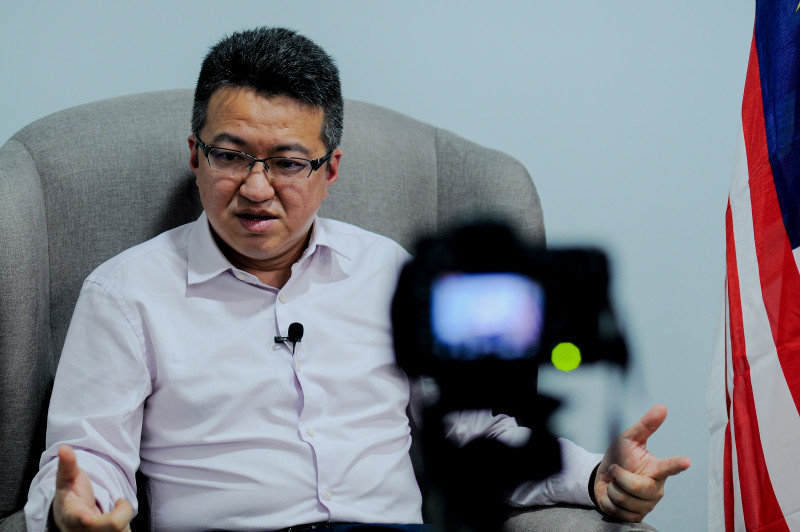
In a wide-ranging exclusive interview with The Vibes, conducted prior to the imposition of the emergency, former deputy defence minister and one of DAP’s principal strategists Senator Liew Chin Tong explained that: “Malaysia has been a 50-50 society since 2008. In 2008, the opposition received 47% of the votes; in 2013 the opposition won the popular vote by 51%, and in 2018 Pakatan (Harapan) received 48% of votes in a three-cornered fight situation.”
Contemplating the possibility of an imminent general election, especially if the present Perikatan Nasional (PN) coalition “implodes”, he nevertheless hopes there would be “people sensible enough to avoid going for a general election (during this) pandemic,” while conceding that all parties need to be prepared.
However, the eventuality of a snap election as a result of Malaysia’s political evolution over the past decade and more could result in a scenario not very different from the one the country confronts today.
“The 50-50 context in terms of votes has been there for a while,” said Liew, adding that in terms of seats, chances are “very high” that the outcome will be similar.
Reflecting on DAP, which was recently given permission to postpone its party election due to the pandemic, Liew addressed several criticisms that had been levelled against the party leadership recently, some even from within the party.
“There are some in the party who believe there should be a direct election of the secretary-general, though we have term limits for our secretary-general, unlike other parties. There are those who think the party should include more young people, even though the fact is we are, comparatively, very young as a party. There are those who think we don’t have enough Malay representation, which is in an issue we will have to deal with. We do need more Malay leaders.
“There are those who think that (Lim) Kit Siang and (Lim) Guan Eng have an overbearing influence on the party, yet it is also they who have put the most effort into leading the party. I hope that more people will spend time trying to understand the DAP and have a genuine discussion on how to change.”
Throughout the expansive interview Liew reflected on the performance of the Pakatan Harapan (PH) government, in particular the DAP. “It was difficult, it was a steep learning curve, we made mistakes, there are things we did well, there are things we didn’t do well; I think we will leave that for history to judge.”
Describing the Sheraton Move and Covid-19 pandemic as the two “catalysts” that have brought about the present political quagmire, Liew is nevertheless firm in his conviction that whatever the present political contestation, it is devising modes of political consensus that remains most imperative, as the former politics of domination yields to the political and electoral realities of today.
“What I am saying is that all of us will have to accept the fact that we will not be able to dominate or eliminate our opponent. We will have to learn to respect our opponents, and work with them within the coalition or a parliamentary framework,” he said.
The full interview of Liew Chin Tong by The Vibes will be published tomorrow. – The Vibes, February 6, 2021