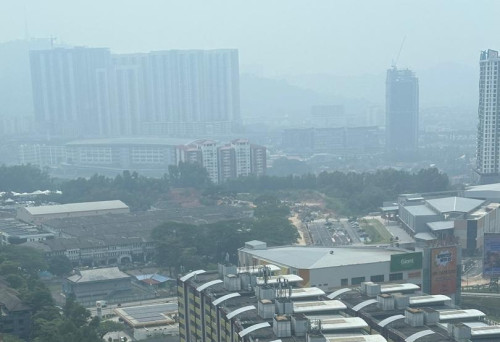

KOTA KINABALU – Sabah has long faced the problem of severe flooding, with the latest heavy rains in June badly affecting several parts of its west coast.
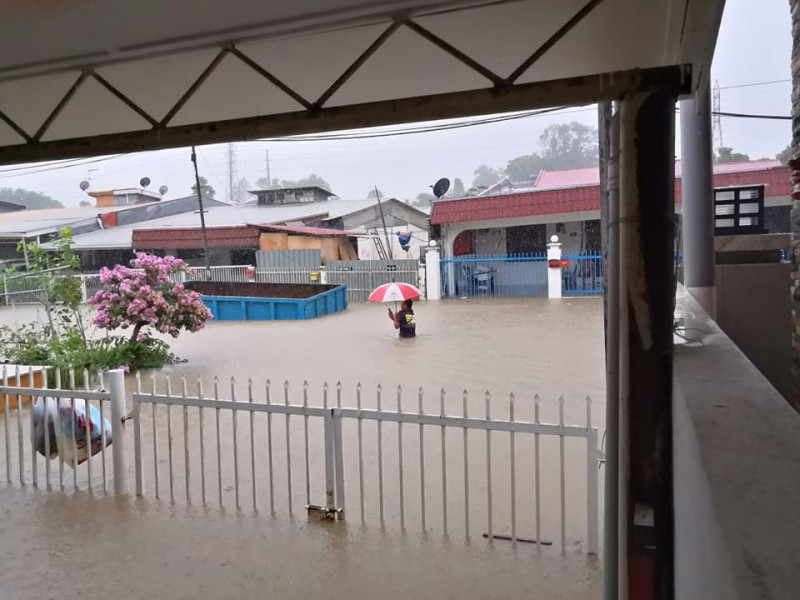
A resident of Kg Lingkodon, Kota Belud, who wanted to be identified only as Michael, said the floodwaters were around 1.8m deep in his village.
“The roads in and out of the village were also flooded. Flooding has been an issue here since 2012. In 2017 alone, there were close to 100 cases of flooding in Kota Belud.”
Michael said the situation was exacerbated by the closure of the nearby Sg Tempasuk, which caused Sg Abai to swell, affecting 15 villages.
The villagers have submitted a letter to the authorities asking for Sg Tempasuk to be reopened to reduce the occurrence of flooding in Kota Belud.
Sabah Chief Minister Datuk Seri Mohd Shafie Apdal in June called for the implementation of a flood-mitigation plan for Kota Belud to be sped up.
He said the federal government had allocated RM50 million to implement the plan, but the funds were used to carry out a feasibility study instead.
He said the study was unnecessary as the causes of the frequent flooding were already known, adding that several rivers in the district needed to be deepened and widened.
Also, drains in the district must be properly maintained to prevent clogging, to reduce the risk of floods.
In June, flooding also affected the Donggongon township in Penampang.
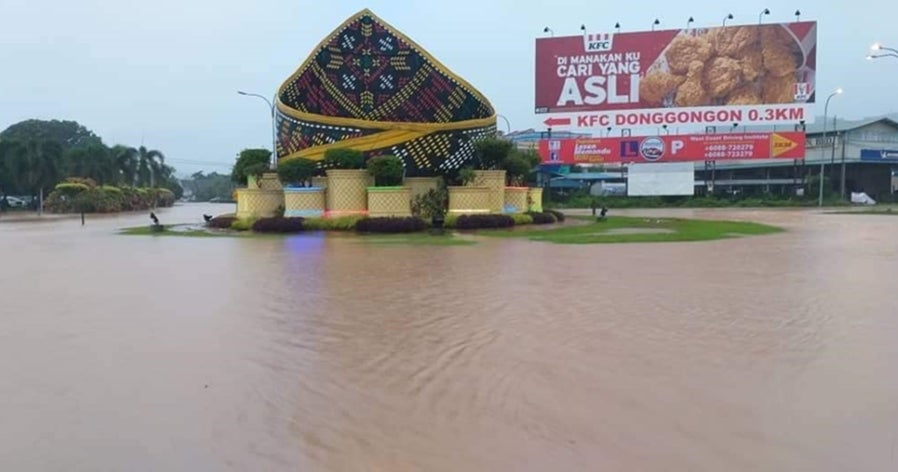
With floodwaters reaching up to 2m in some areas, many residents of nearby villages reported damage to their homes and belongings.
Pertubuhan Paradigma Wanita Sabah president Winis Juani Winis said in Kg Tuavon, the flooding problem has gotten worse over the years.
“This year alone, there have already been three flash floods in Kg Tuavon. Every time there are heavy rains, it floods. It is difficult for the people here because every time it occurs, our furniture and electrical items are damaged.”
In Penampang, flood-mitigation measures have been implemented since 2016, when the government approved an allocation of RM481 million for the purpose.
In a May 2018 meeting chaired by the district officer, the Drainage and Irrigation Department (DID) reported a number of issues that caused a delay in construction works, which are scheduled to be completed by 2021.
Among the issues were compensation, land acquisition and utilities transfer involving Sabah Electricity Sdn Bhd pillars and the Sabah Water Department pipeline, among others.
The DID also reported that carrying out work to widen and deepen the river in some areas of Putatan was not possible, as some villagers living along the river did not agree with the compensation offered.
The Agriculture and Food Industry Ministry has been requested to take immediate action to expedite the flood-mitigation development and resolve the issue of compensation.
In July, state Agriculture and Food Industries Minister Datuk Junz Wong placed blame on past federal governments, saying Sabah had received just slightly over RM400 million of a promised total of RM3 billion in the last 24 years to tackle floods in four districts.
He said the flood-mitigation plans for Penampang, Kota Kinabalu, Sepanggar and Putatan were proposed in the 7th Malaysia Plan (1996-2000), but only RM512.02 million was approved in the 11th Malaysia Plan (2016-2020).
He said of the RM512.02 million, a little over RM100 million came from the state government, and the rest from the federal government.
Wong said a slew of other problems had also contributed to the flooding issue, such as massive land clearing in Penampang, the presence of squatters in areas like Putatan, and climate change.
He urged the authorities to start enforcing laws to reclaim the land and clear illegal structures built near rivers, so that the DID can continue with the flood-mitigation projects.
The Penampang District Environmental Action Committee has identified several issues, including uncontrolled hill cutting and a lack of evaluation reports from the Environment Department.
The overlying hills are not able to absorb rain quickly, causing excess water to flow into Sg Moyog, resulting in soil deposition and the river becoming shallow.
In a social media post, local political activist Zainal Ajamain said the encroachment on water catchment areas in the upper Moyog areas of Penampang by farmers planting cash crops led to the land there being unable to absorb rainwater.
He recommended that all such agricultural activities be stopped and trees replanted to resolve the problem.
In 2017, former Moyog assemblyman Terrence Siambun said local authorities had failed time and again to effectively deal with the issue.
He had said the then Barisan Nasional-led authorities could not continue blaming heavy rainfall or high tides. – The Vibes, September 19, 2020