
KUALA LUMPUR – Not too long ago, the Umno general assembly at the Putra World Trade Centre (PWTC) would see an ocean of people as tens of thousands of party members, delegates, supporters and merchants attend the meet to debate, exhibit their spirited loyalty for the party or simply make some extra dough.
It used to always have a festive atmosphere, with the party’s flag Sang Saka Bangsa being lined and dotted along roads leading to the party headquarters. Nearby streets, as well as malls and hotels, would be full of Umno grassroots from all corners of Malaysia.
It was indeed an extremely colourful annual festival in the political calendar of the country.
Hotels near PWTC would be fully booked, while the roads around it would be jam-packed as buses filled with supporters and followers drop off their charges and later return to pick them up.
The halls of PWTC would also be filled to the brim with stalls, food trucks and traders trying to make a killing in the five days of the annual meeting.
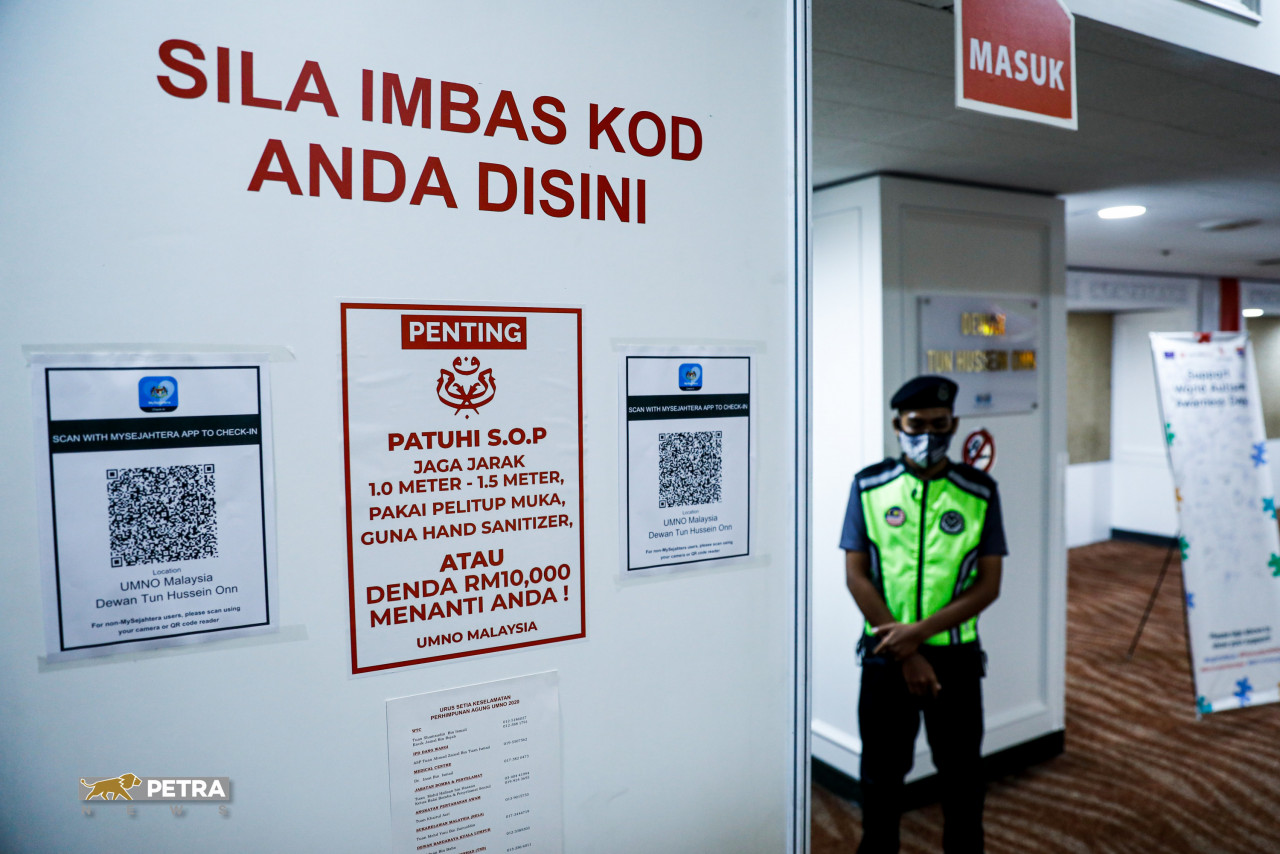
However, due to the Covid-19 pandemic and the National Security Council’s standard operating procedures to curb the virus from spreading further, Umno’s two-day powwow this year is the quietest one in its recent history.
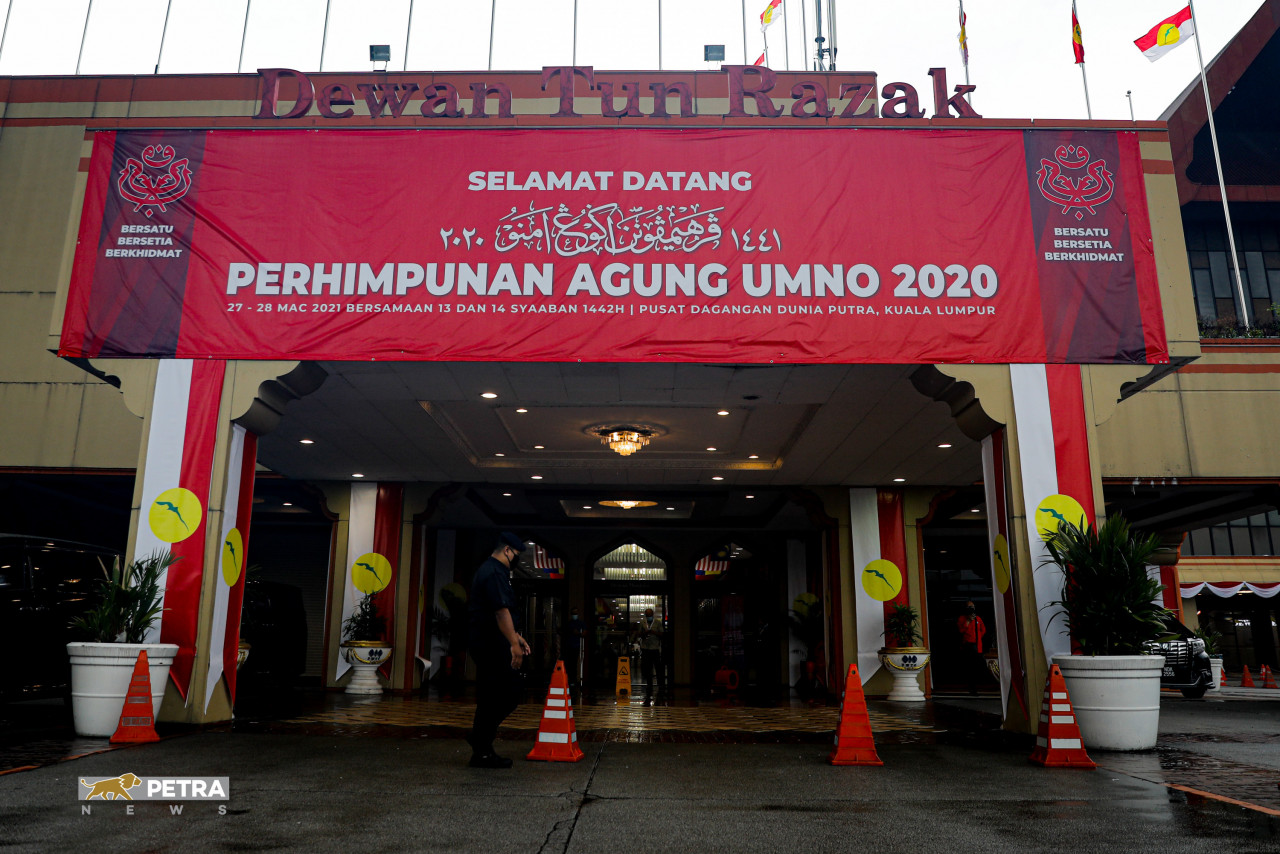
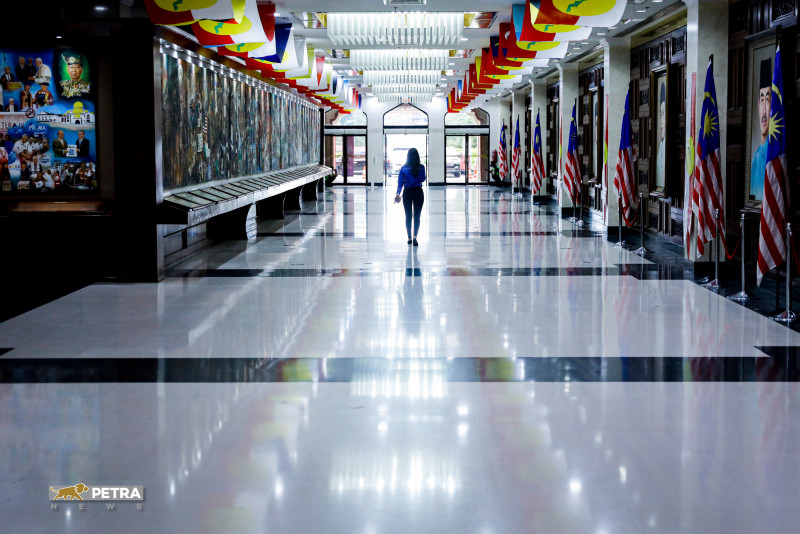
The almost grim and forlorn atmosphere at the assembly, which began yesterday, is reflective of the ominous and grave deliberations this time over the future of the party.
It is certainly a most critical juncture in Umno’s history – having been defeated in the last general election and now at odds with Bersatu, which leads the current Perikatan Nasional (PN) alliance that Umno is tentatively supporting to remain in government.
Coupled with that is the battered national economy that has cast a blanket of gloom beyond PWTC and across the whole country.
Mirroring these issues that are dogging leaders and delegates is the situation at the assembly venue.
Gone are the stalls, the traders and the food trucks.
And, unlike in yesteryears, the streets are quiet. And the usual atmosphere of celebration – which could rival even the party’s Hari Raya festivities – has been replaced with a more serious and sombre air as Umno decides its future in the PN coalition.
Sad loss of income for traders
Speaking to The Vibes on the sidelines of the sessions yesterday, Umno Youth’s Hulu Selangor delegate Mohd Syaril Rahim said he found it sad that the usual gaiety and pageantry have been reduced to nearly nothing.
However, he said that this is a sacrifice the party must make to ensure Covid-19 is not spread further among the population, and it is critical that there must not be an “Umno cluster”.
“The delegates and I are sad. It’s not as ‘happening’ as before and we cannot bring our friends along to attend this conference like in previous years,” said Syaril. “But what can we do? This is our responsibility as Malaysians.”
“Umno thinks of the greater emergency. The government has said that during the MCO (movement control order), there must be limitations, and we are adhering to this limitation.
“But we can still look at this situation positively. With technology nowadays, we can use webinars as a communication tool,” he said.
Youth executive council member Wan Muhammad Azri Wan Deris said he is saddened by the new normal, with traders not being allowed to market their wares.
“Usually, a lot of people here can make money. Those who have traded here in PWTC during PAU know that this is an occasion for them to make immense profit. But this time, as you can see, there’s not a single merchant here.

“So, I believe they must be disappointed because every time PAU is hosted, they’ve already booked their place.
“During this time of Covid-19 (when their income has been adversely affected), many were hoping to make some money at our assembly, but were left disappointed,” said Wan Azri.
Sharing his own experience, he said he had traded in PWTC in 2009, where he made a killing in only five days.
He added that the tens of thousands of people who used to attend the gathering created an extremely lucrative market.
“Businessmen who trade here get to make a ridiculous amount of profit. In the tens of thousands – or even hundreds of thousands – depending on what they sell.
“There were songket sellers who make thousands per item, people who sold glasses at RM10, also making thousands, and others who sold textiles, again, they made money. Basically, there was a market for everything and profit could be easily made.” – The Vibes, March 28, 2021