
KOTA KINABALU – A group of 58 Malaysian Muslims have urged the federal government to address the “Allah” issue with empathy, justice and wisdom to avoid unintended consequences.
In a statement, the group, who said they symbolised 58 years of Malaysia’s independence, said the anxiety of Muslims in Peninsular Malaysia over the use of the word is caused by a cultural shock due to the unique historical experiences and not because of theological differences between Islam and Christianity.
“(Peninsular Malaysia) is unique amongst Muslim countries because Muslims use Bahasa Melayu while Christians – except for the orang Asli – traditionally used English, Chinese and Tamil.
Because different languages were used, Muslims and Christians did not use the same word to refer to God, they said.
“In Arabic countries and Indonesia, both Muslims and Christians use the same language which.
“Hence they pray to ‘Allah’ in mosques and churches respectively, without anxiety or suspicion.”
They said the historical experience of Sabah and Sarawak more closely resembles that of Indonesia than the peninsula.
“Bahasa Melayu had already become the lingua franca for native groups like Iban, Bidayuh, Orang Ulu, Melanau, Kadazandusun and Murut even before the arrival of Christianity.
“Hence naturally the Bornean Christian natives use Bahasa Melayu in churches and pray to ‘Allah’ and until today use religious texts including hymn books from Indonesia.
“When churches in (Peninsular Malaysia) offered increasingly more services and masses in Bahasa Melayu in 1980s, this had caused suspicion that it was an evil plot to cause Muslim apostasy.
“Going beyond the use of the word ‘Allah’, the apprehension is on the emergence of a common language for different religious communities.
“At its core, the formation of Malaysia has caused two socio-linguistic developments: migration of Sabahans and Sarawakians to (Peninsular Malaysia), and the revived popularity of Bahasa Melayu in Sabah and Sarawak.”
The group said the migration of Sabahans and Sarawakians to Peninsular Malaysia for education and employment became more noticeable in the 1980s because of the country’s rapid but imbalanced development.
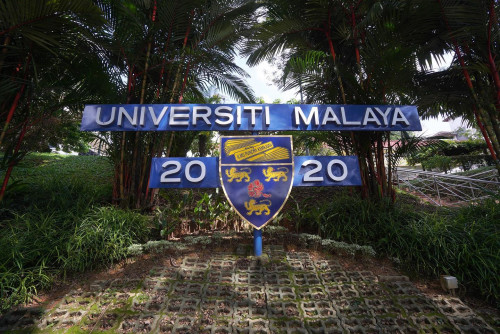
“Before the establishment of Universiti Malaysia Sarawak in 1992 and Universiti Malaysia Sabah in 1994, the main campuses of all public universities were in (Peninsular Malaysia).
“This cultural shock would not have happened if (Peninsular Malaysia), Sabah and Sarawak were not in one country, or the country’s development had been more balanced that many (Peninsular Malaysian Muslims) got to visit Sabah and Sarawak that they would see no issue with Christians praying to ‘Allah’.
“This cultural shock also may not have happened if the National Language Policy had not been so successful in reviving Bahasa Melayu’s status, resulting in its replacement of English’s position in the colonial time as the lingua franca in Malaysian Borneo.
“Jill Ireland, the applicant in this ‘Allah’ case, is a Melanau Christian who was ‘schooled in the National Education System using Bahasa Melayu as the medium of instruction’”.
“Had she been educated in English, she would be praying to God and this case would not have taken place.”
The group said the polemic over the word ‘Allah’ must be resolved without weakening the territorial integrity of Malaysia and the position of Bahasa Melayu as the national language.
“Different religious communities sharing a common language is a development found in many nation-states that we should accept with calm and confidence.
“With more Sabahans and Sarawakians continuously migrating to (Peninsular Malaysia), banning Borneo Christians from praying to ‘Allah’ – even just in (Peninsular Malaysia) a la ‘one country two systems’ – may weaken the sense of ownership Sabahans and Sarawakians have for Malaysia or prompt demands for Bahasa Melayu to be replaced by English as the medium of instruction in schools.
The group said meanwhile, the cultural shock faced by Malaysian Muslims in the peninsula must be addressed with empathy.
“More Bahasa Melayu publications in comparative religion that are respectful to religious differences must be encouraged so that both Muslims and Christians are clear about the differences between their faiths even though both pray to the same ‘Allah’.
“As a comparison, while Nabi Isa/Jesus Christ is revered in both faiths, this has not caused confusion because the theological differences are very clear.”
The 58 members of the group are; Abdul Latif Abdullah, Ahmad Ghazali Abu Hassan, Anas Zubedy, Azril Annuar, Datin Paduka Marina Mahathir, Social activist and writer, Datuk Noor Farida Mohd Ariffin, Datuk Amin Satem, Datuk Azim Zabidi, Datuk Azzat Kamalludin, Datuk Freida Pilus, Dr. Azad Razack, Prof Azmil Tayeb, Dr. Fadzilah Abdul Majid, Mohd Faizal Musa, Mustafa K. Anuar, Dr. Razif Ali, Sharifah Munirah Alatas, Dr. Taufiq Thiagi, Dr. Wan Abdul Manan Wan Muda, Dr. Yasmin Ooi, Dr. Yuwana Podin, Prof Datuk Dr Hj Shad Saleem Faruqi, Prof Johan Saravanamuttu, Faridah bt Mohd Fuad Stephens, Fatimah Merican, Feisal Kamil, Hj Amdee Sidik, Ikhram Merican, Jahabar Sadiq, Johan Arriffin Samad, Kamaruddin Abdullah, Malek Ali, Masjaliza Hamzah, Mohamed bin Halim, Mohamed Tawfik bin Tun Dr Ismail, Mohsin Abdullah, Munawir Mohd Mokhtar, Nina Halim Rasip, Noraini Othman, Norhayati Kaprawi, Nur Qyira Yusri, Nuraain Amirah Yee Abdullah, Prof Mohamed Tajuddin Mohamed Rasdi, Prof Zaharom Nain, Rahim Sulaiman, Razali Wong Phui Nam, Rily Soon Teik Ooi, Roslan Mohd Jannes, Rozan bin Abdullah, Rozana Isa, Sarajun Hoda Abdul Hassan, Siraj Razack, Siti Kasim, Tan Sri Datuk Mohd. Munir bin Abdul Majid, Wan Royhana Ibrahim, Zainah Anwar, Zila Fawzi. – The Vibes, April 3, 2021