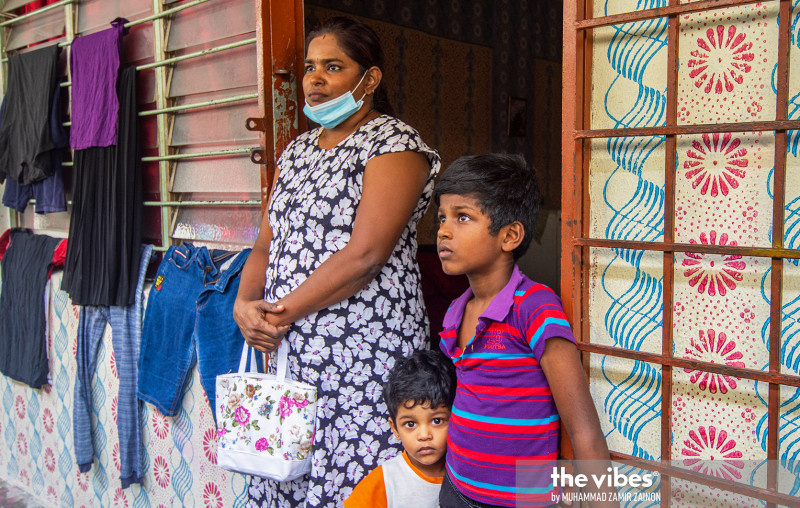

KUALA LUMPUR – One in four Indian youth in the country remains unemployed despite numerous plans to empower them over the years, according to a report drafted by a voluntary committee looking out for the community’s interests.
The committee’s research also revealed that Indian women face work-related discrimination, including earning 25% less than men.
The failure of the past and present administrations to act decisively on schemes dedicated to empowering Indians has prompted a group of concerned citizens to draw up an alternative action plan for the 12th Malaysia Plan (12MP), covering the period from 2021 to 2025.
Based on their findings, the group – comprising 37 professionals, community leaders, academics, retired civil servants, field experts and civil society organisations – submitted their proposal, titled “12th Malaysia Plan: Indians Towards & Beyond 2025”, to the Economic Planning Unit (EPU) recently.
“We want to assist EPU in identifying areas of concern for the Indian community in the country, with some suggestions and delivery mechanisms to be incorporated in the upcoming 12MP,” committee chairman Arun Dorasamy told The Vibes.
“The Indian community, especially those in the M40 and B40 groups, as well as women and youth, is notably the most vulnerable group that needs immediate attention and support, without which, they will be unable to catch up with the rest of Malaysian society.
“Failure to address these issues with intervening programmes, detailed planning and initiatives will eventually affect unity, economic progress, political stability, Malaysia’s image, shared prosperity and national security.”
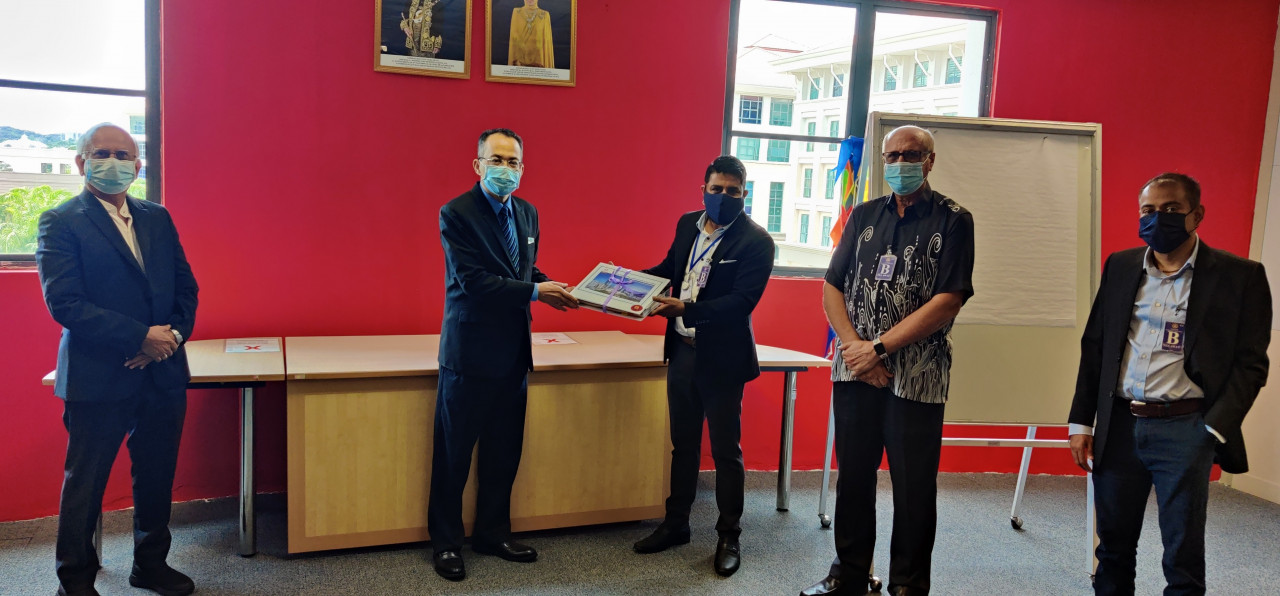
Arun, accompanied by proposal adviser Assoc Prof Chandran Govindaraju, and veteran community leaders Datuk Bhupatrai M. Premji and Datuk Pardip Kumar Kukreja, handed over the proposal to EPU equity development director Abdul Halim Ahmad following a briefing on April 1.
While the Malaysian Indian Blueprint (MIB) launched in 2017 during the Barisan Nasional administration was a good proposal, its effectiveness was called into question due to systemic failures, political meddling, the lack of a proper delivery system, and non-reactive monitoring mechanisms, said Arun.
“The tragedy is that the Pakatan Harapan government suspended MIB, despite having the opportunity to execute it, or make improvements to it prior to execution.
“Hence, under 11MP (2016-2020), the Indian community missed out on the opportunity to benefit from it, as it was not included.”
Along with its proposal, which includes statistics and other research data, the committee has also listed eight pillars of transformation for EPU’s consideration for inclusion in 12MP.
The pillars are human capital development and education; social restructuring; corporate participation and asset creation; entrepreneurship and economic empowerment; delivery and monitoring systems; digital economy, Industrial Revolution 4.0 and accessibility; capacity building; and, cost-of-living and institutional reforms.
The first pillar – in view of the worrying statistics on school dropouts among Indians – features a proposal for 15 of the country’s 69 fully residential schools to accommodate 100 Indian students each.
Alcohol rehab centre needed
One of the committee’s ideas that stand out is for the government to set up a “Malaysia Alcohol Research and Rehabilitation Centre” in a bid to control the consumption of booze in the country, especially among Indian youth.
"Alcohol is also the single biggest problem that leads to education, health, mental and financial problems, as well as crime and gangsterism,” said Arun.
“Therefore, among our recommendations is to introduce a national ban on public drinking spaces, as well as restricting alcohol sales to only liquor shops with controlled business hours.”
The committee will soon submit its proposal directly to National Unity Minister Datuk Halimah Mohamed Sadique.
It is understood that the Perikatan Nasional government is mulling “MIB 2.0”, believed to be an improved, more comprehensive plan than the one introduced in 2017, in an attempt to boost its Indian support.
However, MIC vice-president Datuk C. Sivarraajh has reportedly called on Putrajaya to resume MIB, which PH had put on the back-burner after its 2018 general election win.
The blueprint, a brainchild of then prime minister Datuk Seri Najib Razak, highlights 36 issues and solutions aimed at improving the Indian community’s social status and welfare.
It received a seed funding of RM500 million from Permodalan Nasional Bhd, and was parked under the Socio-Economic Development of the Indian Community Unit before the agency was rebranded by PH as the Malaysian Indian Transformation Unit. – The Vibes, April 19, 2021














.jpeg)