
KUALA LUMPUR – Despite the hue and cry about women’s participation in politics, Universiti Malaya’s political science lecturer Nur Atika Hairi said parties remain comfortable falling back on patriarchy.
She said some Malaysians still have the view that men are more suited to leadership positions.
This, she added, is apparent in political parties where men hold key leadership positions and make executive decisions.
“Political parties and certain NGOs are still very dependent on having male-dominated hierarchies because they feel ‘safe’.
“In all honesty, that sort of mindset should be put to rest as women today are just as capable. A clear example? We have several female organisations that fight for women’s rights in Malaysia,” she told The Vibes.
These patriarchal ideas do not stem from outdated cultural norms, as Nur Atika pointed to political misuse of religion to stifle women’s progress in politics.
PAS, she said, was called out prior to the 2013 general election for saying women should never become leaders.
Right until 2012, it (PAS) was hesitant in paving the way for women candidates, but now it appears to be in support because it needs to survive.”
She added that all parties, in a sudden twist, are talking about increasing the participation of women and bridging the gender gap.
However, whether this sudden change in political behaviour is a genuine effort or merely a personal agenda remains to be seen.
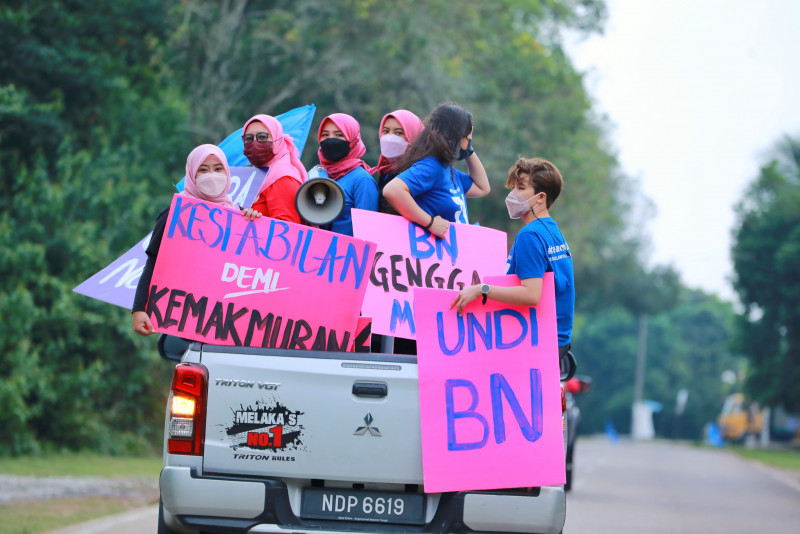
Women comprise 51.43% of the electorate in Melaka, according to Election Commission statistics, hence the argument that the participation of women should mirror the reality on the ground.
However, Nur Atika said, although political parties shocked the nation by fielding a larger than usual number of female candidates – 11 more than the last general election – this will not make any difference if there are insufficient women in office.
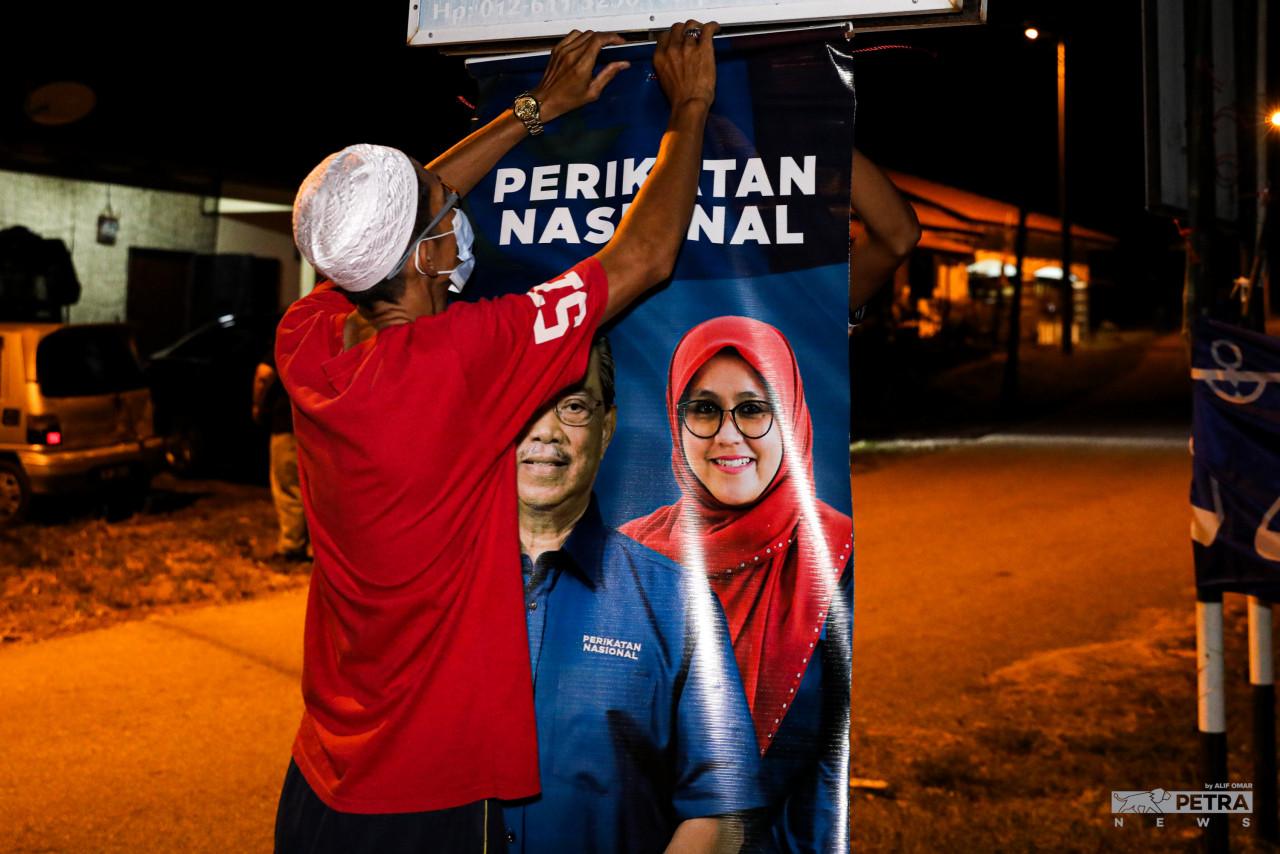
“Even though the number of women candidates have increased, the target of 30% has not been achieved.”
Despite that, Nur Atika is looking forward to tomorrow’s polls to see if the female candidates can make headlines.
“We have 21-year-old Farzana (Hayani Mohd Nasir) representing Pakatan Harapan (PH) and Datuk Kalsom (Nordin) from Barisan Nasional (BN) who is 68 years old – the oldest candidate running in this election.”
Apart from the duo, Gerakan’s candidate Karen Fong Khai Ling (Kota Laksamana) landed herself in the soup with a double whammy.
First, a poster of her straddling a chair believed to be used for campaigning was seen as untimely for Malaysians, and an old video showing her teaching Malaysians how to enter Israel had resurfaced on social media.
Then there is BN’s candidate Leong Hui Ying (Kesidang), who was shamed following the circulation of a video of her struggling to answer questions from the media, drawing speculation the candidate is not fluent in the national language.
This was followed later by a video from Leong who clarified the matter and assured voters she is fluent in Malay.
When asked if it is high time for Malaysia to see a female chief minister, Nur Atika said: “Anything is possible as Malaysia is a nation that matures through each election.” – The Vibes, November 19, 2021