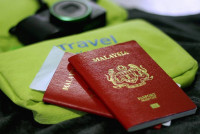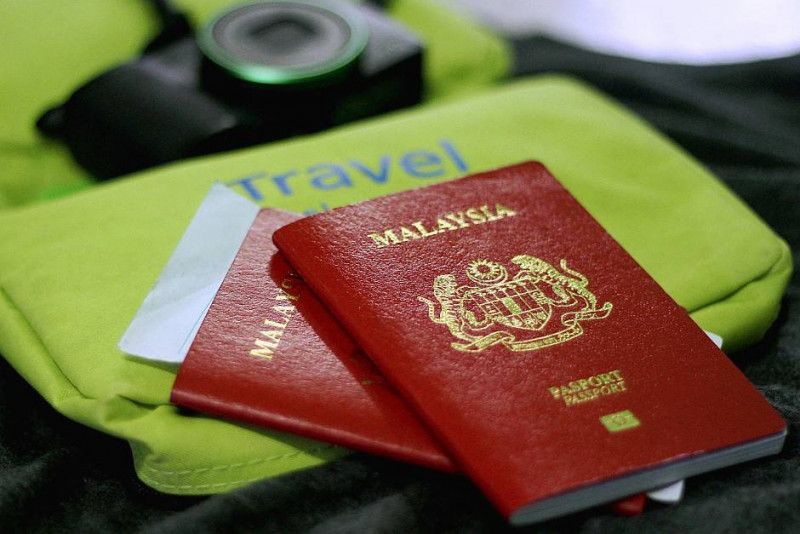
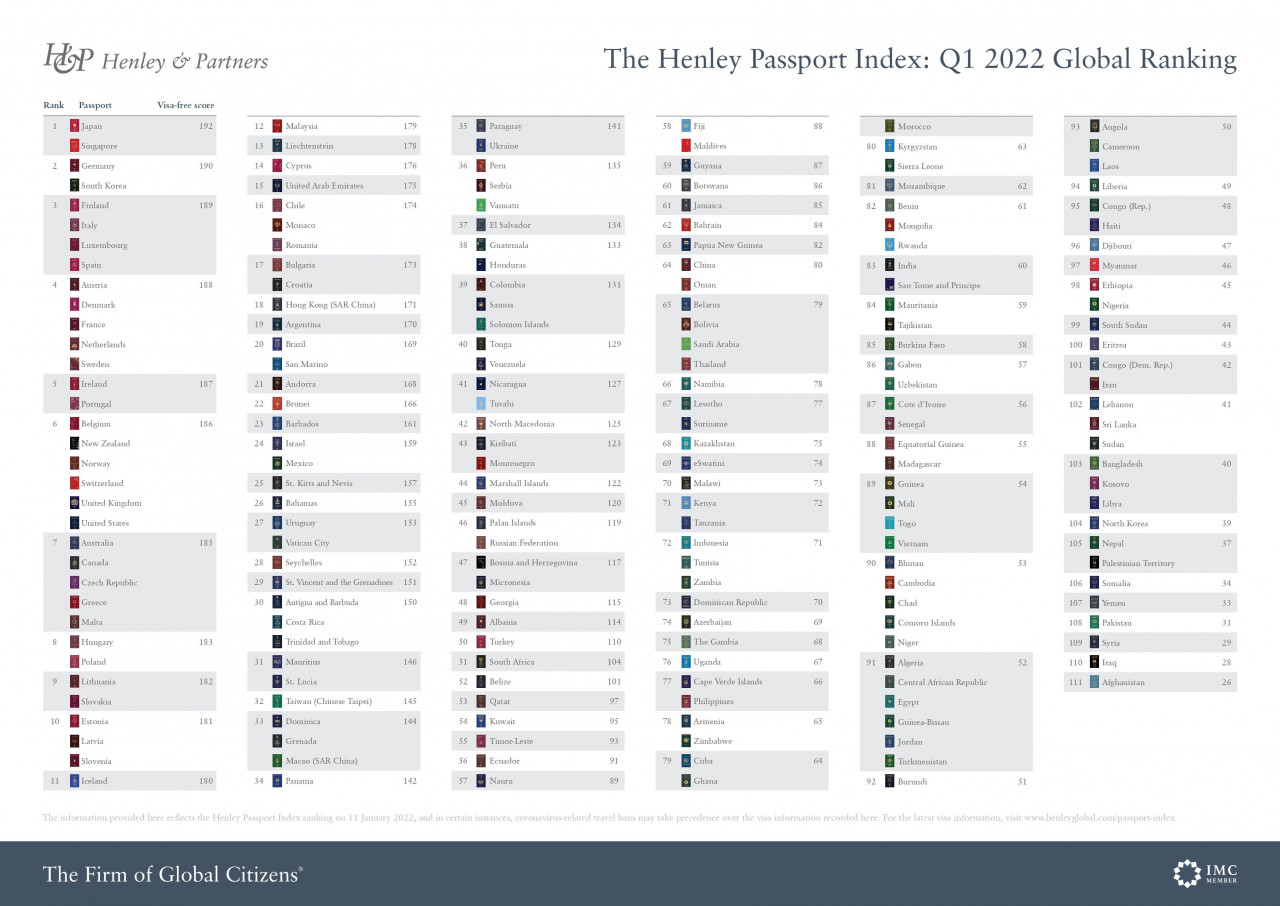
KUALA LUMPUR – The Malaysian passport is ranked 12th in the Henley Passport Index, behind joint leaders Japan and Singapore.
Malaysia garnered 179 in the visa-free score, which means passport holders can enter 179 destinations around the world without applying for a visa, while Japan and Singapore scored 192.
However, Afghanistan sits at the bottom of the index, given only 26 for its visa-free score.
Released on Tuesday, the index ranks all the world’s passports according to the number of destinations their holders can access without a prior visa and is based on exclusive data from the International Air Transport Association.
Germany and South Korea hold onto joint second spot on the latest ranking, with passport holders able to access 190 destinations visa-free, while Finland, Italy, Luxembourg, and Spain share third place, with a score of 189.
The United States and the United Kingdom passports have regained some of their previous strength after falling all the way to eighth place in 2020 – the lowest spot held by either country in the index’s 17-year history. Both countries now sit in sixth, with a visa-free/visa-on-arrival score of 186.
The index’s scoring system was developed to give users a practical overview of their passport’s power. Each passport is scored on the total number of destinations that the holder can access visa-free.
For each travel destination, if no visa is required, then a score of 1 is allocated for that passport. This also applies if passport holders can obtain a visa on arrival, a visitor’s permit, or an electronic travel authority upon entry.
Where a visa is required, or where a passport holder must apply for a government-approved electronic visa before departure, a score of 0 is assigned. The same applies if they need pre-departure approval for a visa on arrival.
Meanwhile, it is found that wealthier countries’ gains in travel freedom have come at the expense of poorer countries, which have experienced mounting barriers to entry in recent years.
Using 17 years’ worth of data from the Henley Passport Index, political scientists Ugur Altundal and Omer Zarpli compared visa-free scores with World Bank statistics on gross domestic product and fragility, as well as with data collected by the Varieties of Democracy (V-Dem) project at the University of Gothenburg.
The study shows that while citizens of upper middle- and high-income countries have achieved visa-free access to most nations, citizens of lower middle- and low-income countries, as well as ones with higher fragility scores, enjoy far less travel freedom because they are deemed to be high-risk when it comes to security, asylum, and overstay.
However, they found that while the world’s democracies on average have higher visa-free scores, both democratic and authoritarian regimes have increased their visa-free scores since 2006, at somewhat similar rates. – The Vibes, January 13, 2022