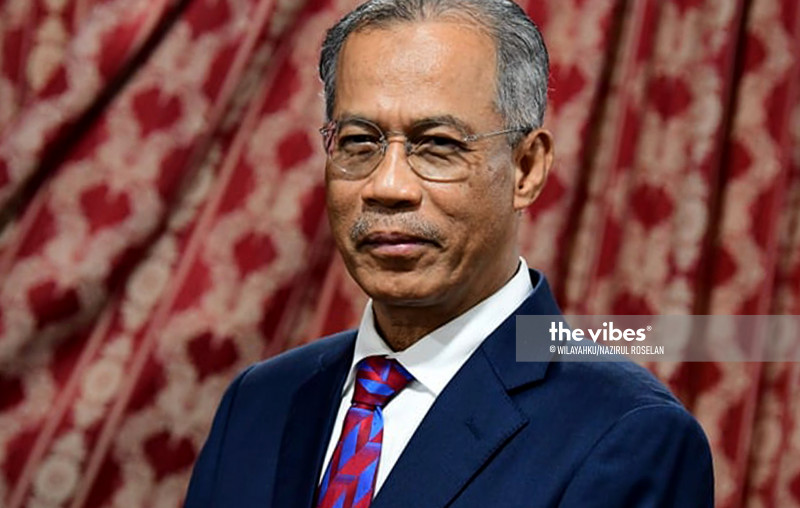
KUALA LUMPUR – With the country going into an endemic phase on April 1, residents and businesses in Kuala Lumpur have trained their attention on the administration of mayor Datuk Seri Mahadi Che Ngah.
Mahadi’s efforts in ameliorating the well-being of ratepayers while being acknowledged, is also subject to suggestions of improvement from his advocates.
For some, he can be described as an efficient leader with great vision and policies, but for others, despite certain policies introduced to help traders ride the pandemic storm, City Hall (DBKL) ought to place greater emphasis to further assist businesses.
While succeeding in some parts in achieving his primary goals to address flash floods, traffic congestion and governance issues, his greatest challenge has always been steering the city into post-Covid-19 recovery.
Making KL a greener, more liveable city
Speaking to The Vibes, Malaysian Institute of Road Safety Research (Miros) former board member Shahrim Tamrin recalled how Mahadi had shared plans to turn KL into a sustainable transport city that is friendly to people.
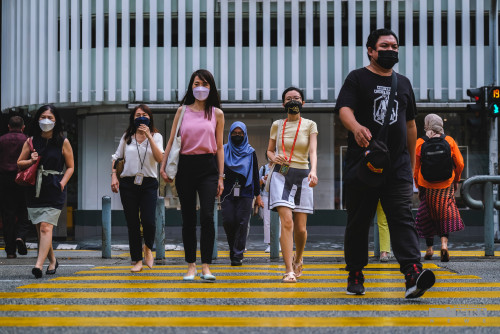
Among his proposals were to gazette certain locations like Jalan Tuanku Abdul Rahman as pedestrian-only zones, expanding bicycle lanes and reducing vehicle lanes, lowering the speed limit to 30km/h in certain areas, and introducing congestion charges for private vehicles.
“Mahadi wants to turn KL into a city like Seoul and Singapore by making more space for people and less for private vehicles.
These are all great proposals. Take the lowering of speed limit, for example, it will make roads safer and concurrently reduce carbon emissions.
“He also wanted to close off certain roads to private vehicles.”
Shahrim credited much of Mahadi’s vision to his background as a town planner. The mayor has a degree and master in the same field, started his career in DBKL in 1983 as a town planner and held the position of Executive Director (Planning) prior to his retirement in 2019.
He was however pulled back out of retirement for a two-year tenure effective October 1, 2020 – meaning he has just over six months to complete his goals.
A knack for transparency, hands-on approach
Veritas Architects founding director David M. Hashim said Mahadi’s background as a professional planner, something not shared by many of his predecessors, meant he is always directly involved in the technical details of urban planning policy decisions and building regulations.
“I have personally witnessed the mayor interact with developers and property owners on many occasions. He is always polite, helpful and makes great effort to explain why urban design regulations and constraints are in place.
“Whenever possible and appropriate, he has convened official meetings with other members of DBKL to consider proposals being made to DBKL. And he has been very supportive of promoting the CSR efforts of businesses, especially in response to pandemic-related needs of the underprivileged.
He is very interested in the topic of smart cities and how Kuala Lumpur can evolve to become more ‘user-friendly’ by adopting digital technologies. We have discussed smart solutions such as remote energy sensing to track/reduce ‘urban heat-island’ effects.
“He is encouraging building owners to install smart energy systems for their buildings. He also has plans for the creation of a digital model of the city, so that future urban planning can be more systematic and better managed.
“I don’t think there has ever been a mayor more passionate about the ‘greening’ of the city, and this will certainly make KL more liveable and attractive to tourists.”
Hashim also commended Mahadi’s commitment to transparency in dealings with business players, which have helped dismantle the culture of seeking special exemptions or appeals for preferable development considerations.

Sacha and Tan Architects Sdn Bhd principal Soon Tan echoed Hashim’s sentiment that Mahadi is a hands-on person often on the ground to monitor and inspect issues plaguing the capital city.
He also commended the mayor for accelerating the adoption of digitalisation in urban planning, including by installing cameras and sensors as part of a smart traffic system management to monitor traffic, crime and ensure safety.
DBKL has installed cameras with 24-hour artificial intelligence functionality for smart traffic system management, crime monitoring, community monitoring, and monitoring of DBKL assets via the Kuala Lumpur Command and Control Centre.
The mayor also appears to have taken a keen interest in addressing the present and future consequences of climate change to meet KL’s needs. This includes spearheading the incorporation of Sustainable Development Goals into the draft Kuala Lumpur Structure Plan 2040, the implementation of Low Carbon Society 2030 Blueprint and the Climate Action Plan 2050.
DBKL has also set up a 24-hour operations room to observe and manage the floods in KL. While admittedly flash floods will continue, proactive efforts such as this operations room are important to arrive at more sustainable solutions.
DBKL’s recent 1 Community 1 Recycle (1C1R) programme, which exchanges waste for basic necessities or rental payment deduction, has been seen as a measure to ease the burden of the B40 group while encouraging the practice of recycling and environmental conservation.
Of waivers and licences
For former DBKL senior adviser Datuk P. Gunaseelan, Mahadi’s vision is often hampered by other vested parties sometimes.
He said this has led to the general perception that some areas in the system needed urgent improvement, and which he said can be improved by retraining the workforce in every department.
On a brighter note, Gunaseelan noted that DBKL has introduced multiple initiatives to alleviate the burden faced by residents and businesses during the pandemic.
Among them are rental discounts on People’s Housing Project (PPR) and business premises and the introduction of the KL Prihatin temporary licence to allow those affected financially to start a small business without licensing fee, the latter of which is still in force.
The mayor also saw to it that businesses operating under an entertainment licence – which were barred from operating throughout the pandemic – are given the opportunity to apply for an additional operational licence to operate as restaurants and bars.
According to Bangsar Bar and Restaurant Owners Association spokesman Joshua Billique, this has helped many of the premises which were not allowed to operate previously to return to business, albeit under a different field of service.
“It is about being creative in the face of unprecedented challenges,” he opined.
What needs improvement
Billique said competing against traditional food and beverage industry players has proven it difficult.
For National Chamber of Commerce and Industry of Malaysia (NCCIM) treasurer-general Datuk AT Kumarajah, key among several suggestions is DBKL should allow for a moratorium period before cracking down on non-compliant businesses, to allow them to “settle in” with the various regulations and requirements.
Kumarajah also proposed that DBKL and other local councils should lift all remaining restrictions back to pre-pandemic level to ensure uniformity.
Malaysia Shopping Malls Association president Tan Sri Teo Chiang Kok similarly opined that all obstacles to fully reopening the economy should be removed immediately and suggested that the validity of licences to operate business be automatically extended for two years without fee.
“It is reasonable, as in most parts of 2020 and 2021, businesses were not allowed to open and thus, their licences can be considered ‘not utilised’.”
Malay Chamber of Commerce president Abdul Halim Hussin similarly urged DBKL to fast-track licence applications, especially of smaller entrepreneurs like roadside hawkers.
He also called on the City Hall to gazette more areas for hawkers to conduct business. – The Vibes, March 28, 2022