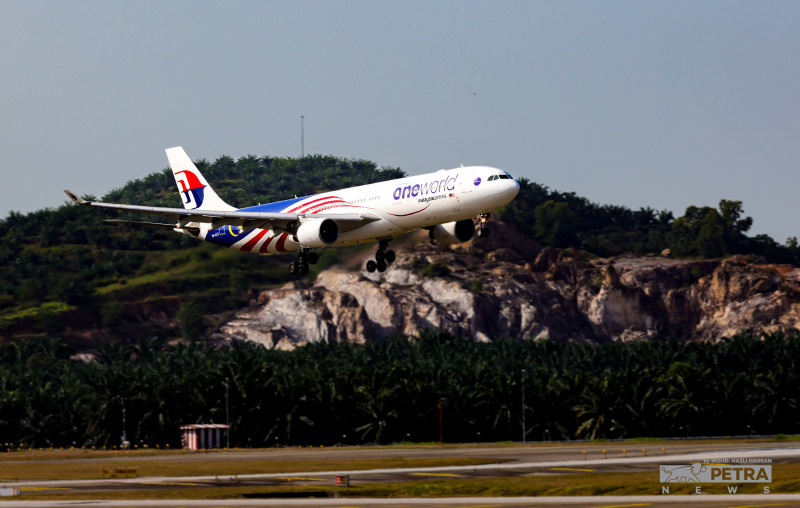
KUALA LUMPUR – Initial investigations by the Civil Aviation Authority of Malaysia (CAAM) identified a pitot-static system malfunction within the aircraft of flight MH2664 that resulted in the Tawau-bound flight returning to Kuala Lumpur International Airport last Sunday.
A statement by CAAM said their review of information extracted from the plane’s flight data recorder (FDR) and that of safety and engineering reports pointed towards a malfunction within the system responsible for measuring air pressure differences to determine precise speed and altitude.
“Based on initial reports extracted from the FDR, it was determined that a technical issue occurred during flight due to malfunction to the pitot-static systems,” read CAAM’s statement.
They said the malfunction caused inaccurate speed readings which then resulted in the aircraft deactivating its autopilot system and performing a “pitch-up”, rotating the nose of the plane upwards.
Last Sunday, Malaysian Airlines Bhd (MAB) confirmed that flight MH2664 from Kuala Lumpur to Tawau was forced to turn back due to bad weather and technical issues.
Passengers who later took to social media claimed the plane had dived from 31,000ft to 23,000ft within a few seconds, causing some onboard to start screaming and crying in fear.
CAAM today lauded the pilot’s quick actions to first attempt to regain control of the aircraft, saying it was a crucial step to ensure the plane remains under the control of the navigating pilot while depending on other remaining indicators and instruments.
“During this manoeuvre, safety data showed an abrupt input from the pilot during attempts to regain control.
“However, these manoeuvres serrated in pitch and altitude changes that correspond with the pilot’s report and passengers’ experience on board,” said CAAM, adding bad weather compounded the effects of the manoeuvres that created discomfort within the cabin.
The authority noted the actions of the flight crew were sufficient despite the abnormality of what happened.
Recommendations to MAB
CAAM included several proposals for the local airline company to enforce in the wake of the incident, including a complete inspection covering all disciplines of pitot-static systems on the airlines’ entire fleet of Boeing B737-800 aircrafts.
It also recommended for the airline to enhance its upset prevention and recovery training programme to emphasise on initial reaction time taken to respond to incidents.
“This will be mandated by CAAM to all commercial aircraft operators,” it wrote.
They called for MAB to issue an enhanced safety memo mandating the need for improved initial actions, reactions, and reinforce compliance to the abnormal recovery checklist.
CAAM also suggested the airline review analysis of the incident from aircraft manufacturers Boeing, troubleshoot the root causes of the incident, and put in place enhanced corrective actions.
The authority said MAB should correspond with them on reliability reports that focus on similar faults reported by other recorded data from the B737-800 fleet.
CAAM said that the plane involved in last week’s incident has since been grounded pending a technical analysis from manufacturer Boeing. — The Vibes, April 10, 2022.