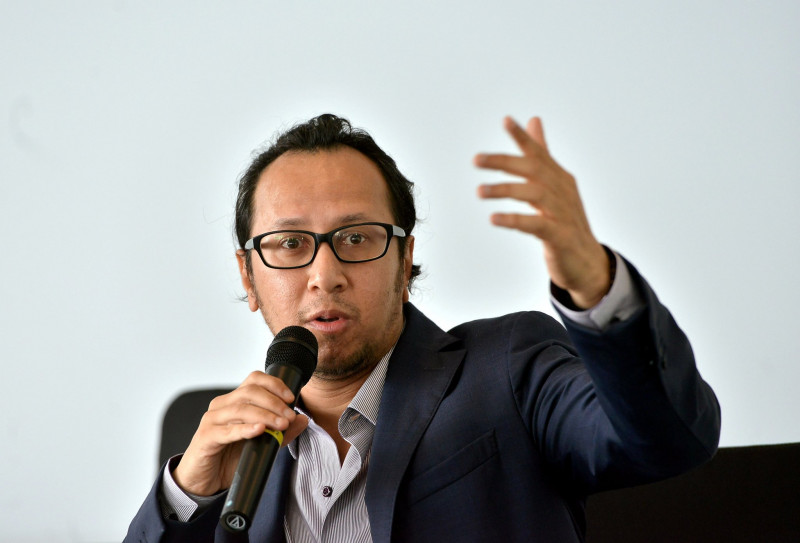

GEORGE TOWN – Putrajaya has lost an opportunity to have a people-centric Budget 2021 as the current model inadequately addresses the nation’s health and economic crises, said Muhammed Abdul Khalid, a former economic adviser to ex-prime minister Tun Dr Mahathir Mohamad.
The Penang-born Muhammed, who now runs his own consulting firm, said the Budget was prepared by inexperienced hands.
“After combing through the Budget, I found that the allocation for the Health Ministry is just a 4% increase compared with this year’s allotment.”
He said reports have surfaced that the allocation for some treatments has been drastically reduced.
“Although Finance Minister Tengku Zafrul Tengku Abdul Aziz has clarified matters, his explanation is unclear and incomplete. The ministry needs to be transparent and itemise allocations for specific healthcare services.”
‘Simply inadequate’
Given the financial impact of the Covid-19 pandemic, said Muhammed, the aid for the worst-hit Malaysians is “simply inadequate”.
“I find the Budget confusing and limited. Why provide a RM500 bonus for each civil servant? It is better to accord help to workers who have been pushed to withdraw from their Employees Provident Fund (EPF).”
He said only half of EPF contributors can afford to withdraw a total of RM6,000 over 12 months, meaning that this measure does not alleviate the burden of the bottom 40% of households.
He said EPF savings are meant as retirement funds, and workers have no business making early withdrawals.
“A substantial number of workers are not contributing to EPF, especially those in the gig economy. Also, what will happen to the Mak Cik Kiahs, the micro-entrepreneurs; where is the aid for them?
“The last time this group received aid, it was the special grant of RM3,000 for each eligible micro-SME. That was several months ago.
“There are 2.4 million such workers in the country, and if the Finance Ministry grants more aid to them, it can lead to a robust business climate.”
Muhammed said the middle class is also affected by the downturn, and that this group should be entitled to an automatic loan moratorium, especially those living in houses with loans less than RM500,000.

‘No’ to Jasa
As for the RM85.5 million revival of the Special Affairs Department (Jasa), Muhammed urged the Finance Ministry to allocate funds to areas that can generate positive returns instead.
“Jasa is not a good example of constructive funding. Why fund a public department instead of underwriting the poor?”
In comparison, he said, only RM50 million is allocated for the maintenance and upgrading of tourism products, while just RM24 million is set aside for programmes related to mental health, violence and abuse prevention, and substance abuse.
Lost focus
“The Budget has lost focus. The crises we are facing are worse than the Asian financial crisis in 1998 and the US-led global recession in 2008,” said Muhammed.
“The world is forecasting a slow economy, as it looks like the pandemic will drag into the new year, but the present government continues to think otherwise – expecting that it can collect more income and corporate taxes like in 2019. This is almost impossible.”
He said the government should remember that economic growth is dependent on a steady domestic consumption rate and positive sentiment despite the uncertainty and polarisation.
He supports the call to extend the loan moratorium for businesses, saying companies should be allowed to make repayments over a longer period of time.
The government needs to understand that aid has to be channelled across the board because the virus crisis and economic decline have affected everyone, not just a few, he said.
Muhammed added that the assessment that growth can return by next year does not compute, because the pandemic is “not going to magically disappear by January 1”. – The Vibes, November 16, 2020