
KUALA LUMPUR – A seemingly innocuous internal political party “meeting” at the Sheraton Hotel in Petaling Jaya on February 23 sparked a political firestorm.
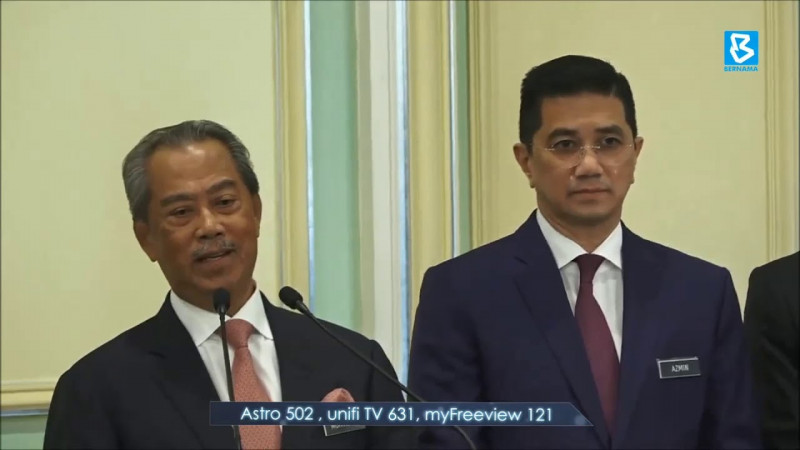
Datuk Seri Azmin Ali who was PKR deputy president at the time, and his band of 10 MPs led breakaway efforts to form a new partnership with former adversaries, BN, PAS and GPS, as Tan Sri Muhyiddin Yassin and other cohorts tried to convince Tun Dr Mahathir Mohamad to switch alliances.
When Mahathir did not budge, and resigned from his position as the nation’s seventh prime minister on February 24, what followed was political chicanery that left the nation without a leader, and the rakyat in the dark.
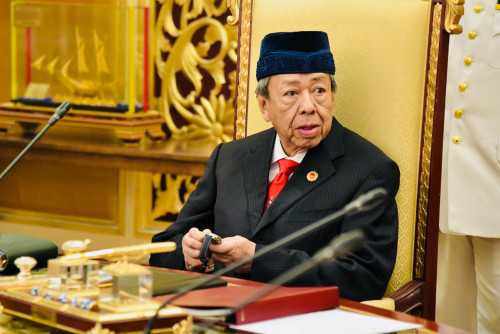
The Yang Dipertuan Agong Al-Sultan Abdullah Ri’ayatuddin Al-Mustafa Billah Shah then appointed Dr Mahathir as interim prime minister, as he sought to meet all the 222 MPs to determine their choice for the new candidate for prime minister.
This was in line with Article 43(2)(a) of the federal constitution which states that the Agong “first appoints as Prime Minister a member of the Dewan Rakyat who in his judgment is likely to command the confidence of the majority of the Dewan”.
An almost week-long political impasse came to an end on February 29, when the Agong appointed Muhyiddin as the country's eighth Prime Minister.
Malaysians were left in a daze as some national leaders they elected switched alliances, and toppled the 22-month-old Pakatan Harapan (PH) federal government.
Historically, party defections by a small number of politicians go as far back as 1961, and have easily caused governments to fall.
In the 1959 general election, the first after Malaya gained independence from the British, PAS, then known as the Pan Malayan Islamic Party came into power in Terengganu, after winning 13 state seats. BN, then known as the Alliance, won seven seats while Parti Negara won four seats.
Setiu assemblyman Mohd Daud Abdul Samad was elected the mentri besar. However, in October 1961, two PAS assemblymen and three Parti Negara reps defected to Umno. A motion of no-confidence was passed against the PAS government, and Tan Sri Ibrahim Fikri bin Mohammad of the Alliance was then elected the mentri besar of Terengganu.
In 1977, PAS, which was then part of BN, was engulfed in a power struggle when its president Tan Sri Asri Muda tried to oust then Kelantan mentri besar Datuk Mohammed Nasir, who was suspected to be backed by Umno.
Nasir did not resign and a motion of no confidence was passed in the state assembly. It was supported by 20 PAS votes after 13 Umno and one MCA assembly member walked out.
He called for the dissolution of the assembly, but it was rejected by the Kelantan royalty, leading to a legal impasse and ensuing violence and looting.
A state of emergency was declared in Kelantan on November 8, 1977 before it was lifted on February 12, 1978. State polls held in March 1978 were contested by PAS, Umno and Berjasa, a new party formed by Nasir.
Umno won 23 seats, Berjasa won 11 seats while PAS managed to win only two seats. Umno then formed the government in Kelantan for the first time with Tan Sri Mohamed Yaacob becoming the new MB.
Fast forward to 2009, the Perak state government went through a messy power tussle when three assemblymen (two from PKR, one from DAP) defected from their respective parties to become BN-friendly independents. Following many legal reviews, BN was recognised as having the majority to form the Perak state government.
Even this year, following the change of federal government, representatives from four state governments - Johor, Kedah, Melaka and Perak – switched allegiances from Pakatan to Perikatan following multiple party defections.
Political analyst Ahmad Atory Hussain described these party defections as worrying, but until there is legislation to regulate them, there will always be groups ever ready to "jump" and join another party that befits their agenda.
However, Ahmad Atory said there are differences between party defections of the past and the current ones.
“Back then, if you switched alliances and jumped parties, you were not going to be rewarded with positions, but you did it for the sake of preserving your principles. Now it seems that people are jumping parties for the sake of political survival and they are rewarded for it,” he told The Vibes.
He also said this trend does not bode well for Malaysian politics as the arena becomes a battleground for self-serving politicians who would switch allegiances for the sake of maintaining their political careers.
“It would take politically aware Malaysians to either vote them out, or some political will by parties to introduce legislation in Parliament that will regulate party defections so that they do not get away with it so easily,” he said.
Meanwhile, Azmi Hassan, a political analyst with Universiti Teknologi Malaysia said a segment of political party members have ideas that are not in line with the majority of other members, and the one that proposes new ideas are considered anomalies and do not fit with the original party aspirations.
“They are being outcast and labelled as rebellious and when this happens it is going to be very difficult for them to be with the party. So the usual case is that the easy way out is to quit or be kicked out of the party,” he told The Vibes.
He also said for this group to join another political party is quite difficult since there is stigma that they are trouble makers.
“So the usual case is that a new political party is established,” he said. - The Vibes, September 18, 2020


.jpg)