THE prospect of PAS and Barisan Nasional (BN) finding common ground again may appear to be a significant political realignment, but behind the possibility of cooperation lies a more complicated question: can two parties that once broke apart rebuild the trust needed to survive another political marriage?
For PAS and Umno, this is not the first time they have attempted to stand on the same side.
Their previous partnership under Muafakat Nasional in 2019 was hailed as a major turning point in Malay politics, bringing together two traditional rivals with the aim of consolidating Malay support and challenging Pakatan Harapan (PH), which had just formed the federal government after the historic 2018 election.
But the alliance quickly unravelled.
PAS eventually moved closer to Bersatu and became a key force within Perikatan Nasional (PN), leaving Umno to navigate its own political survival after losing federal power.
That decision remains a significant part of the baggage surrounding any potential PAS-BN cooperation today.
The question now is not merely whether the two parties can work together again, but whether they can trust each other enough to avoid repeating the same mistakes.
Political observers say the biggest challenge facing any PAS-BN arrangement would be convincing their respective grassroots that this is more than just another political calculation.
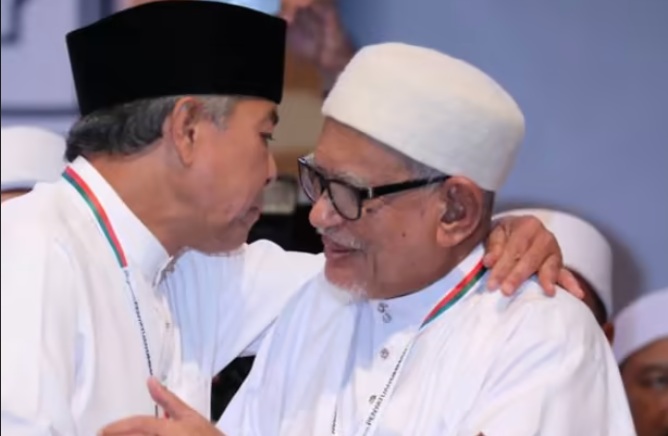
For Umno, PAS’s departure from Muafakat Nasional remains a painful reminder that political alliances can collapse when interests change.
The party must now consider whether it is willing to work with a partner that previously chose a different path when the political landscape shifted.
For PAS, the challenge is equally complicated. After years of strengthening PN alongside Bersatu, the party must justify why returning to cooperation with Umno would offer greater political advantage than maintaining its current alliance.
The issue of trust could become the biggest obstacle.
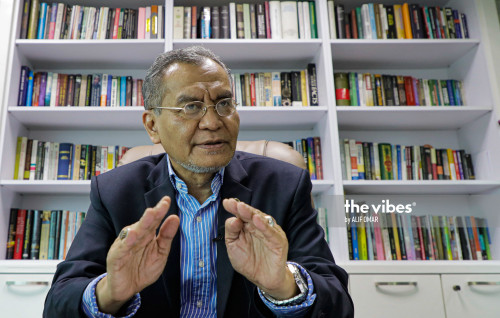
“Why would BN choose to work with PN unless they have done their analysis and discovered that working with PN might be more advantageous than working with PH?” political analyst Dr Syaza Shukri said.
She suggested that political movements are often driven by calculations of survival and advantage, adding that alliances can change when parties believe a different arrangement offers better prospects.
The possibility of PAS and BN working together also raises questions about the future of PN, particularly Bersatu’s position within the opposition bloc.
PAS has emerged as PN’s strongest electoral force, especially after the 2022 general election and subsequent state polls.
A renewed PAS-BN understanding could potentially weaken Bersatu’s influence and reshape the balance of power within Malay-based politics.
However, such a partnership also carries risks.
A PAS-BN cooperation could strengthen their combined machinery and reduce the fragmentation of Malay votes, but it could also deepen divisions within the wider political landscape.
For BN, especially Umno, the challenge would be maintaining its identity as a broader coalition while working with PAS, a party that has built its political appeal around a more conservative Malay-Muslim agenda.
The question is whether BN’s non-Malay component parties and voters would accept such a direction, or whether it would create further uncertainty about the coalition’s future.
For PAS, the danger lies in appearing opportunistic.
The party has spent years telling voters that PN represents the future of Malay politics.
A sudden shift back towards BN could invite questions over whether the move is based on principle or simply electoral necessity.
The collapse of Muafakat Nasional serves as a warning.
That alliance showed how quickly political rivals could become partners when circumstances demanded it.
But it also showed that cooperation built mainly around short-term political goals can fall apart when competing ambitions emerge.
If PAS and BN are serious about working together again, they will need more than public statements and leadership-level agreements.
They will need to convince their supporters that this time, the partnership is built on something stronger than convenience.
Because the biggest challenge is not bringing PAS and BN back to the same table.
The real challenge is ensuring neither party walks away from it again. – July 19, 2026