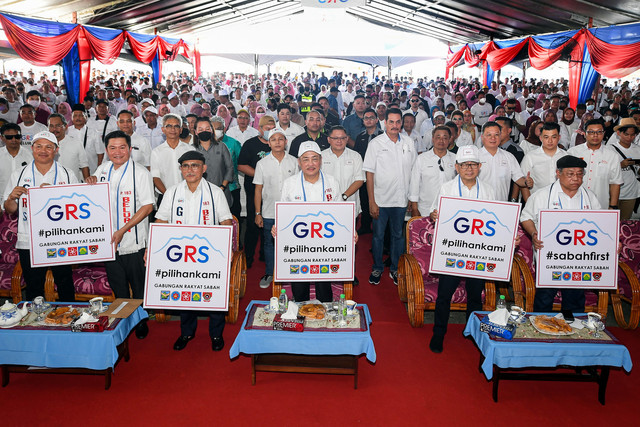

KOTA KINABALU – The once glittering prospect of a formal electoral pact between Gabungan Rakyat Sabah (GRS), which currently rules over the state, and Barisan Nasional (BN) is up in the air.
Will the parliamentary seats in Sabah that are eventually won by parties in the GRS coalition come under Perikatan Nasional (PN) – rival of BN – after the 15th general election (GE15) is over?
Or will the GRS lawmakers stand neutral and not align with any other coalition in the Dewan Rakyat – as Gabungan Parti Sarawak (GPS) which rules over the neighbouring Borneo state has done?
The already intricate situation may seem even more entangled.
Bersatu, SAPP and Sabah Star are not only members of GRS, but are also part of the PN coalition, which originated in Peninsular Malaysia.
However, if an electoral pact does materialise between GRS and BN, these parties would be working with BN in terms of seat-sharing and campaigning.
PBS is the only party in GRS that has no links with either BN or PN.
Also, unlike both BN and PN, GRS is a Sabah-registered entity, and it is registered as a political party – although it operates as a coalition.
Thus, GRS has its own objectives and political goals.
In a bind with Perikatan
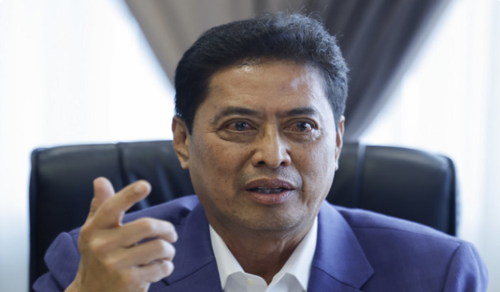
Interestingly, Sabah BN leader Datuk Seri Abdul Rahman Dahlan recently shot down Tan Sri Muhyiddin Yassin’s assertion that seats won by Bersatu belong to PN, saying such an arrangement would not happen.
Muhyiddin is chairman of PN and also president of Bersatu.
Rahman said this is because there is a pact that GRS would work with BN, and the agreement would be set in stone after GE15.
The Umno Supreme Council member said BN has been consistent about rejecting any form of cooperation should GRS’ seats be categorised as Bersatu’s or PN’s, as declared by Muhyiddin.
In fact, if PN loses significantly in the peninsula, GRS will want to negotiate for better deals with other quarters.
Warisan leader Datuk Azis Jamman, too, has questioned how things will work out now that the anti-party hopping law is being enforced.
Anyone who doesn’t follow his party’s orders will be expelled. Subsequently, by-elections will be forced to be held,” said Azis, adding that Sabah politicians from peninsula-based parties like Umno and Bersatu would not dare to defy their respective presidents.
The anti-party hopping law that bars MPs from switching political parties has come into effect on October 5.
But the Constitution (Amendment) (No. 3) Act 2022 that relates to anti-party hopping only applies to lawmakers, not parties.
Azis believes that a problem will arise when the election is over, where the Bersatu-led GRS would be forced to make a choice between being friendly with BN or remaining supportive of PN.
BN and PN, whose respective linchpins are Umno and Bersatu, are rivals in the peninsula, along with Pakatan Harapan (PH) the federal opposition coalition.
But in Sabah, GRS leader Datuk Seri Hajiji Mohd Noor and Sabah BN chief Datuk Seri Bung Moktar Radin have separately announced that they will form an electoral pact.
However, they have yet to formalise the pact and seat-sharing formula.
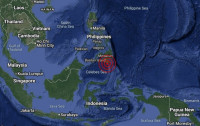
Sabah has 25 seats out of the 222 in the Dewan Rakyat.
The parties will also vie for the Labuan seat on the island, which was formerly part of the state but is now a federal territory.

Voters’ takes on choices, options
A Keningau voter, who goes by the name of James H., believes the GRS-BN pact will lead to a road where leaders from GRS would be forced to make a choice of either keeping support for BN or inclining towards PN.
The 44-year-old electrical engineer said GRS will go for the coalition that will likely have an advantage in winning the election.
“I don’t think they can work together. I don’t know how they (Hajiji and Bung) would be able to conclude that they would be able to work together.
Looking at the current political trends, I think they (GRS) might have to swing to Barisan Nasional,” said James, adding that the country will likely have an Umno prime minister next.
Business development manager Gary Michael said that GRS without its links with PN could emulate Gabungan Parti Sarawak (GPS).
“It is better for GRS to establish a Borneo bloc now with GPS,” said the 44-year-old.
“If GRS and BN continue with their pact, then nothing will change.”
GPS in Sarawak is seen to have political autonomy, as the coalition’s political stand is perceived as not being unduly influenced by the peninsula parties.
Retired worker David William from Tuaran predicts GRS will have no choice but to swing their support to BN, as he believes PN will not win big in the peninsula.
“I don’t think that their (GRS-BN) cooperation will work,” he said.
It’s either both of them will sabotage one another by fielding independent candidates or GRS will have no choice but to pick BN once the election is over.
“I am sure Hajiji (GRS chairman) will take advantage of whichever peninsula coalitions will give Sabah a better deal.
“I think Bersatu will not make it big in the polls, so GRS will have to negotiate with BN,” he said.
Rommela Sebastian predicts there will be some sort of power struggle between the two once the polls are over and this is where GRS is largely seen as an unstable alliance.
He said Sabahans’ sentiments are largely towards local parties and Bersatu is not from Sabah.
“Although I think the GRS-BN pact will work, it is only after the election that we will see which coalition they will give their support to, especially in the case of GRS,” he said. – The Vibes, October 22, 2022