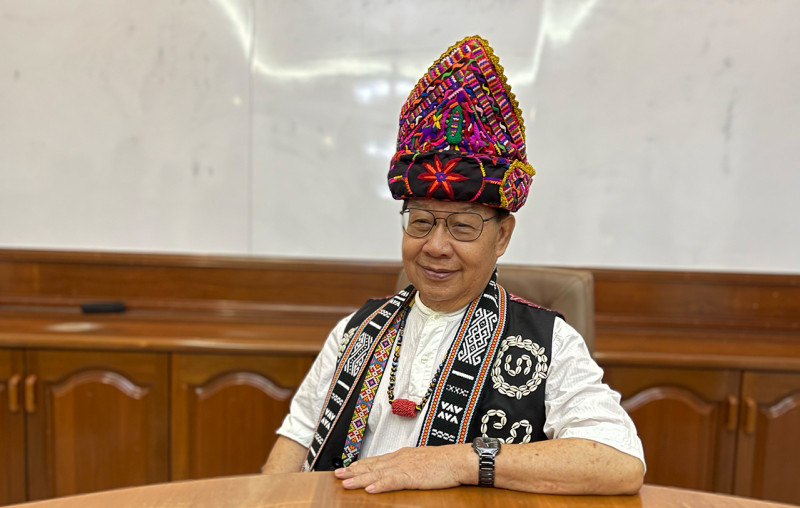
KOTA KINABALU – There can no longer be a “business as usual” approach in Sabah as the state hits a major turning point in 2023, said Deputy Chief Minister II Datuk Seri Jeffrey Kitingan.
He added that for Sabah’s economy to improve, state leaders and the people must be prepared to challenge the norm.
“The best of Sabah is yet to come,” he said in his New Year’s message yesterday.
Sabah, he said, has to do things out of the box seeing that other nations, including its neighbours, have started adopting new technologies to capitalise on their respective capabilities.
“Some of these changes will have an impact on us sooner or later, such as the moving of Indonesia’s capital to Kalimantan.
“And Sarawak is also moving aggressively to regain control of its resources. So, we can’t just be doing business as usual. We must do things out of the ordinary.”
Jeffrey, who is also state agriculture and fisheries minister, noted that for the last 59 years Sabah has been growing steadily at the rate of 3-7% annually.
But he is convinced that the state could achieve far better growth due to its vast natural resources and strategic location in the region.
“Sabah will continue with this trajectory, or probably worse, if it maintains its business-as-usual approach,” he warned, adding that such an approach, mindset, and habit will only blind the state to its full capacity for growth.
Sabah’s gross domestic product (GDP) per capita is among the lowest in Malaysia at US$6,000 (RM26,430) compared to the national average of US$12,000. Eight of the 10 poorest districts in the country are in Sabah.
But the state is rich in natural resources, such as oil and gas, timber, and oil palm, as well as being a tourist destination.
Jeffrey said part of Sabah’s misfortune has been caused by its lack of control over its natural resources, especially oil and gas – in which the state is the country’s biggest producer.
Another reason is the state’s financial dependence on the federal government for development, he added.
He reiterated that the failure of the federal government to honour its constitutional obligation to return 40% of net revenue derived from the state, 10% export duty on petroleum, and 10% import duty on petroleum products has reduced Sabah to becoming dependent on Putrajaya.
On the other hand, he said Sabah’s political leadership is partly to blame for its failure to fight for the state’s constitutional rights over the last 50 years.
“We still keep our hopes alive. We have yet to see the best of Sabah,” he said, as he called on all political leaders to stand united in fighting for the state.
“There can only be political unity if endless and needless politicking stops,” said the Sabah STAR president.
New policies and laws
Jeffrey urged the state leadership to focus on formulating new policies and laws to meet the requirements of modernisation, climate change challenges, and new technologies.
“There must also be a shift to the conservation of our natural resources and capital as well as our environment,” he said, adding that Sabah can gain more revenue from a conservation-based economic development model.
He said Sabah must also start adopting green and circular economic policy – embrace digital technology, artificial intelligence, and machine learning, besides employing the best people and creating global connectivity and partnerships.
“We should apply the BCI (brain-computer interface) approach in our decision-making, which is fact- and data-driven.”
He added that Sabah should also attract more private funding initiatives or foreign direct investments by capitalising on its natural assets without compromising the environment.
Jeffrey also proposed that the Sabah Maju Jaya development roadmap be revised to have quantifiable objectives and results.
He envisioned that one of the key game changers that Sabah can look forward to in the new year will be the implementation of the Nature Conservation Agreement.
“It must be implemented so through it we can raise up to RM4 to 8 billion in revenue annually in five years and attract foreign direct investments as well as private funding initiatives of up to US$12 billion.
“These policy initiatives will yield positive consequences to our GDP growth per capita. We will also be able to implement flood mitigation projects on our own, strengthen our food security, develop our rural areas, provide housing for the people, and improve our infrastructure.
“We will also be able to improve our power generation and transmission because this is so important for us to attract investors to our state.”
Jeffrey said the fulfilment of these resolutions will set Sabah’s own narrative for development in tune with the true aspirations of Sabahans while at the same time speaking the same language of global progress.
“If we don’t set our own narrative, others will dictate theirs to us.” – The Vibes, January 1, 2023