KUALA LUMPUR – Allegation by netizens on the social media that teachers “makan gaji buta” (getting a salary for doing nothing) following the implementation of the movement control order (MCO) and closing of schools has hurt teachers.
Apart from being accused of getting paid for not doing anything, there are also suggestions by netizens that the government use teachers as front-line workers, such as to man roadblocks.
Meanwhile, teachers – of which there about 420,000 of across the country – say they are indeed busy, with many facing challenges in carrying out their responsibility of educating through home teaching and learning (PdPDR) programmes.
A survey of 1,742 teachers from government and private primary and secondary schools by Universiti Kebangsaan Malaysia's (UKM) Faculty of Education last month found that 85% of teachers say they spend between one to four hours daily carrying out PdPDR activities, with the remaining 15% saying they spend more than four hours a day doing so.
On the teaching methods used, 37% say they conduct lessons online, offline (16%), online and offline (45%), while the rest are at community centres distributing and collecting notes, exercises and assignments to give to students.
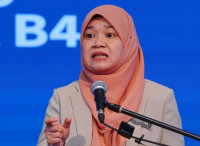
Associate Prof Dr Azlin Norhaini Mansor, who headed the survey, said the findings showed that a majority of the teachers are performing their tasks during the MCO according to the timetables given to them.
"There may be questions as to why a majority of the teachers conduct less than four hours of lessons a day. Based on the explanation given by the teachers, they say their task is not only to teach; they also have to do administrative work.
"These include checking students, assignments, providing teaching aids, recording attendance data and other tasks as instructed by their respective school principal or headmaster, as well as the District Education Office," she said.
The survey also had teachers share the challenges and constraints they faced in conducting PdPDR or home-based learning (HBL).
She said 80% of respondents said that their main challenge is ensuring students turn up for class, followed by helping students adapt to the teaching methods, their needs and readiness, and ensuring students can focus so that they understand and enjoy the lesson.
"Besides that, some 70 to 80% of them said they faced problems of internet stability, access to teaching devices, such as computers, telephones, tablets, student-learning spaces and parental support.
"Other challenges that threaten the credibility of teachers include distractions, such as Astro, Netflix, video games and others, that can be accessed at any time for free and are more exciting for school children, especially teenagers," she said, adding that a complete report on the survey is expected to be ready next month.
She said it is not appropriate to blame teachers as there are many things that need to be taken into account, including the mental and physical health of students confined to their homes due to the MCO, uncomfortable space and residence, family conflicts and other problems that could disrupt the students' learning.
Meanwhile, Universiti Pendidikan Sultan Idris (UPSI) vice-chancellor Prof Datuk Dr Mohammad Shatar Sabran said that the negative sentiments and accusations by netizens against teachers stems mainly from the fact that they do not understand the duties and responsibilities of teachers.
He said it is wrong to think that teachers are paid a salary based on their presence in classrooms, as there are many challenges and burdens shouldered by teachers, especially during the MCO, in ensuring students continue their learning at home.
These include preparing teaching notes, documents and so on, before teachers can start with their online or offline teaching and learning process, he said.
"Can we say the firefighters are getting their salary for not doing anything because they are not putting out any fires? Can we say the same of the police because they do not catch thieves or criminals?
"So, even though schools are closed, there are still classes and lectures; it does not mean teachers only eat and sleep. They still work as usual, especially to prepare notes, which they share with their students," he added. – Bernama, December 5, 2020