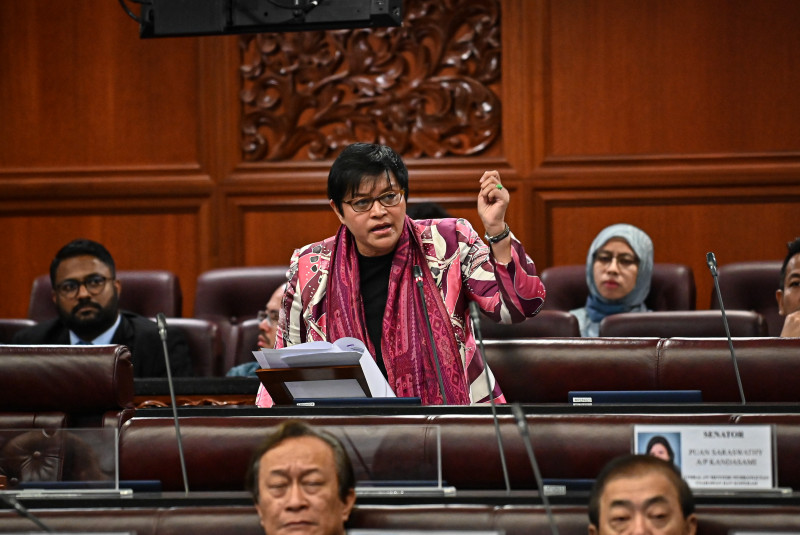
KUALA LUMPUR – The cabinet has agreed to several new policies related to abolishing the mandatory death penalty, said Minister in the Prime Minister’s Department (Law and Institutional Reform) Datuk Seri Azalina Othman Said.
She said the new policies, endorsed at a cabinet meeting last Friday, include replacing life imprisonment as an alternative to mandatory capital punishment with a jail term of between 30 and 40 years, and no fewer than 12 strokes of whipping.
“Apart from this, life imprisonment as a form of penalty has been fully abolished in all laws; the death sentence has been abolished for offences which do not result in deaths – except for three offences, namely under Sections 121 and 121A of the Penal Code and Section 39B of the Dangerous Drugs Act 1952.
The law minister added that another of these is a new bill to enable the Federal Court to review any death penalty or life imprisonment imposed.
“This proposed bill is expected to have an effect on 957 death-row and life-term prisoners who have completed their appeal process in court before this,” she told the Dewan Negara today.
Azalina was replying to a question from Senator Datuk Koh Nai Kwong on the status of a proposal to implement an alternative penalty to the mandatory death sentence for various offences.
She said the Madani government’s policy was not to abolish the death penalty but give judges sentencing discretion.
Azalina said the first reading of the Abolition of Mandatory Death Penalty Bill 2023 and Review of Death Penalty and Life Imprisonment (Temporary Jurisdiction of Federal Court) Bill 2023 will be next Monday (March 27).
“The Abolition of Mandatory Death Penalty Bill 2023 is expected to have an effect on 476 prisoners on death row who yet to complete the appeal process, whether at the Court of Appeal or Federal Court.
“This is because the alternative penalty to the mandatory death sentence will have a retrospective effect,” she added.
Azalina said the government had conducted 19 engagement sessions and meetings with interested parties like government agencies, lawyers, former chief justices, constitutional law experts, and death-row prisoners, as well as non-governmental organisations such as the Anti-Death Penalty Asia Network and the UK-based Reprieve.
“Legal amendments involving policies on punishment and substitute sentences to the mandatory death penalty are a positive change to make the country’s criminal justice system more holistic and inclusive, apart from not denying individuals their basic right to proper justice,” she said. – Bernama, March 23, 2023