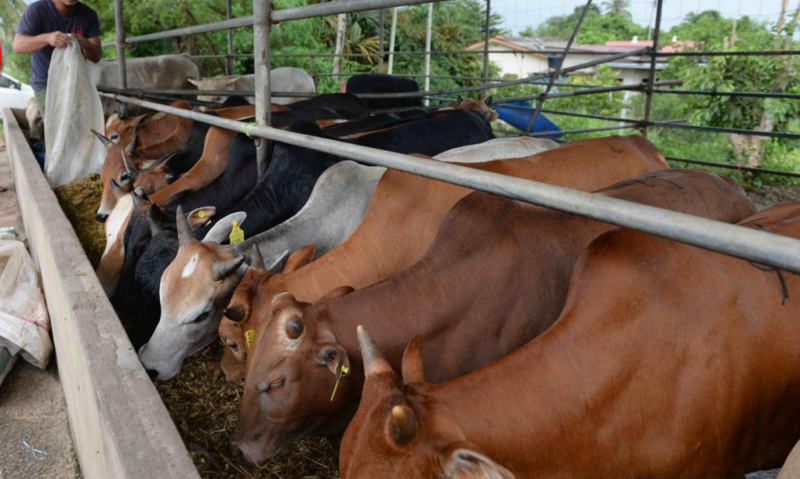
KUALA LUMPUR – Feedlot manager Muhammad Zubir Mohamed sighed heavily when a worker informed him of the death of yet another cow. It was 7am and he was getting ready to leave for his feedlot in Bangi, Selangor, when he received the bad news.
Over the past three months, the feedlot concerned has lost 20 head of beef cattle, ostensibly due to heat stress brought about by the hot weather Malaysia is currently experiencing. The cows were part of the cattle kept aside to meet the demand for the Hari Raya Aidiladha celebrations yesterday.
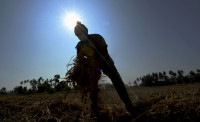
According to the Malaysian Meteorological Department, Malaysia is expected to experience the El Nino phenomenon, leading to warmer and drier weather until September this year.
“The current hot weather is impacting livestock farmers. At our feedlot, we lost 20 head of cattle over the last three months. Each of them weighed an estimated 180kg to 250kg and was valued at around RM4,300. Their deaths caused me to lose nearly RM100,000,” Zubir, 42, said when met at the 0.8ha feedlot, which he has been managing since 2004.
The father of six said the high temperatures have also affected the growth of the other livestock at his feedlot, resulting in them not attaining the desired weight and not being sold as scheduled.
His operations cost shot up after he was forced to extend his beef cattle’s growth period until they attained a minimum weight of 180kg each.
“When these animals become stressed due to the heat, they tend to lose their appetite, which affects their body weight. Local breeds usually take about two weeks to start gaining weight again, but the bigger-sized imported ones take up to a month to do so.
“The longer these animals stay here in the feedlot, the more we have to spend,” said Zubir, who is assisted by eight workers. The feedlot managed by him has 350 head of cattle, including 50 buffaloes.
Change in routine
He said he had to change his daily routine at the feedlot three months ago in order to adapt to the change in temperature, which sometimes soars up to 40 degrees Celsius.
Previously, he would bathe his livestock once a day in the morning, but now he bathes them twice a day. Their drinking water has also been increased by 40l to 45l a day – they now drink twice the amount they used to before the hot season set in.
“During the hot weather, the animals seem restless and aimless, causing them to become stressed and dehydrated. When we see them in this condition, we would bathe them twice a day as well as ensure their enclosures are kept clean, as dirt will expose them to various diseases,” he said, adding that imported breeds such as the Limousin bull from Australia require much more care.
“For such breeds, we need to install a garden net to reduce the incidence of heat stress.”
Increase in free radicals
Commenting on the effects of the hot weather on livestock, a senior lecturer at the Institute of Biological Sciences, Faculty of Science, Universiti Malaya, Norhidayah Mohd Taufek, said heat stress can endanger animal health and even cause death.
“In many species, a change in core body temperature of over two to three degrees Celsius can lead to lower performance and production as well as cause reproductive problems, thus limiting their capacity to produce meat, milk, or eggs. More alarmingly, a temperature increase in the range of five to seven degrees Celsius can often be fatal,” she explained.
She said beef cattle, which are usually darker in colour and have bigger body sizes and thicker hides, are more susceptible to the effects of global warming, which can cause a reduction in the ruminants’ body size, carcass weight, and fat layer.
Mohd Shahmi Hakimi Mazlishah, a research officer at Universiti Malaya’s Glami Lemi Biotechnology Research Centre, said heat stress can be detected in animals through their rapid breathing, high rectal temperature, and restless behaviour.
This condition, he said, can be attributed to the increase in free radicals in the bodies of the livestock, which can cause damage to their vital organs such as the liver, kidneys, and lungs.
He said in Malaysia, livestock operators commonly practice three types of farming techniques – intensive (where the animals are kept in enclosures all the time), semi-intensive and free range (in the case of small ruminants), and according to his observations, all three methods have been impacted by the El Nino phenomenon.
“Even those animals kept in enclosures are not exempt, more so if their cages don’t have enough ventilation and space to prevent them from experiencing heat stress,” he said.
Studies carried out by Shahmi and his fellow researchers found that heat stress led to a drastic decline in the reproductive performance of livestock, as exposure to extreme heat caused a drop in the quality and vitality of their sperm.
“If the sperm’s resilience is low, the fertilisation rate will be affected, and thus the female livestock will not be able to become pregnant. This will have a huge impact on the nation’s food security,” he added.
Food security still stable
Meanwhile, the Veterinary Services Department (DVS) said in an email reply to Bernama that Malaysia’s food security level is still stable as the local livestock industry has not experienced any drop in meat production due to global climate change or extreme temperature changes in Malaysia.
The department also noted that there has been no significant increase in meat imports and that meat supplied by the local livestock industry is “still under control”.
According to the department, this is because livestock industry players that come under the purview of the department have been given the training to adapt to the hot weather by raising breeds resistant to temperature changes, rearing the animals in sheltered enclosures, and providing them with adequate amounts of drinking water to prevent the occurrence of heat stress.
“By right, livestock farmers must prepare early for the drought season, as the hot season occurs almost every year. It is their duty to take reasonable steps to safeguard the welfare of their livestock, and this includes providing them with sufficient and appropriate feed,” it said.
According to the department, any livestock farmer found deliberately neglecting their animals and not taking reasonable measures to safeguard their welfare during extreme weather conditions can be fined not less than RM15,000 up to a maximum of RM75,000, jailed up to 20 years, or both.
The department said one of the measures livestock farmers can take to prevent heat stress from affecting their animals is to rear them in enclosures with controlled temperatures instead of allowing them to graze in the open.
“Although intensive farming is the best choice, the farmers must adhere to animal welfare standards, including ensuring the stock density in the enclosures complies with the required standards.
“This is to avoid the problem of overcrowding in the enclosures, which can cause the animals to become stressed and fight with each other,” it added.
The department has also activated its state Disaster Operations Room to monitor the El Nino situation and its effects on livestock. It has also stepped up its advisory services to farmers and is prepared to provide assistance to those affected by the El Nino phenomenon.
The department is also in the midst of developing new guidelines for livestock farmers in Malaysia to refer to in addressing the challenges posed by climate change. The guidelines currently in place mainly focus on good farming practices. – Bernama, June 30, 2023