KOTA KINABALU – It is time for consumers in Sabah to enjoy fairer prices for rice by allowing market forces to prevail over monopolistic control.
“I believe this change could stimulate competition and lead to more stable, and perhaps lower, rice prices,” Deputy Chief Minister Datuk Seri Jeffrey Kitingan said in a statement here today.
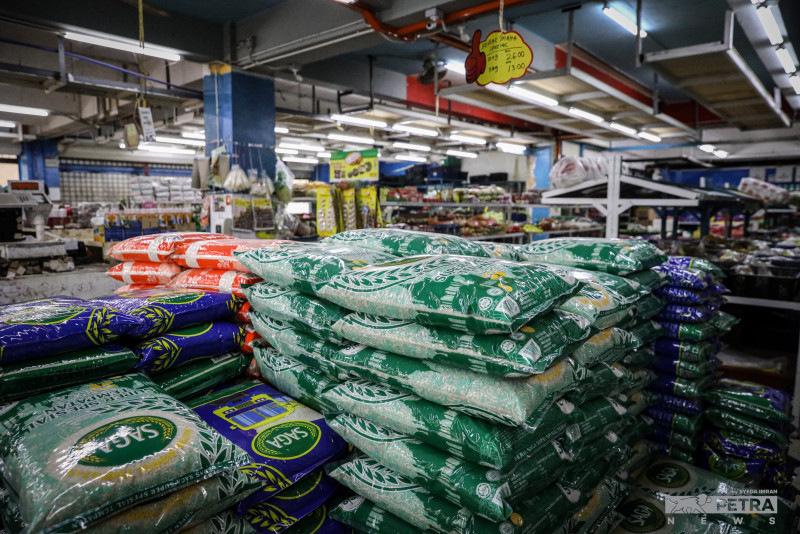
He made the call as concerns mount in households across Sabah over a 36% spike in the price of imported white rice announced recently by Padiberas Nasional.
Such a significant hike not only disrupts the stability of household budgets but also jeopardises the well-being of low-income families, said Jeffrey, who is also the state’s agriculture, fisheries and food industries minister.
Sabah requires “a tailored approach to the supply due to the unique geographical and social landscape.”
“The time has come to break free from the constraints of a single-entity monopoly that has long shaped our local market,” he said.
Jeffrey urged the national rice company to practise transparency in its pricing mechanisms and stock levels.
“The public deserves to know how prices are determined and what measures are being taken to stabilise the market,” he said.
Jeffrey said Bernas should also release their additional stocks from reserves. These are not just business assets.
“They are a public resource, especially in times of increased demand or market instability.”
Profit must not come at the expense of the people’s basic needs, as Bernas is dealing with an essential commodity, he said.
According to the Agriculture and Food Industry Ministry, Sabah imported 290,000 metric tonnes of rice, including reserves, in 2021 but produced only 22,000 metric tonnes locally.
Jeffrey revealed that his ministry has been working to reduce Sabah’s dependency on imported rice through various projects under the Sabah Maju Jaya (SMJ) initiative.
“Agriculture forms one of the three main pillars of the SMJ. We intend to increase Sabah’s self-sufficiency level for rice production to at least 60% by 2030,” he said.
This will be achieved through the Sabah Rice and Paddy Board that will assist farmers to increase paddy production.
Idle paddy fields will be rehabilitated and existing irrigation systems upgraded under this plan.
“These projects are expected to bring long-term benefits and protect Sabah from global rice price volatility.
“We’re not merely addressing the immediate crisis; we’re building a more resilient, self-sufficient Sabah,” he said. – The Vibes, September 6, 2023