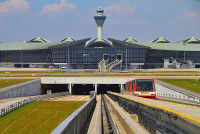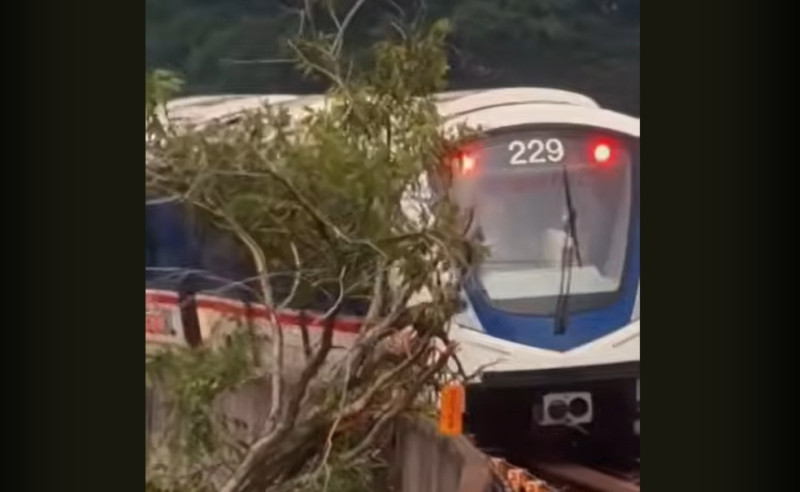

THE disruption on the Kelana Jaya Line didn’t come from a signalling fault or a power trip. It came from a tree.
A branch fell onto the tracks near Taman Paramount. Trains slowed. Services were delayed. Commuters—once again—were left waiting, adjusting, improvising their way to work.
It sounds minor. Almost trivial.
But it shouldn’t be.
Because this wasn’t some freak, once-in-a-decade incident. In Malaysia, where rain is heavy, and trees grow fast, this is exactly the kind of thing we should expect—and plan for.
There’s a tendency to shrug these incidents off as “one of those things.” Tropical country, unpredictable weather, what can you do?
Quite a lot, actually.
Rail systems don’t exist in a vacuum. The Kelana Jaya Line runs through neighbourhoods thick with roadside trees, many of them older than the line itself.
Add in regular storms, and it’s not hard to see the risk. A branch doesn’t have to be large to cause disruption. It just has to land in the wrong place at the wrong time.
And yet, the system still feels surprisingly exposed to something so basic.
We like to talk about modernisation—driverless trains, network expansion, new stations. All important. All visible.
But resilience? That’s quieter work. Less glamorous. Harder to notice when it’s done right.
What makes incidents like this frustrating isn’t just the delay itself. It’s the sense that it didn’t have to happen.
For commuters, even a short disruption carries a cost. Missed meetings. Late clock-ins. Packed platforms. A journey that was supposed to be predictable suddenly isn’t.
And public transport depends on predictability. Not perfection—but reliability.
A system doesn’t lose trust all at once. It chips away, incident by incident, excuse by excuse.
No one expects a rail network to control the weather. But managing the environment it runs through? That’s part of the job.
If a fallen branch can still bring part of a major line to a halt in 2026, then the issue isn’t nature. It’s preparation.
And that’s something entirely within our control. – April 1, 2026

_1.jpg)