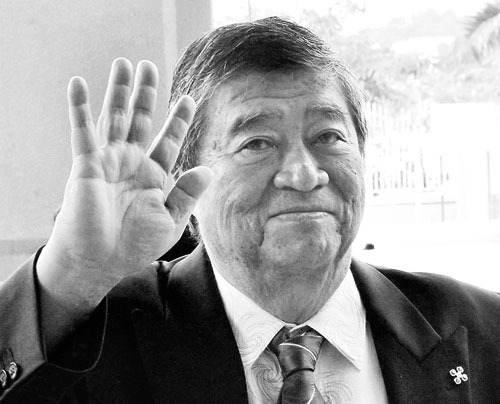

THERE are men in public life, and then there are nation builders. The distinction is not academic — it is existential. With the passing of Tun Ling Liong Sik, Malaysia has lost one of the last true nation builders of a generation that did not merely inherit a country, but helped define its soul.
To me, he was never just Tun Ling Liong Sik. He was “Uncle Liong Sik.”
I knew him from my teenage years, long before I understood the weight of titles or the machinery of politics. My father — a man who respected very few politicians — counted him as a friend. That alone told me everything I needed to know. My father believed in substance over spectacle, integrity over rhetoric. In Tun Ling, he saw a man who stood for something real.
And over the decades, that impression never changed.
Through my father and Tun Ling's son, Hee Keat — a friend of mine for nearly 40 years — I had the privilege of seeing the man behind the office. What struck me most was not his authority, though he had it in abundance. It was his steadiness. His clarity. His quiet but unshakeable sense of duty to Malaysia — not just to a constituency, not just to a party, but to a nation still finding its balance.
Uncle Liong Sik belonged to a rare fraternity. Alongside figures like Tan Sri Rafidah Aziz, Tun Dr Lim Keng Yaik, and Tun Dr S. Samy Vellu, he represented a time when non-Malay political leaders were not ornamental participants in governance — they were central pillars of it.
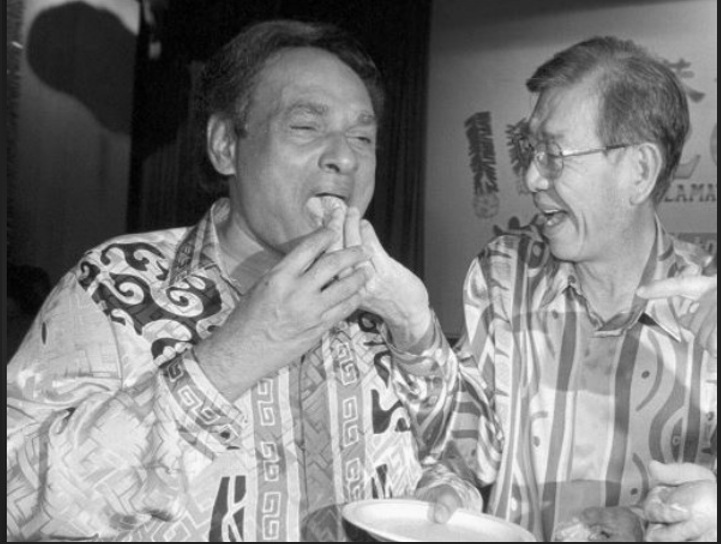
They could stand toe-to-toe with Prime Ministers.
They could disagree, firmly and openly.
And when they spoke, they did so not as representatives seeking approval, but as leaders carrying the mandate and trust of their communities.
That is a kind of political capital that cannot be manufactured today.
It was earned through decades of service, consistency, and an unwavering connection to the people they represented.
But what defined Tun Ling, in my eyes, was something even more important. Though he led a Chinese-based party, he governed as a Malaysian. There was no contradiction in that for him. He understood instinctively that leadership in a country like ours demands a broader responsibility — to care for all, to balance competing realities, and to ensure that no community feels unseen.
He did not need to proclaim unity. He practised it.
And that is perhaps why his passing feels so profound.
Because with him goes not just a man, but a mindset.
Today, we have no shortage of politicians. But we are in dangerously short supply of nation builders. The difference lies in intent. A politician seeks to win the next election. A nation builder seeks to secure the next generation.
Tun Ling Liong Sik was firmly the latter.
His life reminds us that Malaysia was not shaped by noise, but by men and women who carried the burden of responsibility with dignity and resolve. Men who did not need to shout to be heard. Men whose authority came not from position alone, but from the respect they commanded across divides.
For me, this is not just a moment of mourning. It is a moment of reflection.
If we are to honour Tun Ling's legacy, it will not be through words alone. It will be through a conscious decision — by all of us — to demand more from those who lead, and to become more in how we serve.
Malaysia deserves fewer politicians.
Malaysia desperately needs more nation builders.
Rest well, Uncle. Your work mattered. Your leadership mattered. And it always will. We will continue to protect and carry the flag you helped create.
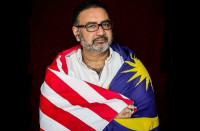
Datuk Dr Vinod Sekhar is the publisher of The Vibes and Chairman of the Petra Group



.jpeg)