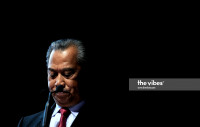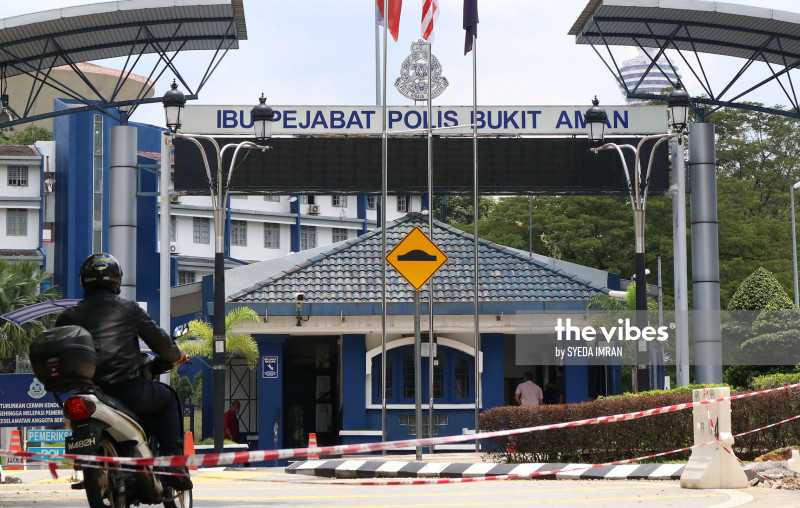
BUKIT Aman’s investigations into Datuk Seri Anwar Ibrahim’s call for the proclamation of emergency to be revoked have raised questions as to the perception of police’s independence and political neutrality.
Police said the investigations are being carried out under Section 505(b) of the Penal Code and Section 233 of the Communications and Multimedia Act 1998.
Based on media reports, there does not appear to be any reasonable ground for proceeding with the investigations.
Police said they are investigating Anwar following reports lodged that he allegedly committed sedition by questioning the Yang di-Pertuan Agong’s constitutional power to declare an emergency.
A report lodged by a political activist is based on an allegation that Anwar committed sedition because Article 150(8) of the federal constitution provides that a proclamation of emergency cannot be challenged in the courts, and by the activist’s personal reasoning, it also cannot be challenged outside of the courts.
There was nothing said in Anwar’s call that can be taken to have been made with the intent to cause fear or alarm to the public, or to induce an offence against the state or public tranquillity, under Section 505(b) of the Penal Code.
The fact that the investigations have proceeded based on such an allegation is troubling because Section 3(2) of the Sedition Act 1948 clearly provides that an act, speech, words, publication or any other thing shall not be deemed seditious if:
A) It is to show that any ruler has been misled or mistaken in any of his measures; and,
B) To point out errors or defects in any government or constitution as by law established, or in legislation or the administration of justice with a view to remedying the errors and defects.
There was nothing seditious said by Anwar. Further, his call obviously falls within Section 3(2) of the Sedition Act. Therefore, it cannot, by any stretch of the imagination, be taken to be seditious, or to have a seditious tendency.
With regard to the ouster clause, whether Article 150(8) of the constitution is valid is a matter that is to be decided by the courts, not police. Police, as an independent organ of the executive, are subject to the direction of the courts and bound by their orders. The courts’ power of judicial review is an important part of the doctrine of the separation of powers, and is fundamental to the Malaysian system of parliamentary democracy.
Sultan Azlan Shah made many judicial and extrajudicial statements on the importance of judicial review. In the case of Pengarah Tanah dan Galian v Sri Lempah Enterprise (1979) 1 MLJ 135, he said: “Every legal power must have limits, otherwise there is dictatorship… the courts are the only defence of the liberty of the subject against departmental aggression.”
The investigations in the present circumstances raise disquiet as to whether members of the police force have been ordered, or forced to exercise, his or her functions or powers, or to deploy police resources to promote or undermine any political party or interest group, or any member of such a party or group.
Police have a duty to uphold the rights of, and afford protection to, all political parties, persons and organisations equally, without fear or favour. Nothing can be more important in terms of policing than political neutrality.
The perception that operational policing is directed by political interests threatens the impartiality that is valued in all democratic countries. Police must carry out their duties and functions without anyone fearing that what they do is guided by political motives or pressure.
It is hoped that in these difficult times, when the people are struggling to overcome the Covid-19 pandemic and economic crisis, police are seen to be maintaining their political independence and impartiality at all times. – The Vibes, January 29, 2021
William Leong is Selayang MP