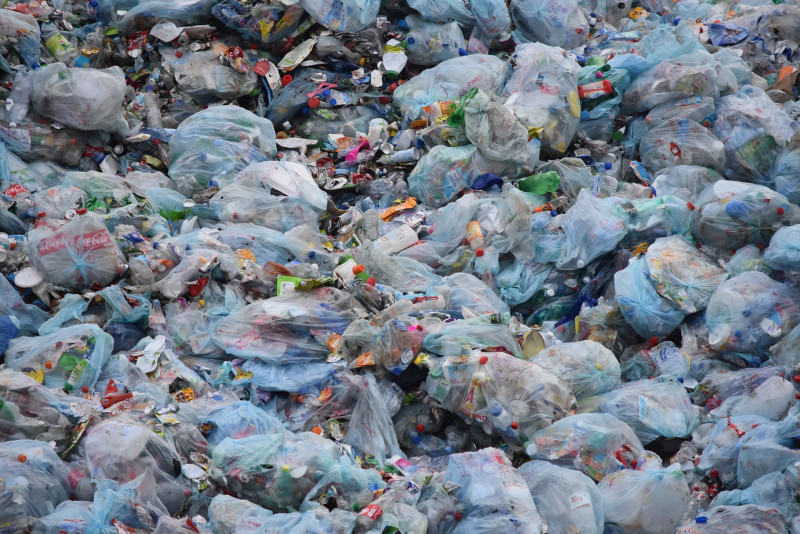
MALAYSIANS are a “throwing” society. We are now discarding an average 1.2kg of waste per person per day.
How wonderful it would be if our national economic growth rate was equivalent to our waste level. Our waste is piling with an alarming 35,000 tonnes being generated per day, the main source being food containers.
What happens to the waste? On September 6, 1995, the government privatised the responsibilities of the local authorities in managing the daunting task of waste management.
Since 1 January 1997, the solid management responsibilities of 48 local authorities have been privatised to three concession companies, namely Alam Flora for the central region (including Pahang, Kelantan and Terengganu) and Southern Waste for the (Melaka, Negri Sembilan and Johor), whilst the northern region (Kedah and Perlis, as Penang and Perak maintain waste management under their states) has been placed under E-Idaman.
In 2007, the Solid Waste and Public Cleansing Management Corporation Act 2007 was approved by Parliament on July 17, 2007 and gazetted on August 30, 2007, vesting executive power in the federal government to implement solid waste management and public cleansing.
The concessionaires did a great job, with all waste-related machinery replaced, as concessionaires focused on only collection of waste.
SWCORP, a government waste commission – focused on waste education in society about reducing, reusing, and recycling – did a fair job in imparting the importance of waste management at source, which now stands at 25% to 28%, and overall improving the collection service.
However, we failed miserably in moving into waste-to-energy (WTE), not because of the science behind the project, but due to political and logistical reasons, and to some extent, ignorance.
Our waste will increase to 49,670 tonnes in 2030. The average composition of Malaysian municipal solid waste (MSW) consists of about 45% food, 24% plastic, 7% paper materials, 6% iron, 4% wood, and 3% glass, with the remaining percentage belonging to others.
This shows that a remarkable amount of Malaysian MSW is recyclable. The moisture level of Malaysian MSW is in the range of 52% to 66%, which reduces their calorific value. The calorific value of our waste is a challenge, but this can be overcome with the help of material recovery facilities.
Our only way forward is through the WTE methodology.
In Malaysia we already have mini-incinerators or small-scale facilities to manage waste disposal.
They were introduced in 1996 in the popular Malaysian tourist islands – namely Langkawi, Labuan, Pangkor, and Tioman – and incinerate an overall 3221 tonnes of MSW a year, though they are facing several teething issues.
During the Covid-19 pandemic, we did a great job in incinerating medical waste through the help of incinerators.
There were no complaints nor protests towards such actions. This has proven well for our nation and our people. If we can manage the pandemic, we are certainly ready for the WTE idea, too.
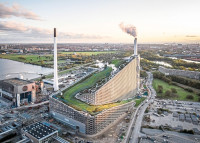
WTE involves a waste treatment process to convert non-recyclable waste materials into usable energy through a variety of processes, including combustion, gasification, pyrolisation, anaerobic digestion, and landfill gas recovery.
Due to the huge amount of MSW produced daily in urban areas, the best method is to use the waste as feedstock for such technologies. We will not have any issues obtaining the waste, since we generate waste very easily.
Malaysia must stride forward and go past landfilling waste to WTE facilities, which bring enormous gains to the environment and the society at large.
Resource savings and recovery are one of the biggest advantages. Metals, wood, plastic, and glass can be separated from the waste using material recovery facilities (MRF) and these materials can be recycled.
WTE facilities generate power in the form of electricity. This is a great source of energy which can be tapped into the main grid that supplies power throughout the nation, and the rates paid by the people for electricity supply can be renegotiated with the independent power producers (IPP) and TNB.
Nestle burns its coffee waste to power its plants, whilst Carlsberg uses the anaerobic digestion method to treat their waste and power their production plants.
WTE is a net greenhouse gas reducer. Methane is a greenhouse gas which is mostly emitted from decomposing waste in landfills. It has more than 20 times the potency of carbon dioxide and is ranked as a dangerous contributor to climate change.
WTE facilities avoid the production of methane while producing almost ten times more electricity from each ton of waste compared to landfills. It is the only solid waste disposal option with state-of-the-art air pollution control technology. Methane will now be harnessed and power will be the best alternative for all.
Landfill usage and landfill expansions can be greatly reduced.
WTE facilities typically reduce waste volumes by 90%. Fewer and smaller landfills will be needed to process ash, and instead, this protects a valuable natural resource – land.
The economy of the community is enhanced.
Studies show that the average waste to energy facility in the US is responsible for the creation of several high-end full-time jobs. Generally, these are salaried and skilled positions with relatively high pay.
These jobs have at least a 40-year projected life span. High-tech, cleaner, hygienic jobs, and higher safety are the encouraging signs of the WTE projects.
The real-time monitoring capabilities of the new WTE check emission levels precisely. In China all emissions data can be viewed by the public from the WTE, giving greater transparency and confidence to the people, especially on the air quality.
WTE is a space-saving innovative technology that reduces landfill footprint and triples the capacity of hygienic waste management, and yet yields greater benefits to the society and nation at large. This is the science of the future. Whilst landfills are dated, WTE is undated and lifelong, and there will be progressive carbon footprint reduction, thus reducing fossil fuel dependency in the years to come.
Experts of waste management say that even the MRF may become obsolete, thus burning every material that goes into the furnace.
Malaysia must prepare herself to embrace WTE the soonest possible, though we may have teething issues like no separation of waste at source, a focus by concessionaires on sending more waste to landfills as their contract says more waste equals more money; a low recycling rate that needs to be stepped up, the high water calorific value of our waste, lower rates offered by the IPP for the power generated by the WTE and our way of life and our way of throwing waste.
These are issues that can be addressed if the society, government, academics. and waste industry players meet to address and resolve these issues altogether. – The Vibes, March 30, 2022
Public relations practitioner Ravindran Raman Kutty was once known as the Malaysian ‘Captain Planet’, a waste management educator who has had several radio talk shows
.jpg)