RECENT events in the South China Sea (SCS), particularly around the disputed Beting Patinggi Ali near Miri, have again underscored the importance of greater public awareness and higher urgency for policymakers to fundamentally reorient our years-long China pandering and move away from being trapped under the Asian giant’s orbit.
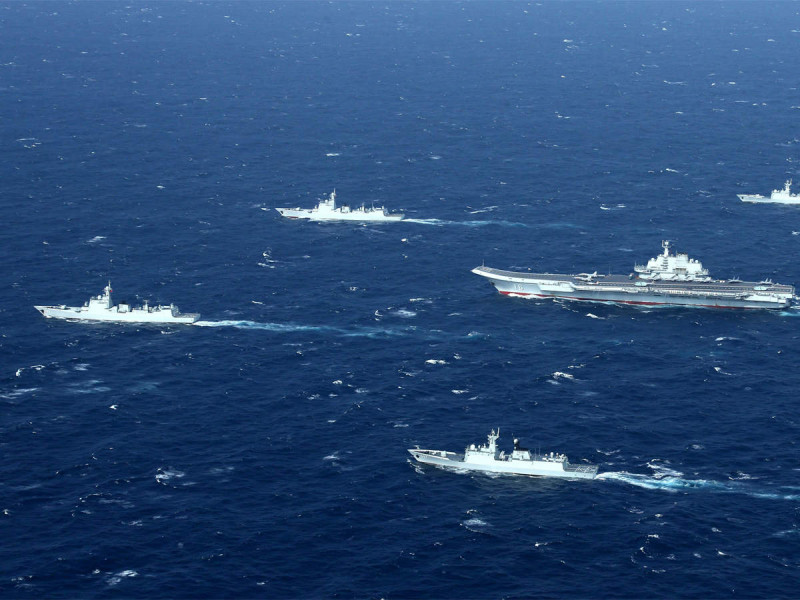
Continuous bellicose actions and grey-zone activities meant to reinforce Beijing’s claims on its nine-dash line demand in the SCS have been repeatedly met with subdued responses on our part and resulted in our continued reliance on backdoor and quiet diplomacy to avoid inciting China’s wrath at the risk of our economic lifeline.
Various incidents have been downplayed and were interpreted in reassuring ways hopefully to provide comfort to our local populace, even though realities on the ground are otherwise.
Defence Minister Mohamad Hasan asserted that monitoring has been ongoing and asset deployment has been initiated to prevent a “doctrine of estoppel”. This reflects our historical trapping in being confined to this measure of monitoring Chinese vessels, combat ships and planes and only being responsive at selective levels should there be a violation of red lines.
Almost each of the incidents will be brushed off as nothing offensive for now, as it has not crossed our real boundaries or our exclusive economic zone under anything permitted by the United Nations Convention on the Law of the Sea.
Continuous militarisation activities in the disputed territories have been ongoing for years and have been a constant presence in our waters, which Beijing deemed as its rightful territory. We, on the other hand, considered them as disputed claims that do not warrant any serious and urgent responses or reorientation.
Unlike Manila and Jakarta who have been firm and resolute in defending their national interests and territorial integrity by raising their deterrence level and prioritising clear and determined messages of increased responsive capacity, we continued to fall further into the abyss of ignorance and utopian make-believe setting.
Jakarta has been increasing its measures in its Natuna interest, Manila has been upping its strategic ante by aligning closer to Washington, and Hanoi has been consistent in its strategic manoeuvre in the SCS claims. Meanwhile, we continue to rely on Beijing’s own self-restraint, and existing diplomatic channels and regional conflict prevention mechanisms to avoid further escalations.
‘Sitting ducks’ amid China’s nuclear ambitions
Our own defence assets and capacity are also fast crumbling from years of mismanagement and corruption-laden procurements and deals that have hampered and weakened our deterrence capacity.
The delay in the littoral combat ships (LCS) and continuous underinvestment in our strategic defence assets, which are reflected by our sorry state of priority and GDP percentage of defence expenditure, have created a dangerous, exposed and predictable vulnerability in our security and defensive capacity.
Lagging behind in conventional firepower, we become exposed sitting ducks in facing Beijing’s growing nuclear ambition in the region and its advanced hypersonic missile capacity.
Even with the spiralling security dilemma, arms race and regional scramble for security enhancement in facing renewed and real threats – as seen from Beijing’s new power quest and Moscow’s invasion of Ukraine, which are both a clear violation of the rules-based order – we remain stubbornly rooted to our clear denial syndrome and do not want to even consider the clear support and assistance being extended by the West on the basis of so-called regional norms and our own neutrality, but in actual fact, we remain fearful of upsetting the apple cart.
Even with LCS in full swing now, we lack clear deterrence capacity, as long as we are tied to Chinese economic blackmail and over-dependence.
Realising that the West will continue to increase its regional presence here, China’s strategy is to deter deeper Western grip and foothold and secure its interests through a potent combination of hard power measures and influence-seeking activities, especially economic dependence and blackmailing that can be used to suppress regional responses, even at the expense of regional stability.
China is cognisant of the limitations of our country and Asean, which are limited by diplomatic pressure, Beijing dependence, and the regional norms and culture of internal divide, self-trap and inadequate hard power capacity, which will continue to rely on hedging and dialogue-building mechanisms.
It will continue to keep us and Asean in their current form, being weak and limited in getting direct external support and intervention, while at the same time trapped by the conventional dogma of our reluctance to embrace realistic changes and deviation from its obsolete approaches.
Beijing’s guile while increasing military power
China plays the long game and will continue to ensure that SCS be a crucial second front for its purpose of Taiwan, and Pacific expansion and as a base for its long-range blue water power projection with the United States in mind.
Beijing is wise and strategic in fooling the region and Asean into complacency, buying time and expressing intent to lead regional peace and dialogue-building mechanisms, all while continuing to play the victim card in thwarting the West’s containment efforts.
At the same time, it is continuing to increase its power parity and increasing the regional military power gap with increasing militarization of the SCS, using ally states to secure the predominant purpose, and continuing to expand the geopolitical returns of its Belt and Road initiatives in the region.
All the newly installed military infrastructure and improved capacities might provide a bolstered shield to its submarines from American anti-submarine warfare capacities while providing enhanced anti-access/area denial capacity to Beijing.
The continuous land reclamation and militarisation activities allow China to ease the support for the deployment of its SSBN nuclear-powered submarine fleet.
In pursuing a bastion strategy, the construction of military outposts and airfields on the SCS is part of a larger ambition to bolster a ring of protection for Beijing’s SSBN to operate with needed protection and ease.
The Chinese military seeks to have a rejuvenated transformation by 2027 and 2035, to meet its key target of world-class military capacity by 2049. The need for the deployment of nuclear submarines and the critical need to expand access to the Pacific to challenge continental US have made the SCS a key battleground for its goals.
Its land reclamation activities have a singular main goal in mind, which is to facilitate the expansion of its nuclear submarine fleet to enhance its nuclear deterrence and second-strike capacity through its SSBN. It remains essential for Beijing to secure itself from potential nuclear blackmail.
The US Defence Department in its annual report on the Chinese military released in 2021 has pointed out that China has built 12 nuclear submarines over the past 15 years and by 2030, it will have up to eight SSBNs.
This reflects China’s rush to enhance its SSBN capabilities, which might threaten the US with its increased strength in second-strike capabilities, all the while maintaining its regional dominance in strategic nuclear submarine capacity in the region.
Will Malaysia’s dependence on China backfire?
Malaysia has always prided itself in its smart and tactful diplomatic manoeuvres over the decades but remains trapped in our own ignorance and China’s orbit.
What have been the real measures on the results and impact of its decades of being non-aligned and what are the short and long-term benefits derived? Will the long-term harm and vulnerabilities nullify the perceived gains and benefits?
Is Malaysia really better off and more protected by this orientation? Are there real calculations and strategies to chart its own unwavering policies and responses to different threats and in humanising its foreign policy paths that will better synergise with the different needs and sometimes conflicting policies of its other ministries and agencies?
More questions and hard thoughts on the need to revamp its foreign policy spectrum remain, but priorities and urgencies should set the tone. Wisdom and clarity of visions are needed to identify future changing narratives and power influence and capacities of present powers.
China’s present economic power will not necessarily translate to a lasting and resilient prospect in the future in other denominators, as can be now seen in its systemic and structural internal weakening and cracks.
A power that is seemingly strong and powerful for now will not be necessarily so in the years or decades to come, based on shifting power measures and calculations. In short, China’s rise and power dominance are not cast in stone and America’s perceived decline and fading into oblivion are not inevitable.
To what extent does Malaysia hedge its bet on its supposed diversification and will its already endemic dependence on China backfire in stronger implications soon? A friend in disguise and a wrong enemy for a target will lead to greater fallout in securing its survival and interests.
Instead of spending more money and resources on unneeded ventures that are not urgent for now, Malaysia will be better off if the focus is channelled on beefing up its core priorities, and its defence capacities. We must not continue to aspire for the best of both worlds, which will only make us worse off.
China will remain our inevitable neighbour but not necessarily at the expense of our own interests and sovereignty. The West and the US might seem a bit further from us geographically but it does not mean that our values and interests will not be adequately supported.
Our overall growth and our defence and security development and assurances in historical proportion and measures have been largely moulded on and depended upon the West, from the Five Power Defence Arrangements to our technological progress.
How China will exert its actions and agenda in the region and in our country will also be determined by the strength, conviction and commitment of the US and the West in standing up to the rules-based order and international system that has been guiding global development, peace and stability for decades. We must stand up equally to that cause and principle.
Be serious, take bold actions
We cannot afford to shoot ourselves in the foot and burn our bridge to the shore by continuing to chastise our partner that is offering a helping hand and sending mixed signals.
We cannot afford to continue to be hypocritical in our approach, where we yearn for security support and backing from the US and the West out of real vulnerability and fear in regional tension and Chinese affront, but publicly rebuking them at times and in stubbornly reluctant to move deeper into security engagement with them.
We keep doing these while continuing to demand more regional responsibilities in capital investment, economic and market support and in wanting Washington to refrain from provoking regional tension and “stirring up” China.
We have been free-riding on many occasions in receiving an immense amount of security assistance and support from the US throughout the years amounting to more than US$230 million (RM1 billion).
However, we continued to ignore the urgent pleas by the West in bolstering our responses and deterrence capacity against Chinese intentions in our territories that will affect our long-term strategic interests, particularly our oil and gas assets and marine resources.
If we are not serious and bold enough to break free from our China trap and fear and to take bold actions to reorient our approach and to rein in leakages and mismanagement in our defence spectrum, how can we expect others to keep their faith in assisting us and to come to our defence should we need it? Even so, aid has been forthcoming but we are not appreciative enough, tied down by our non-aligned trap.
If the government is serious about elevating Malaysia’s status and persuasive profile, it must start at home by defending its honour, interests and survival and make a clear stand on its principles and values.
This will reflect its soft power credentials and conviction of unyielding faith and audacity in its approach, not kowtowing to threats, coercion or quid pro quo arrangements out of fear and submission.
This will win admiration and respect from its regional and global peers, and the nation will be respected for its consistency and audacity in its moral conviction and faith. – The Vibes, January 27, 2023
Collins Chong Yew Keat reads The Vibes