

MY perspective on Pilates being challenging hasn’t always been the same despite practising it for 14 years now. A few weeks ago, I shared how a local club first introduced me to it through Mat Pilates. Although I signed up for the initial course, I didn’t continue because I thought that was all Pilates had to offer: slow, repetitious movements on a mat. Well, I was wrong. When I was introduced to the Pilates Reformer, I realised that Pilates wasn’t a monotony of inhalation and exhalation exercises, but a dynamic, eclectic mix of explosive movements, controlled coordination, balance, and of course, muscle fatigue a.k.a. the burn and shake.
“It’s boring, like vanilla”
First off, I love vanilla ice-cream. Although it’s commonly thought of as the Plain Jane of ice-cream flavours, likening Pilates to plainness is similar to not knowing the existence of other ice-cream flavours apart from vanilla.
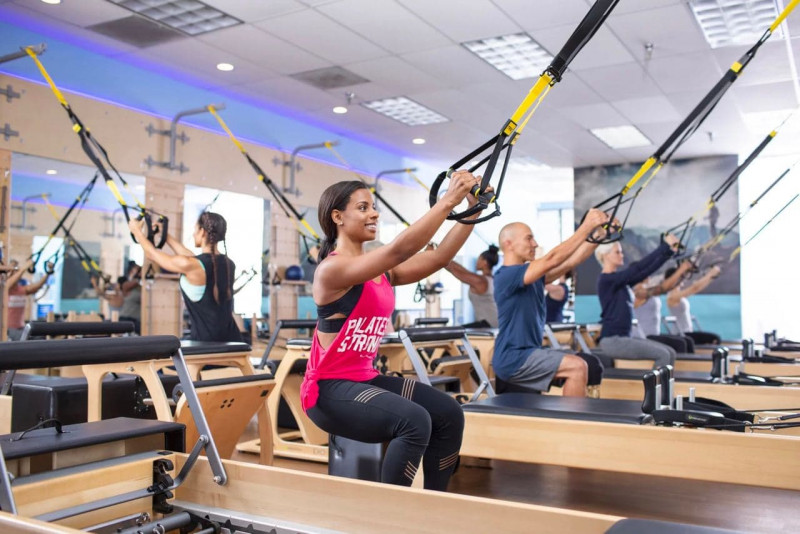
Pilates encompasses different planes of movement, muscle groups and resistance levels. More importantly, it comes with different-sized equipment and not just what’s seen on the mat. Pilates has large as well as smaller apparatus, which is one of the ways Pilates differs from yoga.
The large apparatus includes the Reformer, Wunda Chair, Avalon Chair, Cadillac or Trapeze Table, and Ladder Barrel, often spotted in Pilates studios while smaller, more portable props, such as the mat, Magic Circle, resistance bands, free weights and balls can be used in both a studio or home setting. Pilates is full of variety; there will always be new movement and equipment combinations to explore in one's lifetime.
“I’m not flexible enough to do Pilates”
I’ve heard this first-hand when greeting new students. I remind them that they’re enrolled in my classes to improve their mobility and not to compare their progress with someone else’s journey.
In addition to this, flexibility and mobility evoke two different images, with the former usually synonymous with a bendy ballerina or flexible gymnast. However, both are developed in Pilates, with flexibility referring to muscle length and mobility to the joint’s ability to move actively through a range of motion.
Remember, being flexible does not mean having the mobility to move efficiently; Pilates is all about developing bodies that are able to move healthily across an entire range of movement.
“It’s workouts for women”
Joseph Pilates, the creator, was a man, who developed the method in a prisoner-of-war camp during World War I. While not many people know that, male athletes, such as Andy Murray, Kobe Bryant and LeBron James have found value in Pilates and use it in their off-season training to perform better during their performance season. Don’t believe me? Check out what these Malaysian men have gained from Pilates.
“It’s only for Tai-Tais and rich people”
Social media might paint a picture that Pilates is only for a select few, with a slew of celebrity Instagram pages from the likes of Bollywood actress, Kareena Kapoor, to American socialite, Kim Kardashian.
However, Pilates is not an exclusive, by-invitation-only fitness programme. Joseph Pilates designed his method back in the 1920s for the everyday person and it’s still being practiced around the world by such individuals.
Pilates can be costly, especially when it concerns large apparatus classes or private sessions. These costs are partially due to the cost of certifying an instructor in regards to the years of training required for such certification, the apparatus/equipment and maintaining smaller classes that adequately focus on each and every student. If you’re on a tight budget, start with Mat Pilates, which can practised at home on a mat.
In my books, choosing to invest in your body’s health is never a loss regardless of what the outlying cost may be. ─ The Vibes, 31 March, 2021