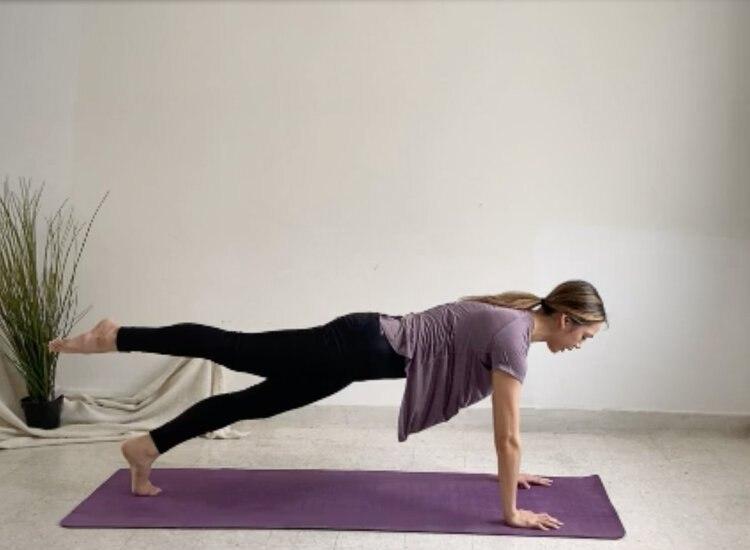

No matter the workout method, chances are that you’ve come across a plank. This push-up position is a core part of many fitness programs due to its multiple benefits. It strengthens your whole body, primarily the core muscles and the stabilisers of the shoulders, chest, and legs.
Benefits of incorporating the plank into your routine include:
- Improved spine alignment and posture throughout the day
- Strength in the posterior chain or the back muscles of the body. These muscles propel you forward in space as you walk, jump, run or pivot. While in this isometric position, the body is held against gravity and needs to recruit posterior chain muscles.
- Building overall stability: with only four points of contact to the floor (arms and feet), it’s a challenge to keep your entire body still in this position. However, it’s important to find the right form in this isometric core position before incorporating other variations of this exercise or external weights.
Here are four pilates variations of the plank. Experience each exercise for at least 1-minute, and remember to do both sides(right and left). Enjoy moving!
1. Hip Extension Pulses
Muscle Focus: Glutes and hamstrings
Purpose: Pelvic stability
- Start in a quadruped position (shoulders directly over wrists, and hips over knees)
- Lift one leg off (thigh towards the floor), and maintain bent knee at a 90-degree angle
- Pulse thigh upwards
- Alternate between the flexed foot and pointed foot, changing your breath cycle (inhale, exhale) every 2 pulses
- Keep length through your neck and stability in the low back. Remember to maintain a neutral pelvis.
2. Straight Leg Toe Taps (Version 1 and 2)
Muscle Focus: Glutes and hamstrings
Purpose: Pelvic Stability
Version 1
- Starting in a quadruped position, straighten one leg along the floor, while the other leg’s shin is on the mat
- Exhale, lift the straight leg to hip height
- Inhale, lower
Version 2
- Same starting position as version 1, except when you lower the leg, top of foot taps the right edge of your mat lightly, reaching 45 degrees.
- Exhale, lift up
- Inhale, cross the leg over the supporting leg and lightly tap the left edge/opposite corner of your mat
- Repeat
Tips
- As you lift a leg, lengthen through the leg/back of the knee and maintain level hips
3. Leg Pull Front
Muscle Focus: Hip extensors
Purpose: Control of muscles that extend the hip, upper body strength, stabilisation of shoulder blades
- Start in a plank position
- Exhale, lift one leg slightly off the mat, maintaining a neutral pelvis, and pointing the foot
- Inhale, lowering the leg, touching the mat lightly with the top of the foot
- Exhale, lift up
- Repeat for 5 rounds before changing to the other leg
Tips
- Maintain the height of hips throughout
- Visualize length from opposing ends of body; reaching forward through the crown of the head and lengthening through heels
4. Side Bend
Muscle Focus: Abdominal obliques
Purpose: Strengthen and stretching abdominal obliques, and shoulder strength and stabilization
- Sit sideways on one hip, with supporting palm on the mat
- Bend knees slightly. Shoulder, hips and heels in a horizontal line.
- Rest the top arm at your side
- Inhale, lift the pelvis up off the mat as you straighten the legs, keeping your shoulder in line with the bottom wrist as you float the top arm to shoulder height.
- Exhale, lift pelvis higher toward the ceiling, while finding deeper lateral flexion through the thoracic spine as top arm curves overhead
- Inhale, return to sideways plank with arms in a “T-position”
- Exhale, lower body to starting position
- Repeat
Tips
- Keep inner thighs together
- Avoid thrusting ribs forward
- Initiate from side muscles (lateral flexors), avoid overpowering with legs (beginning phase)