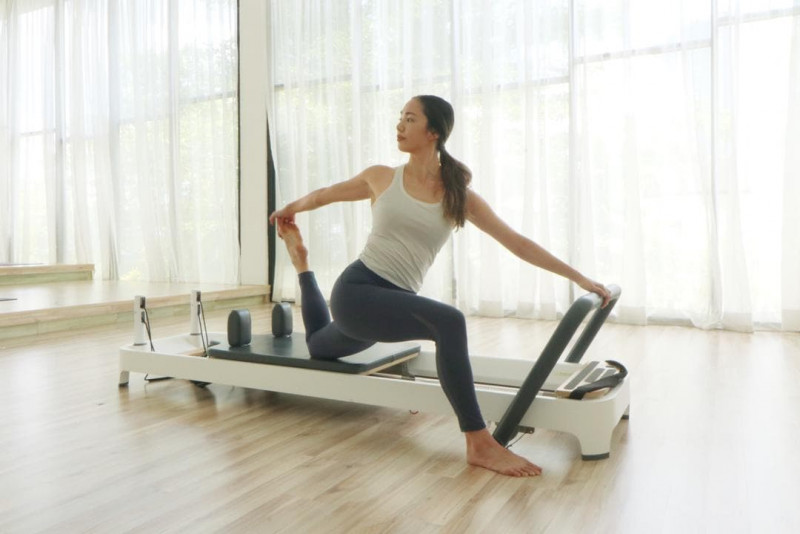

You might have heard it taught at a studio in town or through a friend who claimed their inner thighs were sore for days after. The first thing you should know about Reformer Pilates is, no, it has nothing to do with Pie or Lattés, pilots or Pontius Pilate.
First off, what is Pilates?
It’s a whole-body method that engages the core for stability and support and improves overall mobility by working through your full range of motion with or without the assistance of equipment. Various types of pilates exist and Reformer pilates is one of them that uses the equipment.
What is a Reformer?
Although it might look a little daunting to first-timers, the reformer is not a torture device. Joseph Pilates invented the Reformer when working with soldiers during World War I. The early reformer was a hospital bed with springs attached to the bedposts for rehabilitation. Today's variations of the Reformer have evolved to address the needs of the 21st-century body.
The reformer has a flat, bed-like surface called the carriage which rolls back and forth on its wheels along a vertical track. On one end of the carriage is a spring to increase resistance or challenge stability, and the other end are straps and ropes for arm or legwork. Exercises have different spring settings, which vary from light to heavy tension.
Here are some insights that I hope will help you when attending your first reformer pilates class.
The preparation starts before you enter the studio
Not just physically but mentally too. One of the principles of pilates is mind-body awareness. The last thing you want is to start class frazzled and jump on a piece of unfamiliar equipment, compromising your safety. Sleep well the night before and drink enough water to avoid dehydration. Wear fitted activewear, bring grip socks, and a water bottle. If you sweat easily, as I do, a small towel will help. The last thing you want is a slippery reformer while doing Jack Rabbits or plank work!
Listen to your instructor
When I teach a Reformer class, more often than not, I start with everyone lying down on the carriage. While it may be tempting to zone out, it’s important to keep an ear out to what your instructor is saying as these verbal cues set you up to move efficiently through the class and keep you safe. Although you can always look to your experienced classmates for help, use their visual cues as a guide rather than primary instruction.
Don’t be afraid to ask for help
Even after the movement options are given or looking around for clarification, there may be times where something doesn’t feel right. You may be shy to ask for help, not wanting to draw attention to yourself. In these moments, don’t hesitate to ask for help. The last thing your instructor wants is for you to leave the session feeling defeated or uncomfortable. Go ahead, raise your hand and ask for clarification. Your instructor is there to help facilitate the best experience and ensure your safety too.
You’re in control of your choices
Your first class will feel like an overload of information, from listening to “neutral pelvis, hold that and maintain this” or inhaling and exhaling until you feel a little lightheaded. It’s okay not to do it all in your first class! In fact, if you need to take a break in the middle of sets, take that break and join in once you’re ready. Remember, Pilates is a practice that takes time and consistency before you begin to grasp the concepts and experience all its benefits.