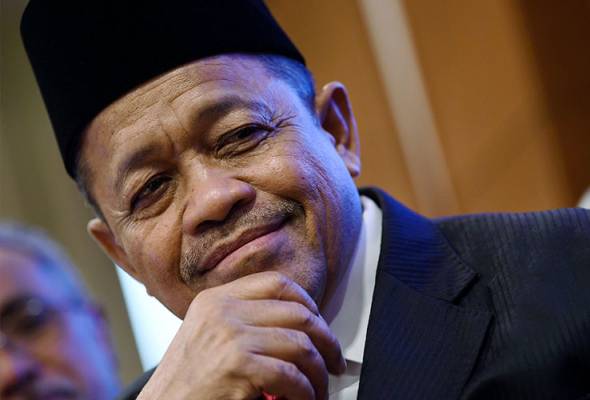

GEORGE TOWN – Federal Territories Minister Datuk Seri Shahidan Kassim may have meant well in wanting to lead the Malaysia Athletics Federation (MAF) but his election yesterday has prompted negative reaction among some quarters.
For starters, it has triggered a widespread debate again on whether politicians should helm sports associations especially when their standards have declined over the past two decades, with the exception for individual sports such as squash and badminton.
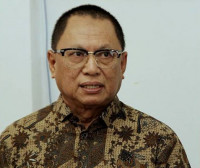
The Centre for Integrity, Professional Governance and Advancement (MyKita) president Myocho Kan said that the very essence of a sports society or association’s existence is to protect, develop and sustain the future of a particular interest, athleticism, or skills.
“Hence the leadership should be from the same interest who intimately knows the issues and struggles because he (she) was ‘one of them’ before, better still an expert and professional in the same field,” said Kan in an interview.
“Yes true, we sometimes need experts from another industry to trigger the innovative fusion but that can come at the middle or executive level. Unfortunately, in Malaysia, most leadership in societies and associations, and even GLCs, are politically connected.”
It can impair the country’s sports development if too much politics gets in the way, said Kan.
“Malaysia was once a respected nation with its fearsome football team, its badminton players but now we have ended up with almost nothing. This is attributed to the loss of direction.”
Sports, like economy and education, must be helmed and handled by professionals, not politicians, said Kan.
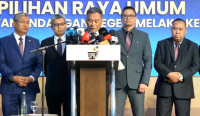
Shahidan, who also helms the national swimming association, became the new president of MAF after defeating incumbent Datuk S. M. Muthu in the elections at the Royal Selangor Club.
Shahidan, a former Perlis Menteri Besar, won 20 votes while Muthu received 16 in a direct fight for the top post after the third candidate, Nurhayati Kassim withdrew.
Shahidan will helm the federation for the second time having been its president from 2008 to 2012.
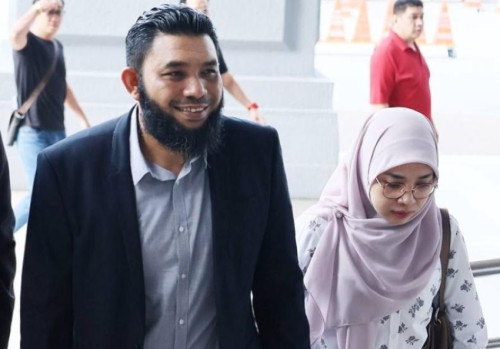
Adrian Rajamoney, who is the son of a former national athletics coach Lionel, said that while no disrespect is given to Shahidan, he feels that sports in the country need an infusion of new and young blood apart from being performance orientated.
“Shahidan was already given one term previously. How did our athletes perform then? We must be competitive in all levels; at the association and out there on the track.”
Echoing a similar view, former Senator Yusmadi Yusoff, who played football for Penang at the junior levels, said that politicians can be involved in sports at the policymaking level such as in Parliament when drafting legislation to spur sports development.
“But at the association/society level, perhaps, if they are former players. Politicians who were previously athletes can be considered as they would know the sport from the bottom-up,” said Yusmadi.
But if they are just there to grab popularity, then their intent and agenda remain murky and the sport may essentially end up ruining its reputation here, said Yusmadi.
Veteran lawyer S. Raveentharan thinks that there must be an absolute rejection to having politicians interfering in sports.
He referred to parts in India where local government officials are barred from being involved in sporting associations, who are managed by ex-athletes and professionals instead.
“Look at India’s badminton. They are latecomers and, yet, they defeated us.”
To him, politicians should stick to what they do best, which is to debate and formulate policies which can lead to nation building unlike now, where their constant politicking has led the country to a virtual standstill in terms of real economic growth.
“Leave the sports management to coaches and their athletes. They should know what is best as the results are the best indicator of whether the associations are managed well.”
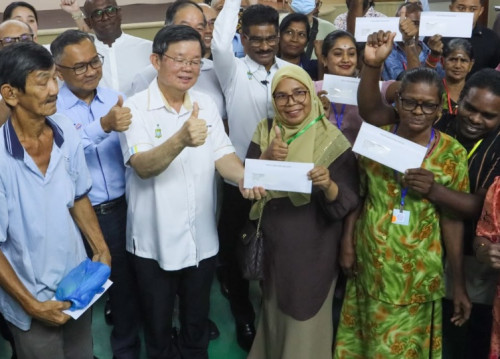
But Kebun Bunga assemblyman Jason Ong Khan Lee said that some folks have overreacted as there are some politicians who are quite adept in managing associations, federations, or societies.
He cited the example of Penang Football Association, which is helmed by Sungai Bakap assemblyman and state legislative deputy speaker Datuk Dr Amar Pritpal Abdullah, whose passion for the sport has yielded positive results.
Penang is back in the Malaysian Super League this season although it is now sitting at the foot of the table.
According to Ong, politicians should be selected based on their abilities and capabilities, not just political connections or promises of bringing in additional funds.
“Fundraising, just like business, needs to be done transparently and the organisation must be managed well. Success is infectious,” said Ong.
He agreed that the debate on whether politicians need to be involved in sports or not should go on for now. – The Vibes, June 13, 2022.