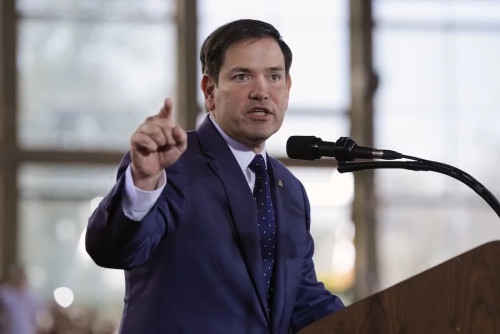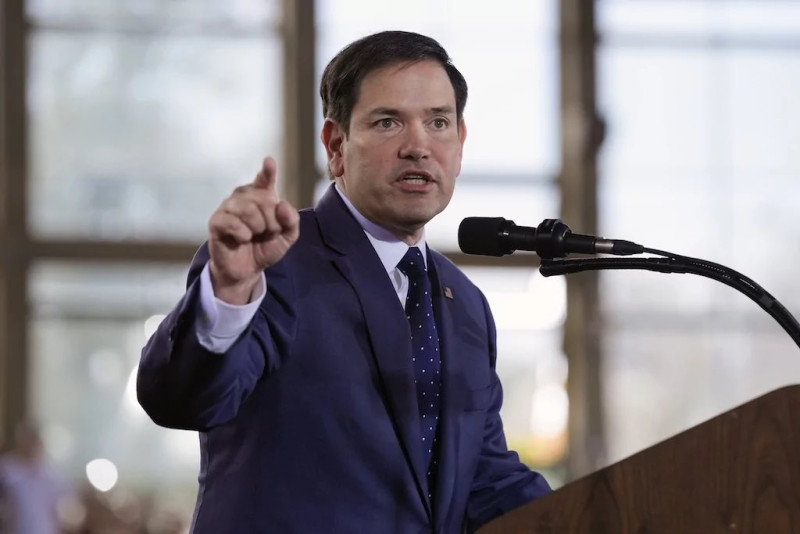
US SECRETARY of State Marco Rubio indicated that Ukraine and European nations would play a key role in any genuine peace negotiations aimed at ending Russia's ongoing war, emphasising that talks between the U.S. and Russia this week will serve as an important gauge of President Vladimir Putin's commitment to peace.
During an interview on CBS, Rubio downplayed concerns that European nations might be sidelined in the early stages of U.S.-Russia discussions, which are set to take place in Saudi Arabia in the coming days.
He clarified that while formal negotiations have not yet commenced, if the talks progress, both Ukrainian and European representatives would be included in the process.
Earlier reports from Reuters revealed that U.S. officials had sent a questionnaire to European counterparts, seeking input on the potential contribution of troops to enforce any peace agreement between Ukraine and Russia.
Reuters reported, "President Trump spoke to Vladimir Putin last week, and Putin expressed an interest in peace, while President Trump reiterated his desire for an enduring resolution that ensures Ukraine's sovereignty," Rubio stated during the CBS interview. "But of course, these words must be followed by concrete actions, and the next few weeks will determine the seriousness of this initiative. A single phone call does not equate to peace."
The upcoming talks in Saudi Arabia coincide with U.S. efforts to negotiate a deal with Ukraine to unlock the country's vast natural resources for U.S. investment. Ukrainian President Volodymyr Zelenskiy raised concerns in a separate NBC interview, questioning whether resources in Russian-occupied territories would be handed over to Putin.
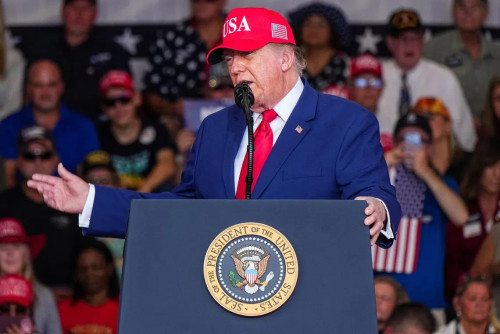
Meanwhile, former President Donald Trump, who had a call with Putin last week and mentioned that the Russian leader seeks peace, expressed confidence that Putin would not attempt to seize all of Ukraine.
"That would have been a huge problem for me, because you can't allow that to happen. I think he wants to end this," Trump stated to reporters in Florida. He added that Zelenskiy would also be involved in the peace talks.
Rubio and U.S. Middle East envoy Steve Witkoff, who was also set to travel to Saudi Arabia, both dismissed concerns that Ukraine and European leaders would be excluded from the peace process.
Despite recent comments from Trump's former Ukraine envoy, Keith Kellogg, at the Munich Security Conference suggesting Ukraine's absence from initial discussions, Witkoff pointed out that Ukrainian officials had been engaging with U.S. representatives at the conference.
Rubio affirmed that Ukraine and European nations would ultimately be brought into any meaningful negotiations.
"Ultimately, if real negotiations take place—though we're not there yet—Ukraine will need to be involved because they are the ones who were invaded. European nations will also have to be involved, as they have imposed sanctions on Putin and Russia," Rubio explained. "But for now, we're not at that point."
In response to growing concerns in Europe, French President Emmanuel Macron is scheduled to host an emergency summit with European leaders on Monday to address the ongoing conflict in Ukraine.
This follows Kellogg's remarks, which left many European officials feeling caught off guard by recent U.S. actions on Ukraine, Russia, and European defense.
European leaders are especially worried about the potential erosion of U.S. military protection and the possibility that Trump may pursue a peace deal with Putin that compromises Ukraine's interests and broader European security.
When asked whether he discussed lifting sanctions on Russia during a recent phone call with Russian Foreign Minister Sergei Lavrov, Rubio declined to provide specifics but indicated that no detailed discussions had taken place.
Following the call, Moscow indicated that the conversation included discussions about removing "unilateral barriers" imposed by the previous U.S. administration in relations with Russia.
Rubio said he did address the "difficult" operating conditions of the U.S. embassy in Moscow with Lavrov. If there was to be progress in Ukraine peacemaking, both Russia and the U.S. would need properly functioning embassies in the other country, he added. – February 17, 2025