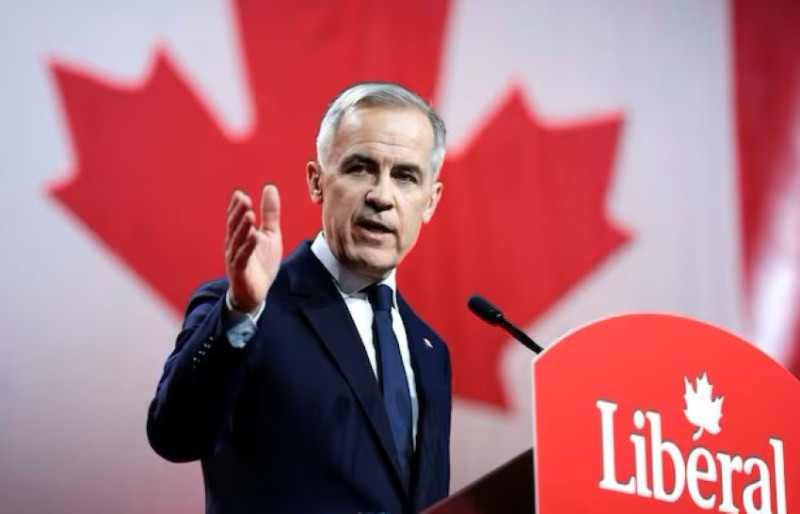
PRIME MINISTER Mark Carney’s Liberal Party won Canada’s federal election on Monday, capping a stunning turnaround in fortunes fueled by U.S. President Donald Trump’s annexation threats and trade war.
AP reported that after polls closed, the Liberals were projected to win more of Parliament’s 343 seats than the Conservatives, though it wasn’t immediately clear if they would win an outright majority — at least 172 — or would need to rely on one of the smaller parties to form a government and pass legislation.
The Liberals looked headed for a crushing defeat until the American president started attacking Canada’s economy and threatening its sovereignty, suggesting it should become the 51st state. Trump’s actions infuriated Canadians and stoked a surge in nationalism that helped the Liberals flip the election narrative and win a fourth-straight term in power.
“We were dead and buried in December. Now we are going to form a government,” David Lametti, a former Liberal Justice Minister, told broadcaster CTV.
“We have turned this around thanks to Mark,” he said.
The Conservative Party’s leader, Pierre Poilievre, hoped to make the election a referendum on former Prime Minister Justin Trudeau, whose popularity declined toward the end of his decade in power as food and housing prices rose.
But Trump attacked, Trudeau resigned and Carney, a two-time central banker, became the Liberal Party’s leader and prime minister.
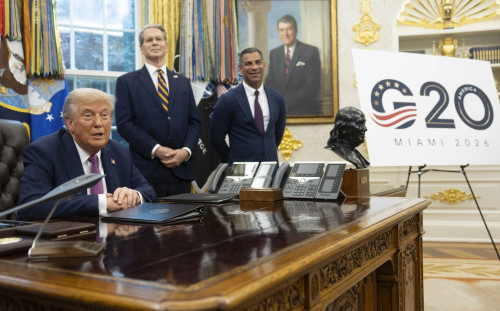
Even with Canadians grappling with the fallout from a deadly weekend attack at a Vancouver street festival, Trump was trolling them on election day, suggesting on social media that he was on their ballot and repeating that Canada should become the 51st state. He also erroneously claimed that the U.S. subsidizes Canada, writing, “It makes no sense unless Canada is a State!”
Trump’s truculence has infuriated many Canadians, leading many to cancel U.S. vacations, refuse to buy American goods and possibly even vote early. A record 7.3 million Canadians cast ballots before election day.
“The Americans want to break us so they can own us,” Carney said in the runup to election day. “Those aren’t just words. That’s what’s at risk.”
As Poilievre and his wife cast their ballots in Ottawa on Monday, he implored voters to “Get out to vote — for a change.” After running a Trump-lite campaign for weeks, though, the Conservative leader’s similarities to the bombastic American might have cost him.
Reid Warren, a Toronto resident, said he voted Liberal because Poilievre “sounds like mini-Trump to me.” And he said Trump’s tariffs are a worry.
“Canadians coming together from, you know, all the shade being thrown from the States is great, but it’s definitely created some turmoil, that’s for sure,” he said. - April 29, 2025