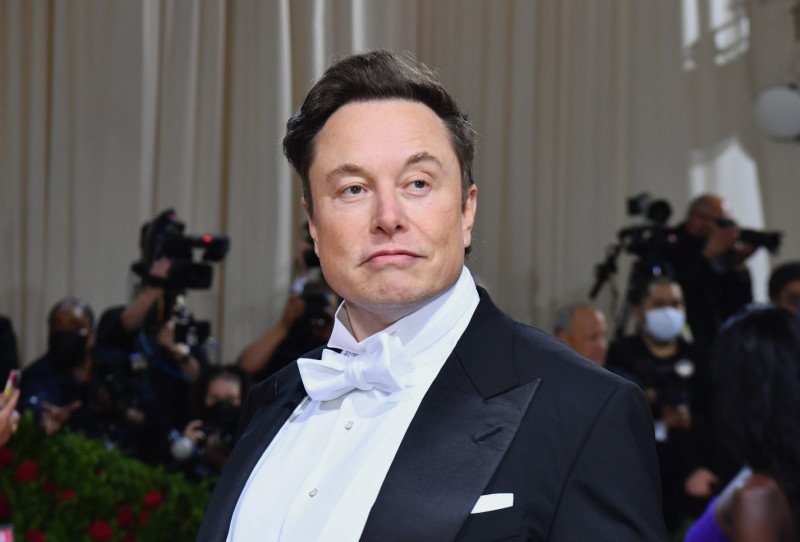
ELON Musk has become the first person in history to amass a fortune exceeding US$1 trillion, following a blockbuster initial public offering by SpaceX that dramatically expanded the value of his business empire and reinforced investor confidence in his long-term vision for space exploration, artificial intelligence and advanced technology.
The landmark achievement came after SpaceX raised a record US$75 billion in its public debut, pushing the valuation of Musk’s flagship aerospace and satellite company to unprecedented levels.
Based on company filings and market valuations, Musk’s net worth is expected to exceed US$1.1 trillion once trading begins, placing him far ahead of every other billionaire on the planet.
Reuters reported on Friday that the scale of Musk’s wealth has created an extraordinary gap between him and the rest of the world’s richest individuals.
Prior to the IPO, estimates placed his fortune at approximately US$780 billion, already more than double that of most rivals. The latest surge has widened that lead even further.
"The second richest person has been hovering around $300 billion, so about less than one-third of what Musk can potentially be worth tomorrow," said Matt Durot, deputy editor at Forbes Wealth. "And only one other person, (Oracle founder) Larry Ellison, has ever been worth $400 billion.”
Much of Musk’s wealth is now tied to his dominant stake in SpaceX, which alone is valued at hundreds of billions of dollars.
Combined with his holdings in electric vehicle giant Tesla and several other ventures, the entrepreneur has built a business ecosystem that analysts increasingly describe as the "Muskonomy".
Musk, 54, first rose to global prominence through Tesla and SpaceX before further expanding his influence through the acquisition of Twitter, now known as X, in 2022.
The takeover transformed him into one of the most prominent voices on social media, where he regularly comments on politics, immigration, government spending and free speech.
His growing political profile has attracted both support and criticism. Admirers praise his willingness to challenge conventional thinking and pursue ambitious goals, while detractors argue that his concentration of economic and political influence raises concerns about governance, accountability and conflicts of interest.
Despite recurring controversies, investors have continued to back Musk’s ventures, often valuing his companies on expectations of future technological breakthroughs rather than traditional financial metrics.
"Much like Tesla, SpaceX is a bet on Elon Musk," said Matt Kennedy, senior strategist at Renaissance Capital.
"A market cap of $1.5 trillion-$2 trillion would certainly throw all traditional valuation methodologies out the window, and is instead best characterized as the 'Elon Musk premium.'"
That premium reflects investor belief that Musk can replicate the disruptive success Tesla achieved in the automotive sector across other industries, including space transportation, satellite communications and artificial intelligence.
Born in Pretoria, South Africa, to a Canadian mother and South African father, Musk graduated from the University of Pennsylvania in 1997 before embarking on a career that would reshape multiple industries. Beyond Tesla and SpaceX, he has co-founded several companies, including Neuralink and The Boring Company.
Supporters argue that Musk’s greatest achievement has been forcing established industries to rethink long-standing assumptions. Tesla’s rise accelerated the global shift towards electric vehicles, while SpaceX has transformed the economics of space launches and satellite deployment.
“He renewed the world's respect for American ingenuity in automotive engineering,” said Bob Lutz, a former General Motors vice chairman.
Musk’s influence has extended beyond technology and business into public policy and political debate. His alliance with US President Donald Trump, including his role in the administration’s Department of Government Efficiency initiative, further elevated his profile, although the relationship later became strained amid policy disagreements.
Even so, many investors remain focused on his ability to convert ambitious ideas into highly valuable enterprises.
"Elon is the Edison of our time," JPMorgan Chase CEO Jamie Dimon said during a recent conversation with Musk.
Dimon, who previously clashed with Musk in a lengthy legal dispute, later became one of his admirers and described the entrepreneur as "our Einstein."
As SpaceX begins trading and Musk’s fortune enters a realm never before seen in modern capitalism, the entrepreneur’s rise marks a defining moment in the history of wealth creation — and underscores the growing influence of visionary founders in shaping the global economy. - June 12, 2026