AS the 9 July deadline nears for the resumption of President Donald Trump’s country-specific tariffs, the White House is bracing for the reality that its highly publicised goal of transforming global trade may fall well short of expectations.
Bloomberg reported today that top US advisers last week had said the US was close to concluding agreements with up to a dozen of its largest trading partners. Yet if earlier deals with China and the United Kingdom are any indication, these forthcoming pacts are unlikely to be comprehensive or resolve major trade grievances. Instead, they are expected to offer limited commitments with key details deferred to future negotiations.
“I would expect the White House will announce some number of frameworks that it’s going to call trade deals, but do not meet anyone’s ordinary understanding of that term,” said Dr Tim Meyer, a professor of international trade law at Duke University.
For many other nations that have not secured agreements and were subject to Trump’s higher tariff rates since 2 April, the President has threatened further duties beyond the 10 per cent baseline. Treasury Secretary Scott Bessent told CNBC on 27 June that these would mainly affect “smaller trading partners”.
In characteristic fashion, Trump has left investors and foreign governments guessing, issuing vague signals on which countries are nearing deals and which may face penalties. The ambiguity has unsettled global markets and heightened tension around a trade policy that carries considerable economic stakes.
Despite the deadline, it remains unclear whether the administration will enforce it strictly or extend talks further. Bessent noted that around 20 countries might still be allowed to negotiate beyond 9 July, though their tariff rates could revert to higher levels unless they are deemed to be “negotiating in good faith”.
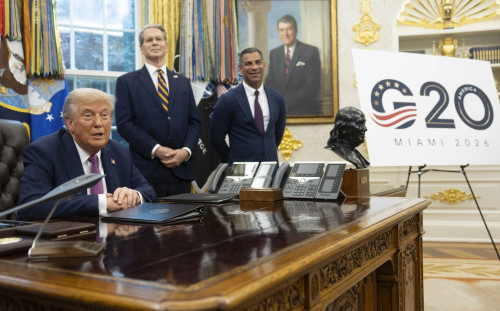
Trump, however, struck a more aggressive tone hours later, reiterating his threat to set tariffs unilaterally — potentially even before the deadline. “We can do whatever we want,” he said at a White House press conference. “I’d like to just send letters out to everybody. ‘Congratulations. You’re paying 25 per cent.’”
In a sudden move on social media, the President announced the termination of trade talks with Canada over its digital services tax and threatened to impose a new tariff within a week. Observers view this as both a punitive measure and a warning to other leaders seen as uncooperative.
The final days ahead of the deadline have seen a flurry of diplomatic activity, with international delegations flying into Washington, world leaders lobbying Trump directly, and his aides offering mixed signals. The US is reportedly close to deals with Taiwan and Indonesia, with potential agreements also being discussed with Vietnam and South Korea. Talks with India have advanced, while optimism has grown around negotiations with the European Union.
“My sense is the White House will potentially give a delay for some countries if they are negotiating in good faith or earnestly,” said Clark Packard, a research fellow at the libertarian Cato Institute. “I do think some deals will be struck and some won’t. I do think some countries will retaliate.”
Though Trump’s erratic tactics may elicit concessions, they have also created a cloud of uncertainty for businesses and financial markets. The President’s insistence on rapid, high-profile outcomes has frequently clashed with the complex realities of trade negotiation.
Since taking office, Trump has pledged to slash trade deficits and revive domestic manufacturing, using tariffs as the cornerstone of that agenda. The 2 April tariff hikes were paused after investor panic suggested a risk of global recession.
Despite White House promises, including adviser Peter Navarro’s pledge in April of “90 deals in 90 days”, Trump appears unlikely to meet that target. The limited scope of existing agreements has also dampened expectations.
In the case of Britain, hopes that steel and aluminium duties would be eliminated were dashed when the US maintained 25 per cent tariffs, offering instead a vague future quota framework. Similarly, promises that China would resume rare earth exports swiftly have yet to materialise.
Other trading partners, including Japan, India and the EU, have resisted pressure to sign deals without clarity on separate tariffs targeting key exports like semiconductors, pharmaceuticals and aircraft. The US Commerce Department is expected to release findings on these sectors in the coming weeks, possibly resulting in further levies.
Adding to the uncertainty is an ongoing legal challenge to Trump’s use of emergency powers for imposing tariffs. While the US Court of International Trade ruled in May that many of the measures were unlawful, an appeals court has temporarily allowed them to remain in place, with a final hearing expected in late July.
Though Trump’s threats have often shaken allies, they rarely translate into lasting consequences. His frequent walk-backs have earned him a reputation for brinkmanship without follow-through — so much so that some investors now use the acronym “TACO” (Trump Always Chickens Out) to describe the pattern.
Ultimately, for a President who prides himself on deal-making, announcing agreements — however insubstantial — is often more important than their contents. Trump has grown visibly frustrated with the drawn-out pace of negotiations, even as polling shows that voters are increasingly sceptical. A Quinnipiac University poll conducted from 5 to 9 June found 57 per cent of Americans disapproved of his handling of trade. - June 30, 2025