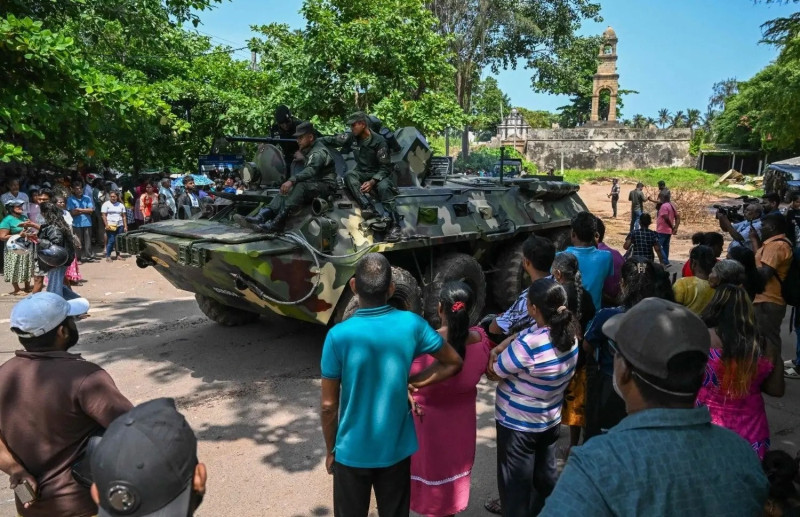
SRI Lanka is stepping up efforts to tackle chronic prison overcrowding following the country's deadliest prison riot in more than a decade, with authorities planning to reopen a former colonial-era jail and expand detention capacity after violence at Negombo Prison claimed 28 lives.
Eight prison officers and 20 inmates were killed during two days of clashes between rival groups of prisoners at Negombo Prison, about 35 kilometres north of Colombo, marking Sri Lanka's worst prison violence since 2012.
AFP reported on Friday that the riot has renewed scrutiny of the country's overcrowded prison system, with human rights advocates urging the government to complement infrastructure expansion with reforms that reduce incarceration and align prison management with international standards.
Negombo Prison, designed to accommodate around 650 inmates, was holding approximately 2,400 prisoners when the violence erupted.
Across Sri Lanka, the prison population has swollen to about 41,000 inmates, nearly four times the combined official capacity of the country's 22 prisons, according to government figures.
"Prisoners refer to their sleep arrangements as 'salmon packing' where they have to sleep lying end-to-end in shifts at night," said Rasika Gunawardana, project manager at the Committee for Protecting Rights of Prisoners.
"Some prisoners, including women, have to sleep inside toilets. There is no privacy to even change clothes."
Human rights campaigners said the country's aggressive anti-drug enforcement has significantly contributed to overcrowding.
Latest data from Sri Lanka's Department of Prisons showed the number of drug offenders in custody rose from 9,344 in 2021 to 31,314 in 2024, accounting for 65.5 per cent of the total prison population.
Former Human Rights Commission of Sri Lanka commissioner Ambika Satkunanathan said prison expansion alone would not resolve the underlying problem.
"What you need to do is prevent people from coming into conflict with the law, prevent people from being incarcerated, and do something about over-incarceration," she said.
"The evidence in other countries shows that harm reduction services, opioid substitution therapy (and) community-based, evidence-based treatment options work to address drug dependence."
Justice and National Integration Minister Harshana Nanayakkara told Parliament the government plans to recruit about 1,300 additional prison personnel, although recruitment has been hindered by bureaucratic delays and declining interest in prison service careers.
"People from good schools are not applying to the prisons anymore. Job requests have decreased drastically," he said.
The government has also abandoned plans to convert a disused colonial-era prison, closed since 2014, into a hotel and will instead reopen the facility to accommodate about 2,000 inmates.
Additional measures include converting part of a closed hospital in the southern town of Galle into a temporary detention facility and constructing a new prison within a naval base on the outskirts of Colombo.
Sri Lanka is also reviewing legislation that would allow low-risk remand prisoners to serve their detention under house arrest, as part of wider efforts to ease pressure on the country's overcrowded prison system. – July 10, 2026