MALAYSIA has once again urged the international community to take decisive action in response to the ongoing humanitarian catastrophe in Gaza and the continuing oppression of the Iranian people.
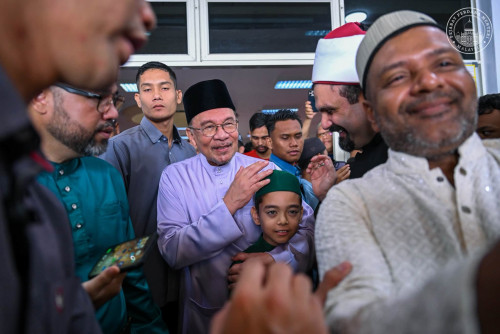
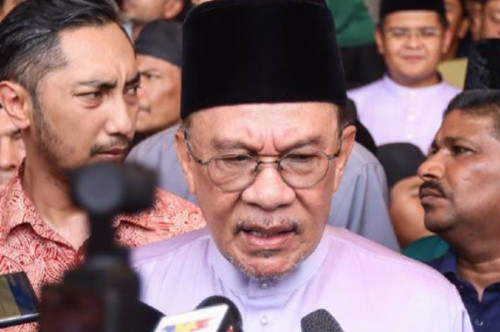
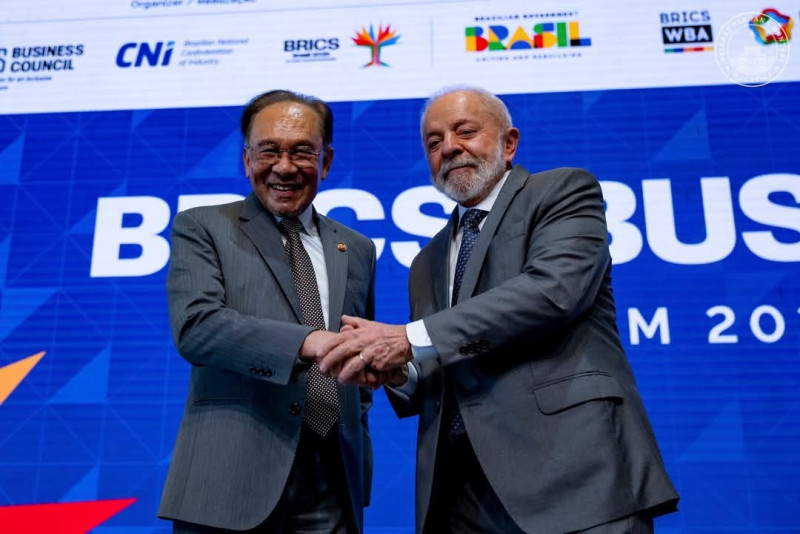
Speaking during the intervention session on the opening day of the BRICS Leaders’ Summit in Brazil on Sunday, Prime Minister Datuk Seri Anwar Ibrahim appealed to the bloc to become “a global voice for justice, rejecting all forms of oppression and upholding human dignity.”
“The world’s future must not be dictated by bloc rivalries or geopolitical division,” Bernama cited Anwar saying. “Instead, it should be shaped by a spirit of cooperation, shared prosperity, and a collective commitment to a just, secure, and inclusive digital future for all.”
As of 3 July 2025, nearly 58,000 Palestinians have been reported killed since the outbreak of the Gaza war in October 2023.
The summit—attended by heads of state and government from across the expanded BRICS group—focused on reforming multilateral institutions, promoting ethical artificial intelligence (AI) governance, and strengthening global economic cooperation.
Brazilian President Luiz Inacio Lula da Silva, hosting the summit in Rio de Janeiro, echoed Malaysia’s concerns over Gaza, Iran and Ukraine.
“Absolutely nothing justifies the terrorist actions perpetrated by Hamas,” Lula said during the Peace and Security, Global Governance session. “We cannot remain indifferent to the genocidal practices by Israel in Gaza, the indiscriminate killing of innocent civilians, and the use of starvation as a weapon of war.”
Lula reiterated Brazil’s support for “the establishment of a sovereign Palestinian State within the 1967 borders” and denounced “violations of Iran's territorial integrity,” paralleling Brazil’s stance on the war in Ukraine. “The parties engaged in the war in Ukraine must urgently deepen a direct dialogue that aims for a ceasefire and a lasting peace,” he added.
In a joint communiqué released on Sunday, BRICS leaders condemned attacks on Gaza and Iran and called for urgent reforms of global institutions such as the United Nations Security Council and the International Monetary Fund. The group described strikes on Iran’s “civilian infrastructure and peaceful nuclear facilities” as “a violation of international law” and voiced “grave concern” over the situation in Gaza.
The BRICS bloc, which now includes 11 member states following its recent expansion—among them Egypt, Ethiopia, Indonesia, Iran, Saudi Arabia and the UAE—accounts for more than half the world’s population and 40% of global economic output.
Reuters cited today that President Lula, in his opening address, said: “BRICS is the heir to the Non-Aligned Movement. With multilateralism under attack, our autonomy is in check once again.”
Despite the growing influence of the bloc, its diversity raises questions over the coherence of its agenda. Chinese President Xi Jinping was notably absent, sending Premier Li Qiang in his place, while Russian President Vladimir Putin attended virtually due to an International Criminal Court warrant.
Nonetheless, leaders including Indian Prime Minister Narendra Modi and South African President Cyril Ramaphosa convened in person at the Museum of Modern Art in Rio for discussions.
The BRICS joint statement also warned of the dangers posed by rising tariffs to global trade, offered support for Ethiopia and Iran’s accession to the World Trade Organization, and backed a pilot for the BRICS Multilateral Guarantees initiative under the New Development Bank to boost investment and reduce financing costs.
On the governance of artificial intelligence, BRICS leaders called for safeguards to prevent unauthorised data use, equitable compensation mechanisms, and protections against invasive surveillance.
Separately, China and the UAE expressed interest in financing Brazil’s proposed Tropical Forests Forever Facility, aimed at conserving endangered forests worldwide—a move aligned with Brazil’s preparations to host the UN climate summit in November. - July 7, 2025