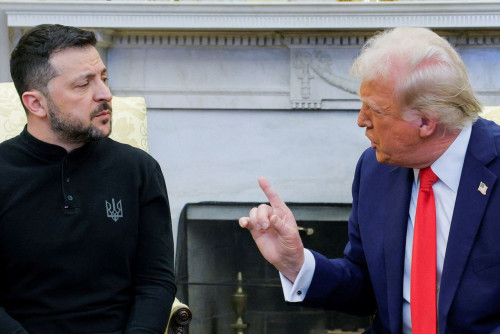
THE United States will once again withdraw from the United Nations Educational, Scientific and Cultural Organization (UNESCO), US President Donald Trump has announced, repeating a controversial move first made during his previous term in office. The withdrawal will take effect at the end of 2026.
In a statement issued on Tuesday, the White House accused the Paris-based agency of supporting “woke, divisive cultural and social causes that are totally out-of-step with the commonsense policies that Americans voted for”.
The decision reflects Trump’s broader “America First” foreign policy, which has long questioned the relevance and neutrality of multilateral institutions including the United Nations, NATO, and the World Trade Organization.
Reuters cited a spokesperson for the US State Department saying: “UNESCO promotes a globalist, ideological agenda for international development at odds with our America First foreign policy.” Washington also criticised the organisation’s decision to admit Palestine as a member state, calling it “highly problematic” and a driver of “anti-Israel rhetoric”.
UNESCO Director-General Audrey Azoulay said she “deeply regretted” the US decision, though it had been anticipated. “Even though the situation has changed profoundly, political tensions have receded, and UNESCO today constitutes a rare forum for consensus on action-oriented multilateralism,” she said.
She also defended UNESCO’s recent record, noting that “these claims contradict the reality of UNESCO’s efforts, particularly in the field of Holocaust education and the fight against antisemitism.”
French President Emmanuel Macron expressed “unwavering support” for the agency, describing it as a “universal protector” of global heritage. France’s foreign ministry said it “regrets the United States’ decision to leave UNESCO” and reaffirmed its support for the body’s work, including “access to education for all, the protection of endangered heritage, and the responsible development of artificial intelligence”.
Israel welcomed the move, with UN Ambassador Danny Danon accusing the agency of “consistent misguided anti-Israel bias”. Foreign Minister Gideon Sa’ar thanked the US for its “moral support and leadership”, saying the singling out of Israel and politicisation in UN agencies “must end”.
Meanwhile, critics within the US expressed concern over the geopolitical implications of the withdrawal. Senator Jeanne Shaheen, a senior Democrat on the Republican-led Senate Foreign Relations Committee, said the move was “short-sighted and a win for China”, which became UNESCO’s top financial contributor after the previous US exit.
The United States, a founding member of UNESCO in 1945, has had a strained relationship with the agency. It first withdrew in 1984 under President Ronald Reagan, citing financial mismanagement and alleged anti-American bias, but rejoined in 2003 under George W. Bush. Funding was halted again in 2011 under President Barack Obama following UNESCO’s recognition of Palestinian membership.
Trump first announced a US withdrawal in 2017, citing bias against Israel, before the decision was reversed by President Joe Biden in 2023. At the time of that initial exit, the US owed \$542 million in unpaid dues.
UNESCO is best known for its World Heritage Site designations, which include 26 sites in the United States such as the Grand Canyon and the Statue of Liberty, and more than 1,200 globally.
Despite the anticipated impact of Washington’s exit, Azoulay said the agency had since diversified its funding and now receives only around 8% of its budget from the United States. - July 23, 2025