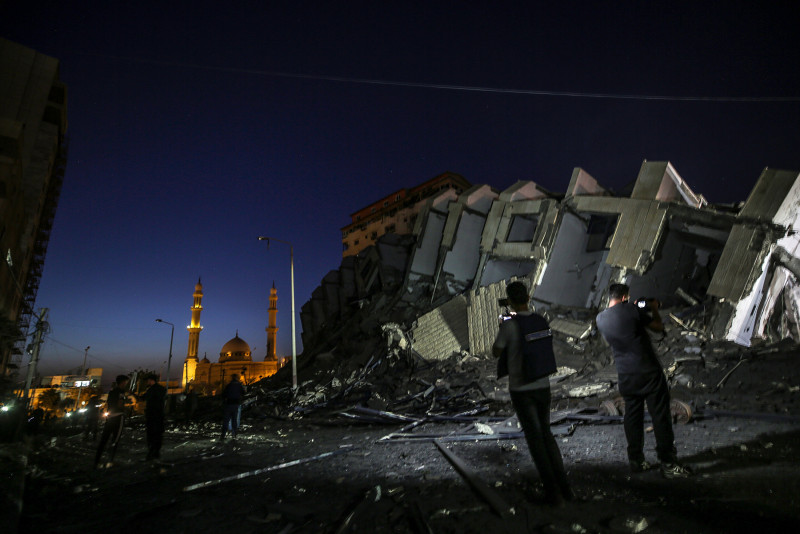
PALESTINIAN mother Hanan al-Joujou, 31, struggles to feed her three children in the dark, relying on a flashlight for light as Gaza continues to receive no electricity following last month’s Israel-Hamas ceasefire.
“We stay in the darkness – once the sun sets and the Maghrib prayer is called,” Reuters cited al-Joujou saying today. “If the light of the flashlight is available, we light it. If not, we go to sleep without dinner or light.”
Her family has been without power since the war broke out more than two years ago. Initially, they relied on candles when displaced to Rafah in southern Gaza, but eventually abandoned even that due to fire risks.
“We tried a simple LED light, but it broke. We do not have the money to fix it. We tried to get a battery, but it’s expensive and unavailable,” she added.
Before the conflict, Gaza relied on 180 megawatts of electricity, primarily imported from Israel, with an additional 60 megawatts supplied by the enclave’s lone power plant.
After Hamas militants attacked southern Israel on October 7, 2023, triggering the war, Israel imposed a total siege, and Gaza’s power station soon ran out of fuel.
The Israeli military told Reuters that civilian infrastructure, including electricity facilities, is not targeted directly, and that measures are taken to minimise harm to civilians while acknowledging Hamas operates within civilian areas.
Most daily activities in Gaza now end at sunset. Al-Joujou’s children use a flashlight for homework when possible, and the family’s tight finances make basic necessities a constant struggle. “We barely have enough money to get by in our daily lives,” said her husband, Ahmed, 35.
Some residents have turned to solar power or private generators to operate small charging points. Mohammed al-Hor, 32, recounted how his family ran one such solar charging business at their home, which was later hit in an Israeli strike that killed his brother.
Restoring Gaza’s electricity will require extensive reconstruction. The war has destroyed over 80 per cent of the enclave’s distribution network, with infrastructure and machinery losses estimated at $728 million, according to the media director of Gaza’s electricity company.
“For the past two years, no electricity has reached the Gaza Strip. The amount of electricity reaching Gaza is zero,” said Mohammed Thabet, noting pre-war needs of 600 megawatts.
COGAT, the Israeli military agency overseeing aid flows into Gaza, said Israel remains committed to facilitating humanitarian aid, including fuel for electricity, under the ceasefire agreement.
Power lines have been connected to two desalination plants and a UN-managed facility in Khan Younis to provide drinking water. - November 12, 2025